
Review · OAHU
Private 1-on-1 Surf Lesson with Videos and Photos
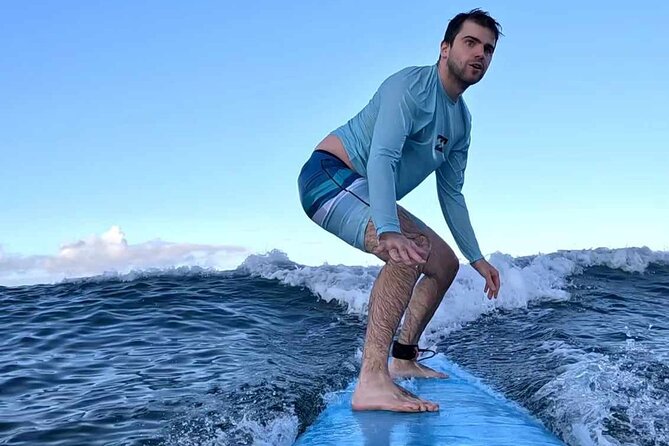
The best part of this Oahu surf lesson is the one-on-one coaching. Jake stays close, adjusts his teaching to your pace, and can tow or push you into a wave when paddling feels like too much. You get a real chance to stand, not just a dry-land lesson followed by a quick splash.
I like two things here: the built-in photo and video package, which captures the moment instead of leaving you to guess how it looked, and the calm, patient approach for nervous beginners. The main consideration is time. One hour goes quickly, especially when you are still learning how to paddle, turn, and stand.
Quick takeaways from this Honolulu surf lesson
- Private attention: Only your group takes part, with one instructor focused on your needs.
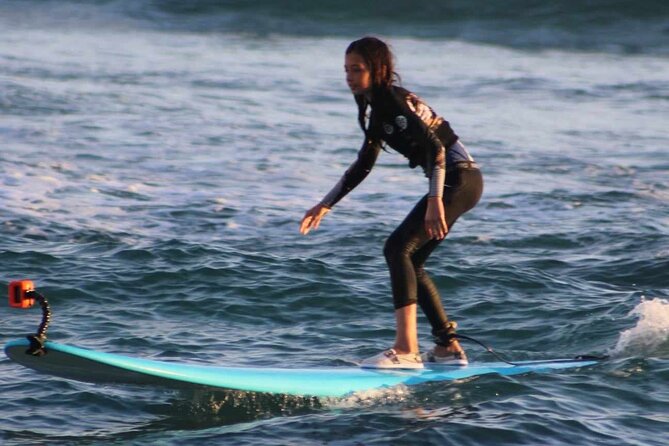
- Beginner-friendly goal: You are guaranteed to catch a wave, even if you ride it on your stomach.
- Family option: Children age four and older can participate, and ages four through eleven may tandem surf with the instructor.
- Useful equipment included: Board, leash, rash guard, water shoes, fees, taxes, photos, and videos are covered.
- Same-day memories: Your photos and videos are uploaded and emailed by that evening.
- Easy central setting: The meeting point is near Duke Kahanamoku Lagoon, public transportation, Waikiki, and Honolulu.
Why a private lesson makes sense on Oahu
Surfing looks simple from the beach. Paddle, stand, ride. In the water, each step takes timing, balance, and a bit of nerve. A private lesson removes much of the guesswork because the instructor can watch you closely and correct one problem at a time.
That matters most during a first lesson. You may be pushing the board’s nose too far down, paddling too slowly, or trying to stand before the wave has enough speed. With Jake beside you, the feedback comes at the moment you need it. He can also guide the board, tow you when your arms tire, and push you into a wave when catching one under your own power is not yet realistic.
This is not a class where you wait while another student takes a turn. You have the instructor’s attention throughout the water session. For a beginner, that can mean more attempts in the same hour and less time wondering what to do next.
The private format also suits someone who has surfed before but wants better local guidance. One customer specifically valued help with positioning, reef awareness, surf etiquette, and where to go in the water. Those are useful lessons that do not always come from simply renting a board.
More Surf Lessons with Photos in Oahu:
- Surf Lesson Without the Crowds Including GoPRO Videos
★ 5.0 · 167 reviews - Group Surf Lesson with Videos and Photos
★ 5.0 · 69 reviews - Surf Lessons get your Social Media video & photos you Surfing HI.
★ 5.0 · 3 reviews
Meeting at the triangular beach near Duke Kahanamoku Lagoon
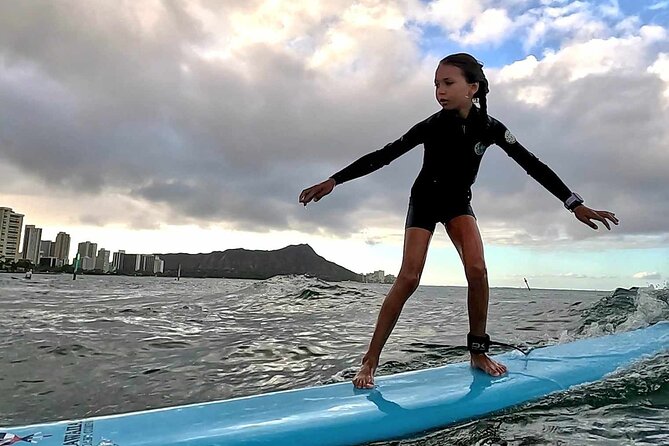
The listed starting point is Manifesting Aloha Surf School at Duke Kahanamoku Lagoon in Honolulu. The directions describe meeting at the end of the parking lot by the ocean, near a small triangular beach. A map link is provided, and that is worth using rather than relying on a broad search for the surf school.
The central location is convenient if you are staying in Waikiki. It also sits near public transportation, so you may not need a car. Still, give yourself time to find the exact end of the parking lot. One person arrived at the wrong location and needed guidance to reach the correct meeting place. That was handled patiently, but getting it right from the start protects your short lesson time.
At the meeting point, you choose a water shirt and water shoes in the right size. The school supplies the surfboard and leash as well. Since the gear is included, you do not need to arrange a separate rental before the lesson.
The activity ends back at the same meeting point. That makes the outing easy to fit into a Honolulu day, especially if you plan to walk, use public transportation, or return to your hotel after changing.
The first safety lesson happens at the water’s edge
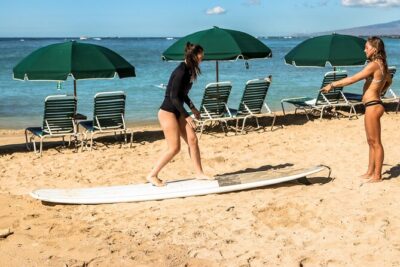
Before heading into the main practice session, the instructor gives a demonstration near the water entrance. You learn how to stay safe, paddle, position yourself on the board, and perform the pop-up.
That short introduction is more important than it may sound. New surfers often focus so hard on standing that they forget board control or safe movement around other people. The demonstration gives you a basic plan before the water gets busy with new sensations.
You can also ask questions at this point. If you are worried about falling, unsure about the board, or nervous about ocean water, say so early. The lesson is private, so the instructor can adjust the explanation instead of rushing through a standard group speech.
One especially useful detail is the promise of a wave even if you cannot stand. Riding on your stomach still teaches you how a wave carries the board. It also gives you a successful first run while you work toward the harder pop-up.
One hour of hands-on surfing
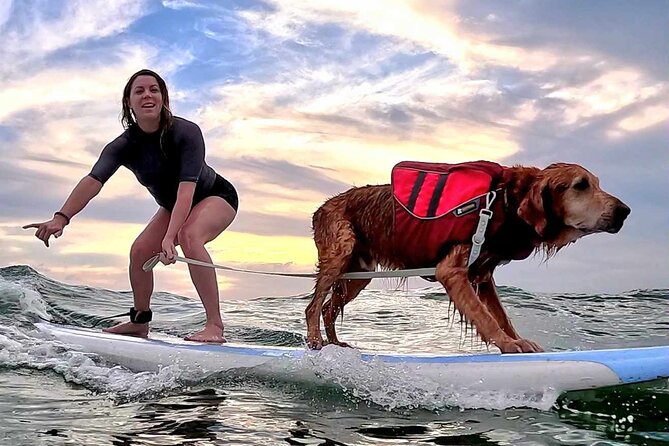
After the demonstration, you spend about an hour practicing. The instructor helps with paddling, wave selection, and getting into position. If you struggle to paddle on your own, he can tow you. If you are in the right place but need help catching the wave, he can push you and the board.
That level of physical help is a major reason this lesson suits first-timers, children, and people who feel unsure in the ocean. You are not left waiting for the perfect wave or asked to repeat a technique without support. The instructor stays involved in the process.
The goal is not to turn you into an experienced surfer in one hour. It is to give you enough safety and technique to catch waves, enjoy the feeling, and understand what to practice next. Most beginners catch several waves standing during their first session, but the guaranteed floor is more modest: you will catch a wave, even if you remain on your stomach.
A private session can also help someone with a physical limitation in confidence or stamina, though the listed requirements say you should have a moderate level of physical fitness. Paddling is work. Getting on and off the board takes effort. The ocean can leave you tired even when the waves look small from shore.
More Surf Lessons around Oahu:
- Open Group Surfing Lesson in Waikiki, Hawaii
★ 4.5 · 582 reviews - Oahu: Beginner-Friendly Waikiki Beach Surfing Lesson
★ 4.9 · 425 reviews - Surfing Lessons On Waikiki Beach
★ 4.5 · 317 reviews - Waikiki Private Group Surf Lesson
★ 5.0 · 298 reviews
Why children and nervous beginners may like this setup
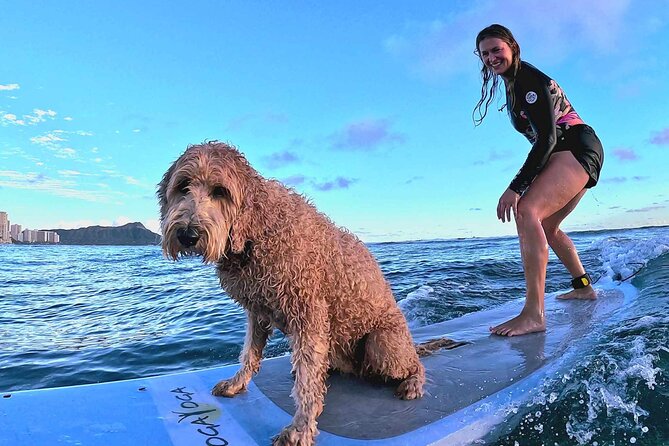
The minimum age is four. Children from four through eleven may choose to tandem surf with the instructor, which gives younger participants a more supported option than trying to manage the board alone.
That does not remove every challenge. Children still need to listen, paddle when asked, and feel comfortable in the water. But the one-on-one structure lets the instructor slow down, offer direct reassurance, and focus on one child without dividing attention among a whole class.
The same arrangement works well for fearful adults. One customer described having a long-standing fear of salt water and needing the instructor to push both the board and the surfer for much of the session. Standing on one wave became a meaningful achievement because the guidance made that first step possible.
Another customer with limited vision felt safe because Jake acted as both instructor and eyes in the water. That detail shows the value of direct communication, though you should explain your needs when booking so the school can confirm that the activity is suitable.
If you are already comfortable in the ocean, the private lesson still has value, but you may want to tell the instructor what you hope to improve. The session can then focus less on basic balance and more on timing, local water awareness, or technique.
Jake’s teaching style and what you can expect
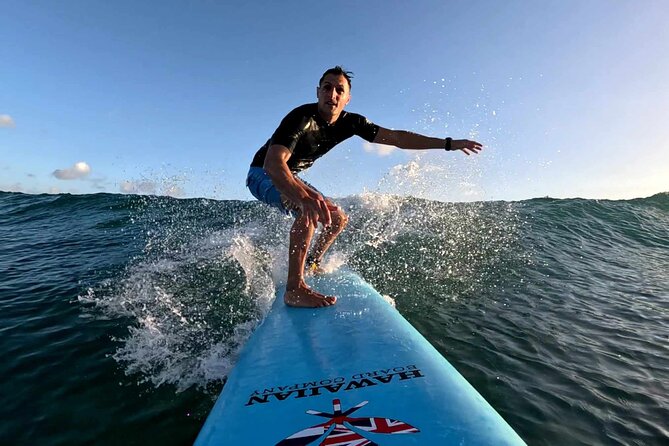
Jake is the instructor named in the available details, and his strongest qualities are patience, encouragement, and close attention. His coaching is not limited to explaining a move on shore. He gives feedback in the water and adjusts his help to the person on the board.
That can mean guiding the board while you paddle, pushing you into a small wave, or standing nearby as you work out the pop-up. For a nervous beginner, his steady presence can make the difference between freezing and trying again.
The lesson also has a friendly, low-pressure feel. You are encouraged to make progress, but the experience is not presented as a test. If you only manage stomach rides, you still leave with a genuine first step. If your balance comes quickly, you may catch multiple standing waves.
The school’s photo and video work adds another useful layer. Jake takes pictures and videos during the session, then uploads them the same day and sends an email by that evening. That gives you a record of your form, your first successful ride, and the parts of the lesson you may not remember clearly.
The package is especially useful for families. Parents can watch a child’s ride instead of trying to hold a phone while managing beach gear. It also gives you something more useful than a posed shore photo: evidence of what you actually did on the board.
What the four named Oahu areas mean for your day
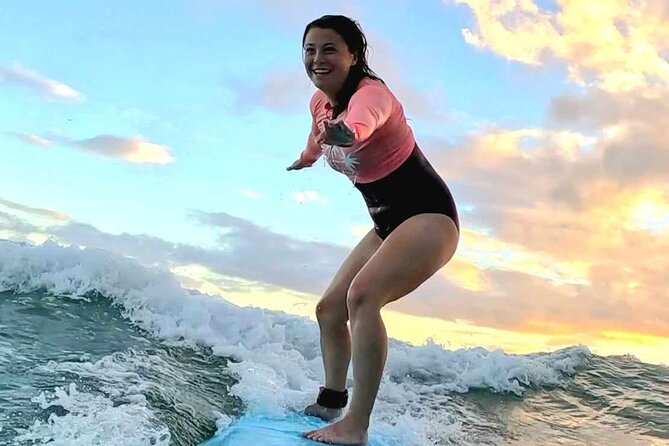
The itinerary names Diamond Head Crater, Waikiki, Honolulu, and Oahu. These are broad location references rather than a sightseeing route with separate stops.
Diamond Head is part of the setting associated with Honolulu’s famous surf and coastal views, but this experience is not a crater hike. You should not expect time to tour the crater or stop for a formal viewpoint. The focus remains on the water.
Waikiki is the practical base for the outing. Its central position makes this lesson easy to combine with a beach day, hotel time, or other Honolulu plans. The drawback is that a central beach location can involve more activity around you than a remote surf beach. The private teaching helps, but you should still pay attention to the instructor’s directions about where to go and how to move safely.
Honolulu and Oahu describe the wider destination rather than extra sightseeing stops. You are booking a surf lesson, not a guided island tour. If you want Diamond Head admission, a driving tour, or multiple beach visits, those need to be planned separately.
Is $160 a fair price?
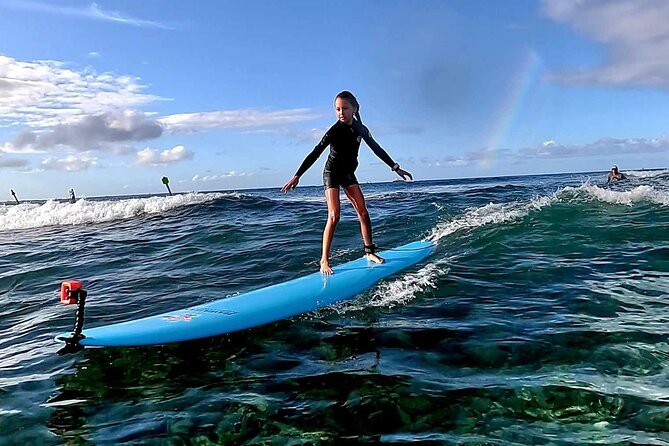
At $160 per person, this is not the cheapest way to touch a surfboard. A group lesson or board rental may cost less. Those options can work if you are comfortable learning at your own pace and do not mind sharing an instructor’s attention.
The price makes more sense when you count what is included. You receive a private lesson, board, leash, rash guard, water shoes, all fees and taxes, and a photo and video package. You also receive direct help with paddling and wave catching, which can save a beginner from spending the whole hour missing waves.
The photo and video package has real value for a first-time lesson. If you tried to film yourself, you would need someone on shore, and the result would not show what the instructor was correcting in the water. Here, the footage becomes both a souvenir and a way to see your progress.
For families, the calculation depends on how many people participate. Each person pays $160, so a larger group can become costly. On the other hand, a private format prevents your child’s short turn from being lost among several students. If your priority is a supported first ride and lasting photos, the price is easier to justify.
Tips are not included. Gratuities are optional and separate from the listed cost.
Timing, weather, and cancellation details
The lesson lasts about one hour, with a demonstration before the main practice. Plan around the full meeting process rather than treating the activity as a quick fifteen-minute beach stop.
Confirmation arrives when you book, and the experience is offered in English. It requires suitable weather. If poor weather causes a cancellation, you are offered another date or a full refund.
You can cancel for a full refund if you do so at least 24 hours before the start time. Changes or cancellations inside that 24-hour window are not accepted for a refund, so check the forecast and your Honolulu schedule early.
The activity is booked an average of 38 days in advance. That does not guarantee that every date sells out, but it is a useful warning for anyone planning a family trip or hoping for a particular morning. Booking earlier also gives you more room to move the lesson if your schedule changes.
Who should book this private surf lesson?
I would choose this for:
- A first-time surfer who wants direct help rather than a large class
- A child age four or older who needs close supervision and may tandem surf
- An adult who feels nervous about ocean water
- Someone who wants photos and videos without arranging a separate photographer
- A beginner who values a guaranteed wave more than a low-cost rental
- An intermediate surfer who wants local help with positioning, reef awareness, etiquette, or technique
- A small private group that wants everyone to receive individual attention
I would think twice if your main goal is a long surf session. The lesson is only about an hour, and the introductory demonstration uses part of the overall experience. You may also prefer a less structured option if you already surf confidently and only need a board.
Should you book it?
Book this lesson if your main goal is to catch a first wave with patient help and leave with photos and videos. The private format, same-day media, included equipment, and ability to tow or push you into waves make it especially useful for children, fearful beginners, and anyone who wants a guided first attempt.
Skip it if you are mainly looking for the lowest price or several hours on a board. For everyone else, $160 buys more than equipment. It buys focused coaching, a clear safety introduction, and a better chance of turning a short Honolulu beach visit into a real surfing memory.
FAQ
Where does the surf lesson meet?
It meets at Manifesting Aloha Surf School near Duke Kahanamoku Lagoon in Honolulu. The directions specify the end of the parking lot by the ocean near a small triangular beach, and a map link is provided.
Where does the activity end?
The lesson ends back at the meeting point.
How long does the surf lesson last?
The experience lasts about one hour. A safety and technique demonstration takes place before the water practice.
What ages can take the lesson?
Private lessons are available for ages four and older. Children ages four through eleven may choose to tandem surf with the instructor.
Is the lesson private?
Yes. Only your group participates in the activity.
What equipment is included?
The price includes a surfboard, leash, water shirt or rash guard, and water shoes.
Are photos and videos included?
Yes. Photos and videos are included and are sent by email after the lesson. They are uploaded the same day and sent by that evening.
Do I need to know how to surf?
No. The lesson teaches safety, paddling, and pop-ups. You are guaranteed to catch a wave, even if you ride on your stomach.
What happens if the weather is poor?
If poor weather causes the experience to be canceled, you are offered a different date or a full refund. You can also cancel at least 24 hours before the start time for a full refund.
Latest surf sessions around Oahu
- Waikiki 2 Hours Private Guided Surf Lesson★ 3.5 · 8 reviews
- Surf Honolulu: Ala Moana Stand-up Paddleboard Lesson★ 5.0 · 3 reviews
- Surf Activity on the Wai Kai Wave in Ewa Beach★ 5.0 · 8 reviews
- Semi-Private Surfing Lesson in Waikiki, Oahu★ 5.0 · 26 reviews
- Private Group Surf Lesson★ 5.0 · 47 reviews
- Surf Lessons on the North Shore Great for Families and all Ages★ 5.0 · 27 reviews
- Learn to surf with a local big wave rider on the North Shore of Oahu★ 4.5 · 10 reviews
- Waikiki Surf Lesson (Hawaiian Boy Surf School)★ 4.0 · 8 reviews
Oahu Surf Lessons, compared.
Oahu: Beginner-Friendly Waikiki Beach Surfing Lesson
Read our review →
Family, Private & Group Surfing Lessons, Waikiki Courtesy Shuttle
Read our review →
Oahu: Waikiki 2-Hour Beginner Group Surf Lesson
Read our review →
Browse the lists this tour appears in