
Review · OAHU
Surfing Lessons On Waikiki Beach
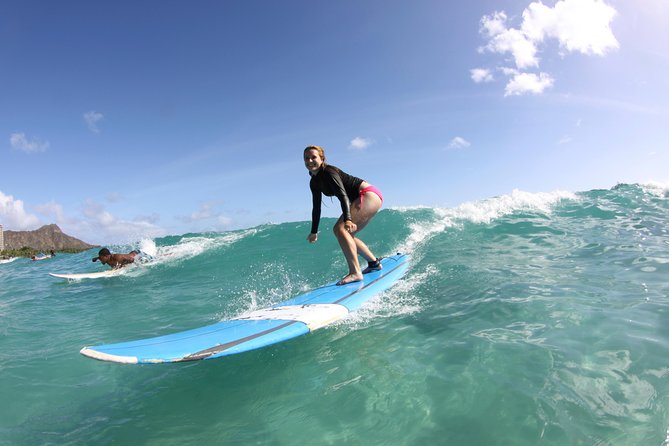
Waikiki is one of the easiest places in Hawaii to try surfing, thanks to its shallow water, sandy bottom, and gentle beginner waves. This 90-minute lesson starts near Waikiki Beach Walk with a 20-minute safety and technique briefing, then moves into the water for hands-on help catching waves.
I like the small advertised group size of five and the fact that you do not need to haul equipment across Honolulu. A board, leash, and locker are included, and instructors such as Josh, Derek, Alex, Cody, and Tanner have helped first-timers stand up and catch waves. The main concern is consistency: some sessions have had larger groups, limited water instruction, or poor supervision in rough conditions.
Key Points Before You Book
- Twenty minutes on the beach: Learn water safety, paddling, board control, and how to stand before entering the surf.
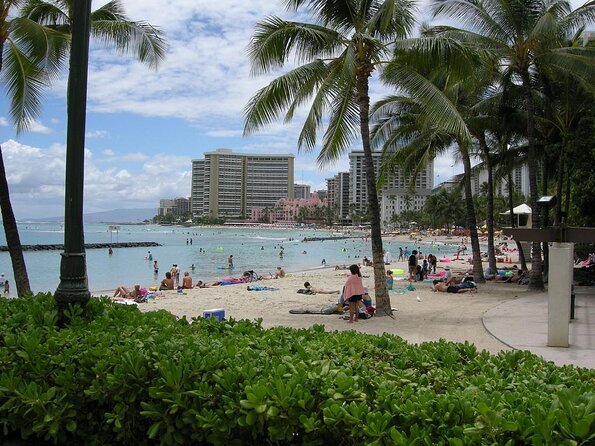
- Beginner-friendly Waikiki water: The south-facing coast has a sandy bottom and shallow areas that make falls less intimidating.
- Equipment is included: You receive a surfboard, leash, and access to a locker. Bring or rent a lock and rash guard.
- The water session matters most: Expect about an hour practicing wave timing, paddling, and standing with instructor help.
- Group size needs confirming: The advertised maximum is five, but some sessions have reportedly included more people.
- Book with safety in mind: You must be able to swim and should have moderate physical fitness.
Why Waikiki Is a Good Place to Learn Surfing
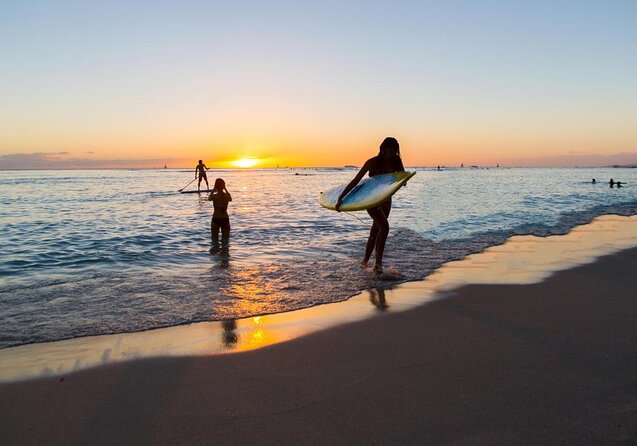
Waikiki gives beginners a forgiving introduction to surfing. The coast faces south, and the area used for lessons has a sandy bottom with shallow water. You will still fall, get tired, and occasionally lose control of the board, but you are not starting on a rocky reef or in a remote surf break.
That setting makes a real difference. When you are learning, your attention is already divided between paddling, balancing, watching waves, and remembering how to stand. A soft bottom and water only a few feet deep can make the first attempts feel manageable.
You should not expect an empty beach. Waikiki is busy, and the lesson area may be shared with other surf schools and catamaran traffic. One session included a boat coming in near the launch point, which made the water entry stressful. Good instructors adjust the route and give each person a safe line, but crowding remains part of learning to surf in this famous part of Honolulu.
The lesson is based at Big Wave Dave Surf & Coffee, at 226 Lewers Street, inside the Waikiki Beach Walk area. The shop is convenient for many hotels, and you can walk to the beach from the meeting point. The location is somewhat tucked into a ground-floor hotel setting, so allow time to find it.
More Surf Lessons around Oahu:
- Open Group Surfing Lesson in Waikiki, Hawaii
★ 4.5 · 582 reviews - Oahu: Beginner-Friendly Waikiki Beach Surfing Lesson
★ 4.9 · 425 reviews - Waikiki Private Group Surf Lesson
★ 5.0 · 298 reviews
Starting at Big Wave Dave Surf & Coffee
You should arrive about 20 minutes before the scheduled start. That gives you time to check in, store your belongings, collect your board and leash, and get ready without rushing.
The included locker is useful because you do not want a phone, wallet, or room key loose on the beach. A lock is optional and costs $5 if you need one. You can also bring your own lock. A rash guard is not included. Rental costs $5, or you can bring one from home.
The shop is near public transportation, which helps if you are staying outside central Waikiki. It also sells coffee and food, so you may be able to grab something before or after the lesson. Bathroom access may be limited, so plan accordingly rather than counting on a full changing-room setup.
Your mobile ticket and booking confirmation make check-in simple. Still, I would save the meeting address and arrive early. Waikiki streets and hotel entrances can be confusing, especially when you are carrying a board and trying to arrive on time.
The 20-Minute Beach Briefing
The lesson begins on land. This is not filler. For a first-time surfer, the beach explanation is where you learn the basic movements without waves pushing you around.
Your instructor covers:
- Water safety and surfing etiquette
- How to paddle efficiently
- How to turn and maneuver the board
- How to position yourself for a wave
- How to handle the board and leash
- How to move from lying down to standing
The standing motion is the part most beginners worry about. You will practice the movement on the beach before trying it in the water. This helps you remember where to place your hands and feet when the board begins moving.
The quality of this briefing can shape the whole lesson. Some instructors have been praised for clear explanations, patience, and positive encouragement. Josh, in particular, helped several first-timers feel comfortable and stand up repeatedly. Derek was also singled out for helping two family members catch many waves.
There is a practical limitation: spoken instructions can be hard to hear once you are in the surf. One session had an instructor whose voice did not carry well, and the noise from breaking waves made directions difficult to follow. Before entering the water, make sure you understand how your instructor will signal where to go and what to do if you become separated from the group.
Getting Into the Water at Waikiki
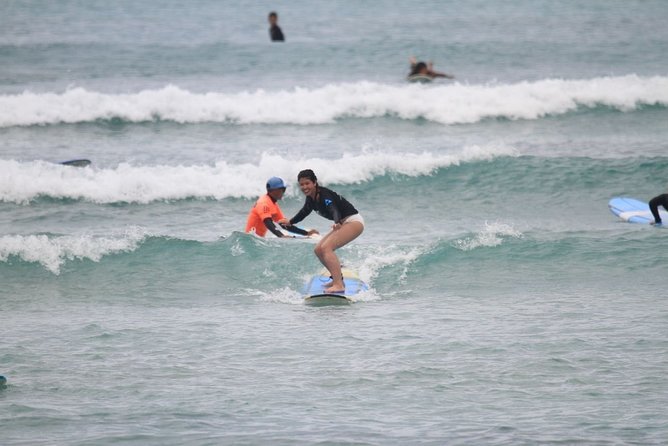
After the beach briefing, you walk to the surf area with your board and leash. Waikiki’s shallow, sandy water gives you a gentle place to start, but the launch area can be crowded.
The instructor’s job is to help you judge the waves, keep a safe route, and decide when to paddle. In the best sessions, the instructor reads the waves, gives the board a push at the right moment, and lets you focus on standing. This assistance is why many first-timers manage to ride a wave during their first lesson.
Do not be surprised if you spend some time waiting. Surfing lessons are not a nonstop sequence of rides. You paddle out, watch for a suitable wave, wait for other people to clear the path, paddle again, and try to stand before the wave passes.
The experience can vary with tide, weather, and wave conditions. One useful tip is to consider the time of day. A morning session may offer higher tides and larger waves, while an afternoon session may have smaller waves that feel less intimidating. Neither is automatically better. If you are nervous, smaller waves may help. If you want more push from the water, a morning time may suit you better.
The company requires good weather, and an activity canceled for poor weather can be moved to another date or refunded. That policy makes sense for an ocean activity, but it also means you should leave some flexibility in your Waikiki schedule.
Same water, another way to ride it:
- Surf Lessons on the North Shore of Oahu
★ 5.0 · 267 reviews - Family, Private & Group Surfing Lessons, Waikiki Courtesy Shuttle
★ 5.0 · 216 reviews - Oahu: Waikiki 2-Hour Beginner Group Surf Lesson
★ 4.9 · 191 reviews - Private Surfing Lessons in Waikiki
★ 5.0 · 176 reviews
What You Actually Practice in the Surf
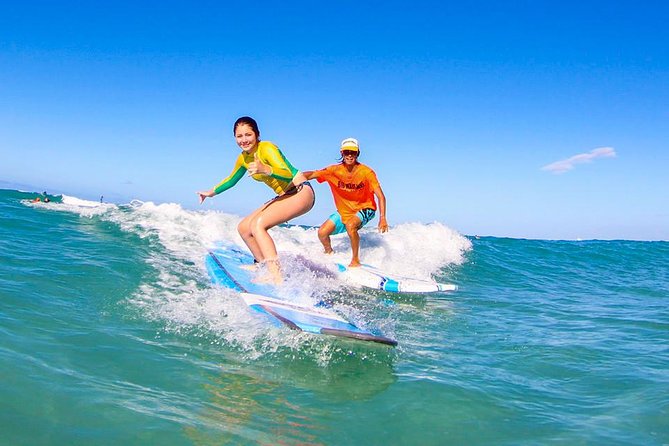
The goal is not to master surfing in 60 minutes. The goal is to learn enough to catch a small wave, stand safely, and understand what you would practice next.
You will work on three basic skills:
Paddling: You need enough speed to match the wave. Poor paddling leaves the board behind the wave, while paddling too late may put you in an awkward position.
Timing: The instructor helps you decide when to start paddling. This is often the hardest part for beginners because waves look smaller or faster from the board than they did from shore.
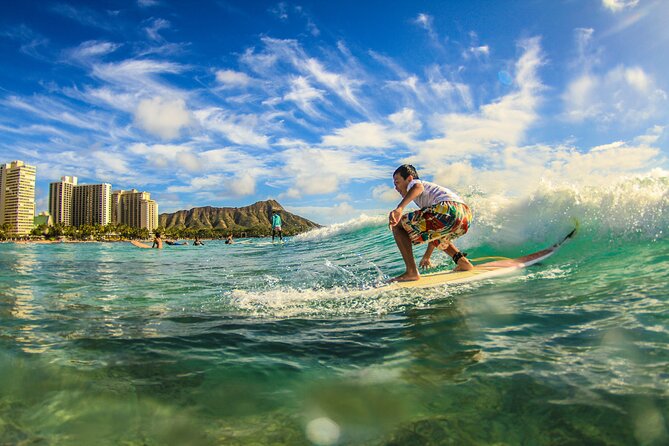
Standing: Once the wave begins to carry you, you push up and bring your feet under you. The movement should be quick but controlled. Falling is normal, and the shallow water helps reduce the fear of making mistakes.
Strong sessions give everyone repeated chances. Several families reported that children and teenagers stood up during their first lesson, and some adults said they caught multiple waves with help. One participant in their 40s gained enough confidence to keep practicing.
The less successful sessions had only three or four low-quality waves per person. That is a poor value at this price, especially if the group is larger than advertised. Ask at check-in how many people are in your group and how the instructor plans to rotate turns.
Instructor Quality and Safety Matter Most
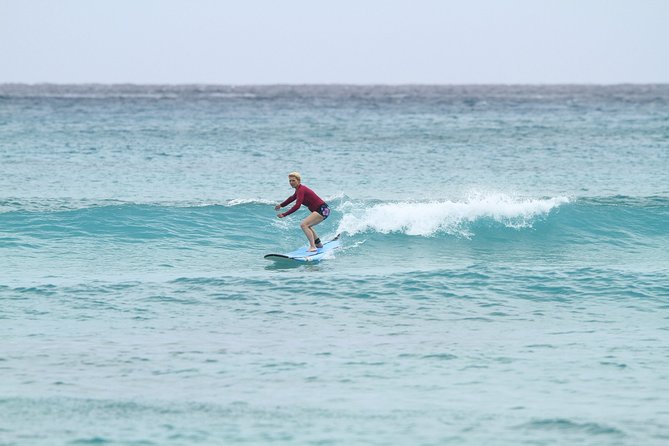
This experience depends heavily on the person leading it. Names that received especially strong praise include Josh, Joshua, Derek, Tanner, Alex, Cody, and Mouse. The most common strengths were patience, encouragement, clear instruction, and hands-on help at the right moment.
An instructor who explains the ocean as well as the mechanics can make the lesson more memorable. One praised coach talked about sea life and the water around Waikiki, while another helped older participants feel comfortable by adjusting the lesson to their ability.
But you should take the safety issue seriously. One couple described a session in turbulent conditions where the instructor moved ahead of two struggling beginners. They felt abandoned, and one person was in danger of reaching a concrete wall. That is not an acceptable outcome for a beginner lesson.
This account appears to be an exception among the generally positive experiences, but it points to a real concern. You must be able to swim, and moderate physical fitness is required. If you are nervous in open water, tell the instructor clearly before you leave the beach. If conditions feel beyond your ability, say so immediately and ask for help returning.
Do not assume a photographer or another staff member is responsible for safety. Photography can be arranged in advance, but it is an extra service. Your instructor should remain the person directing the lesson and watching the group.
Is the $129 Price Good Value?
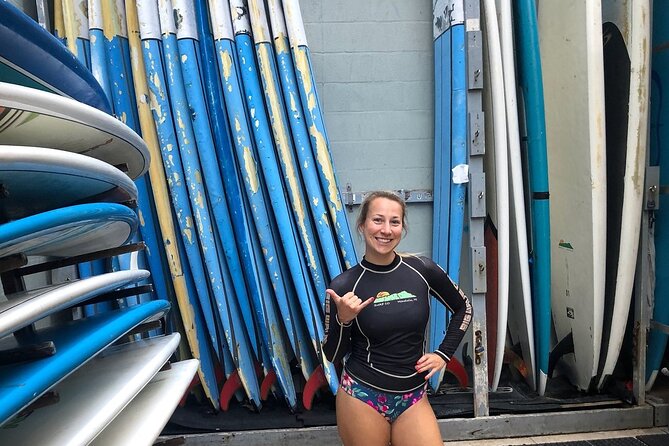
The price is $129 per person. That includes the professional instructor, surfboard, leash, and locker access. For a first lesson in Waikiki, that is not an unreasonable price if you receive a small group, repeated attempts, and close coaching.
The value drops quickly if the group is larger than five or if you spend most of the water time waiting. The advertised maximum is five, yet some sessions have been described as having six, seven, or even nine people. Another booking was reportedly moved to a different company and became shorter and less private.
Those differences matter. A small group means more turns and more correction from the instructor. A larger group can leave you with only a few attempts, even when the total lesson time remains 90 minutes.
Budget another $5 for a rash guard if you do not bring one. A lock is also $5 if needed. Photos are available only with advance arrangements and are not part of the basic price.
The company has an overall rating of 4.7 from 317 ratings, with 92 percent recommending the activity. That strong overall result fits the many accounts of first-timers standing up, friendly coaching, and easy organization. Still, the mixed experiences mean I would treat the group size and current operator arrangement as important questions, not small details.
Who Will Enjoy This Lesson Most?
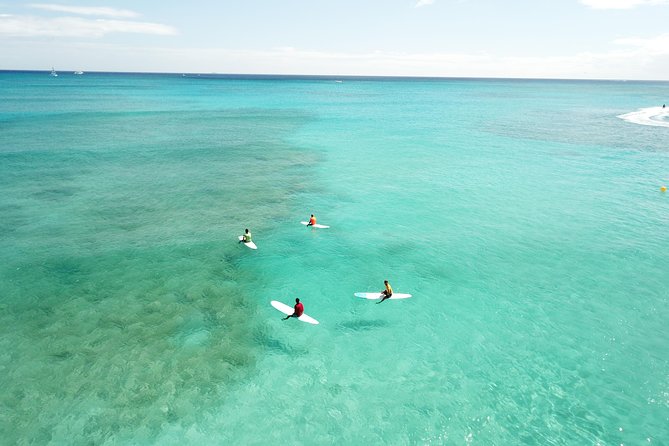
This lesson is best for a first-time surfer who can swim, handle moderate physical exertion, and accept that falling is part of the process. It also suits families with older children and teenagers. Children aged 10, 15, and 18 have taken the lesson together, and teenagers have particularly enjoyed the confidence boost.
It can also work well for older adults when the instructor adapts the pace. One participant described receiving coaching suited to their age and ability.
I would be more cautious if you are uncomfortable in open water, cannot swim confidently, or have limited strength for paddling. You should also reconsider if you need private instruction. This is a small-group lesson, not a guaranteed one-on-one class.
Couples should not assume they will remain together in the water. Instructors may pair people differently to manage wave timing and group flow. If one person in your party is much more nervous than the other, explain that before the water session begins.
Booking, Cancellation, and Useful Preparation
You can cancel for a full refund up to 24 hours before the start time. Changes or cancellations made within 24 hours are not refunded. If poor weather forces cancellation, you can receive a full refund or choose another date.
I would book at least several days ahead, since the experience is commonly reserved about 11 days before the activity date. Morning and afternoon conditions can differ, so choose based on your comfort level rather than assuming one time is always best.
Bring:
- A swimsuit and towel
- A rash guard, or $5 for the rental
- A lock, or $5 for the optional rental
- Water and sunscreen
- Only the belongings you need
Most important, arrive early, listen closely during the beach briefing, and tell the instructor if you are struggling. You are not expected to surf well on the first attempt, but you are expected to communicate when you need help.
Should You Book Surfing Lessons on Waikiki Beach?
I would book this lesson if you want a convenient first taste of surfing and value a Waikiki location, included equipment, and a chance to stand on a board during your vacation. The sandy bottom, shallow water, and many encouraging instructors make it a sensible starting point.
I would book only after confirming the current group size and instructor arrangement. The best sessions offer patient coaching and several waves. The worst account describes a serious supervision problem, and some sessions have felt overpriced because of large groups or too few usable waves.
For a first-time surfer who can swim and wants a practical introduction, this is worth considering at $129. Go in expecting a workout, not a private lesson. If you need extra reassurance, ask for the instructor’s name, confirm that no more than five people are scheduled, and make clear that safety and close supervision are your priorities.
FAQ
Where does the surfing lesson meet?
The lesson meets at Big Wave Dave Surf & Coffee, 226 Lewers Street #154, Honolulu, Hawaii 96815. The activity ends back at the same meeting point.
How long does the experience last?
The experience lasts about 1 hour and 30 minutes. Around 20 minutes is spent on land learning safety and surfing basics, followed by water practice.
Is surf equipment included?
Yes. A surfboard and leash are included, along with use of a locker for your belongings.
Is a rash guard included?
No. Rash guards can be rented for $5, or you can bring your own.
Do I need to bring a lock?
A lock is optional. You can rent one for $5 or bring your own.
How many people are in each lesson?
The advertised maximum is five people. Some sessions have had larger groups, so confirm the current group size when booking or checking in.
Do I need to know how to swim?
Yes. You must be able to swim to take part in the activity.
Can I cancel for a refund?
You can cancel at least 24 hours before the start time for a full refund. Cancellations or changes made less than 24 hours before the start time are not refunded.
What happens if bad weather cancels the lesson?
If poor weather causes cancellation, you will be offered another date or a full refund.
Latest surf sessions around Oahu
- Waikiki 2 Hours Private Guided Surf Lesson★ 3.5 · 8 reviews
- Surf Honolulu: Ala Moana Stand-up Paddleboard Lesson★ 5.0 · 3 reviews
- Surf Activity on the Wai Kai Wave in Ewa Beach★ 5.0 · 8 reviews
- Semi-Private Surfing Lesson in Waikiki, Oahu★ 5.0 · 26 reviews
- Private Group Surf Lesson★ 5.0 · 47 reviews
- Surf Lessons on the North Shore Great for Families and all Ages★ 5.0 · 27 reviews
- Learn to surf with a local big wave rider on the North Shore of Oahu★ 4.5 · 10 reviews
- Group Surf Lesson: Two Hours Of Beginners Instruction★ 5.0 · 32 reviews
Oahu Surf Lessons, compared.
Oahu: Beginner-Friendly Waikiki Beach Surfing Lesson
Read our review →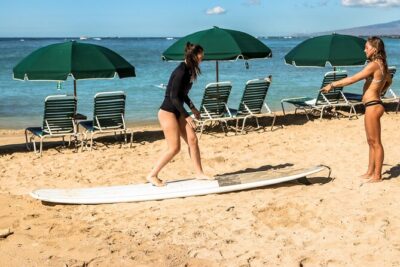

Family, Private & Group Surfing Lessons, Waikiki Courtesy Shuttle
Read our review →
Oahu: Waikiki 2-Hour Beginner Group Surf Lesson
Read our review →
Surf Lesson Without the Crowds Including GoPRO Videos
Read our review →Browse the lists this tour appears in