
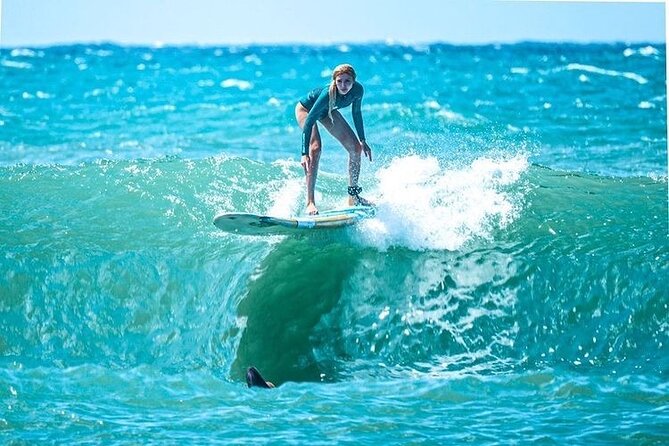
Review · OAHU
Learn to surf with a local big wave rider on the North Shore of Oahu
The best part of this North Shore lesson is that you learn from Chance King, a Haleiwa local and big-wave surfer who knows the ocean from both sides: the thrill of a powerful wave and the caution needed to teach a beginner. The session starts on the sand, then moves into the water at a break chosen for new surfers.
I like the short beach briefing, which covers safety, standing on the board, and how to move through the surf. I also like the attention given to each person. Groups can be private, and one-on-one instruction means more chances to ride instead of waiting for a large class to rotate through.
The main thing to consider is that this is a real ocean lesson, not a pool with tidy, predictable waves. The school promises you will get up and ride, but you still need to be comfortable in the water, follow directions, and accept that sea conditions can change.
Key points before you book
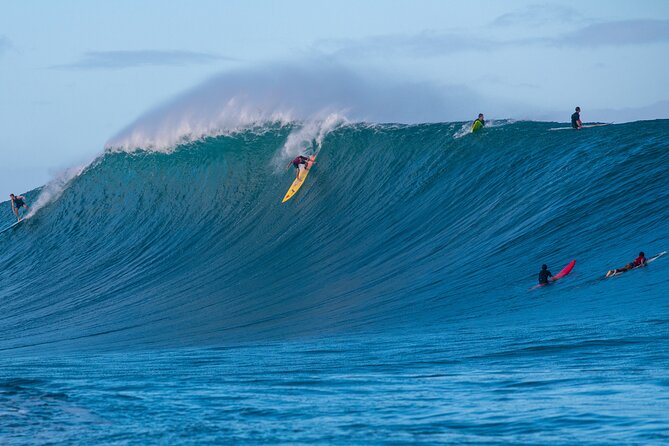
- Learn with a North Shore local: Chance King grew up on Oahu’s North Shore and brings big-wave experience to a beginner lesson.
- Start with 15 to 20 minutes on the beach: You learn basic safety, how to stand, and how to approach the surf before getting wet.
- Private group format: Only your group participates, which can mean more coaching and more rides.
- Beginner-friendly instruction: The lesson is designed for first-time surfers, with patient help for children and nervous participants.
- Plan on about 90 minutes: The session includes land instruction and time in the water, then returns to the meeting point at Kahalewai Place.
- Wear protection against board burn: A one-piece swimsuit or clothing covering your thighs is a smart choice.
Meeting a North Shore waterman in Haleiwa
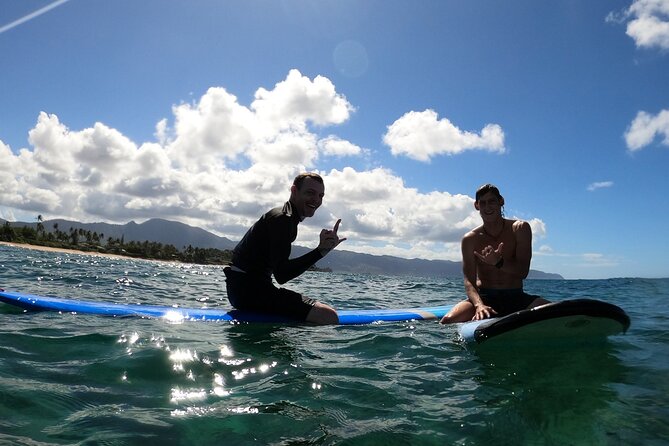
You meet at Kahalewai Place in Haleiwa, on Oahu’s North Shore. The activity begins and ends at this meeting point, so you will need to arrange your own way there and back. The location is near public transportation, but the information provided does not specify a pickup service.
That detail matters on Oahu. The North Shore is not a place where you want to arrive at the last second, especially if you are driving from Honolulu or another part of the island. Give yourself time to find the meeting point, gather your things, and arrive ready for the beach.
Chance King owns Haleiwa Surf Surf School and grew up on this stretch of coast. He is known for big-wave surfing and tube riding, but this lesson is not about showing off in giant surf. His value to a beginner is knowing how the ocean works and how to choose a suitable place for learning.
You may also work with Caleb or Charlotte. The instruction has a personal feel, with teachers staying close to beginners and adjusting their help to the person in front of them. That matters more than a fancy speech on the beach. A new surfer needs clear timing, calm corrections, and someone watching closely when a wave arrives.
More Beginner Surf Lessons in Oahu
- Oahu: Beginner-Friendly Waikiki Beach Surfing Lesson
★ 4.9 · 425 reviews - Oahu: Waikiki 2-Hour Beginner Group Surf Lesson
★ 4.9 · 191 reviews - North Shore Beginner Surf Lesson, Hawaii
★ 4.5 · 114 reviews
The first 15 to 20 minutes on the sand
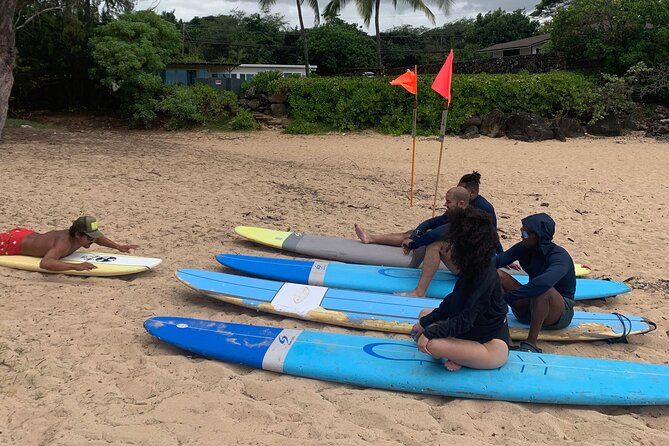
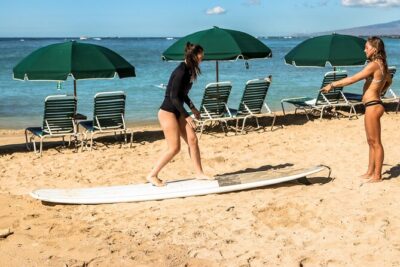
Your session begins with a 15 to 20-minute beach lesson and safety briefing. This is the part many beginners are tempted to rush, but it is where the rest of the experience starts to make sense.
You learn how to position yourself on the board and how to stand properly. The instructors also explain how to navigate the surf break. For a first lesson, that second point is just as important as the pop-up. You need to know where to move, when to wait, and how to handle the board before you begin chasing waves.
The beach talk also gives you a chance to settle your nerves. Several people who had never surfed before, including children, received patient help before entering the water. One instructor stayed with an eight-year-old who felt nervous, and the child ended up standing on several waves.
That is the sort of practical care I want from a first lesson. Big-wave credentials may sound impressive, but beginner teaching depends on patience. The instructors appear ready to slow down, repeat a movement, or stay close when a new surfer needs extra confidence.
Choosing a beginner-friendly North Shore break
The lesson takes place on Oahu’s North Shore, but the specific beach can vary. The instructor chooses a break suited to the conditions and the group’s ability. One session used a beach that was not very crowded and worked well for beginners, while another group joined other instructors and students at a break with a relaxed feel.
Do not assume every North Shore beach looks the same on every day. Surf conditions, crowds, and the strength of the waves change. The school’s decision about where to teach is one of the most important parts of your safety.
For you, the practical lesson is simple: listen to the instructors instead of deciding that a bigger wave must be a better wave. You may be moved to a quieter area or given smaller waves at first. That is not a lesser experience. It gives you the best chance to learn the basic movement and finish the session feeling capable rather than battered.
The North Shore also brings a sense of place that an indoor lesson cannot match. You are learning beside the coast where Chance grew up and where surfing is part of daily life. You get local instruction without needing to book a full-day surfing camp.
Getting your first wave
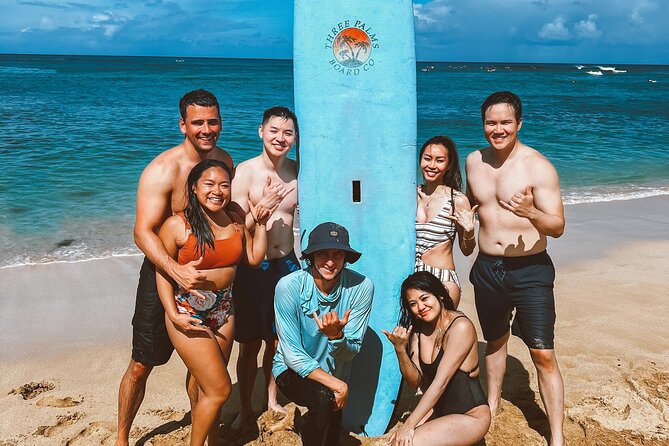
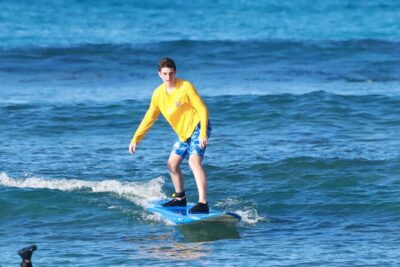
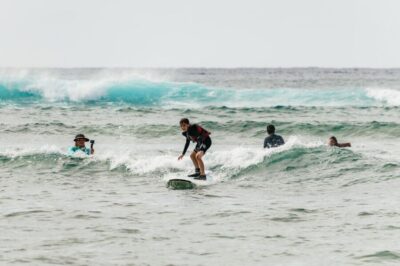
Once you enter the water, your instructor helps you time a wave and get into position. The aim is not simply to push you onto a board and hope for the best. You practice the sequence: lie correctly, prepare your hands, rise quickly, bend your knees, and keep your balance as the board moves forward.
The promise here is unusually direct: you are guaranteed to get up and ride during the session. The school also says it will refund you 100 percent if you are not enjoying the experience at any point. That is a strong confidence signal, though you should still read the current booking terms before paying.
The exact number of rides depends on the group. With four people, one session allowed each person about four or five attempts, with enough rest in between. One-on-one teaching can bring more wave time because you are not sharing the instructor’s attention with a large crowd.
That makes the private format valuable even if you are not an expert. A first lesson is built from repetition. You need a few attempts to understand what went wrong, then another chance while the advice is still fresh. A large group can offer a lower price, but a private session may give you more useful practice per minute.
Some beginners may stand immediately. Others will need several tries. The instructors focus on pointed advice rather than making the lesson feel formal or stiff. That is helpful when you are trying to remember foot placement, timing, balance, and ocean awareness all at once.
More Beginner Surf Lessons in the USA
- Surf lessons for beginners in Waikiki
★ 4.0 · 40 reviews - Group Surf Lesson: Two Hours Of Beginners Instruction
★ 5.0 · 32 reviews - Beginner Surf Lesson in North Shore, Oahu
★ 5.0 · 26 reviews - Beginner Surf Lesson at North Shore Haleiwa, Oahu
★ 5.0 · 19 reviews
What the private format changes
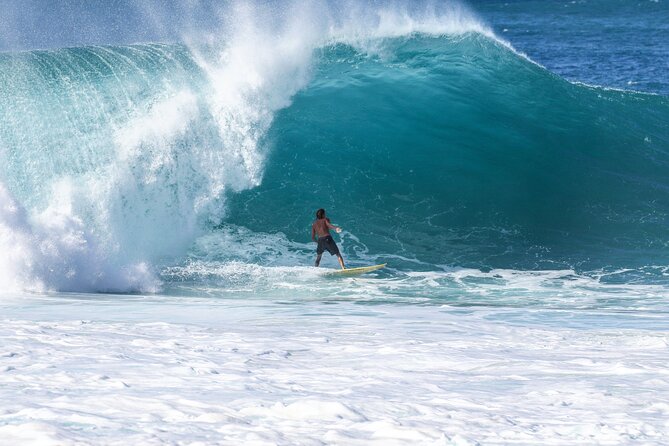
This is a private activity, so only your group participates. The size of your group will affect how much individual attention you receive. A solo booking offers the most direct coaching, while a family or group of friends lets you share the experience and spread the cost across several people.
For families, this setup has clear advantages. Children can receive help at their own pace, and a parent can remain close without being mixed into a large public class. The instructors have worked with children aged 15, 13, and 8 in the same family. Each child received time in the water, and the youngest stood up several times.
The private format does not mean every person surfs at the same moment. You may take turns, rest, or wait for a suitable wave. That is normal. Surfing is physical work, and short breaks help you keep your balance and attention.
I would choose this lesson for a family, couple, or small group that wants personal attention and a relaxed introduction. It is also a good fit for a solo learner who would rather not begin in a crowded class. If your only goal is the lowest possible price, compare the cost with larger group schools before booking.
Staying safe without losing the fun
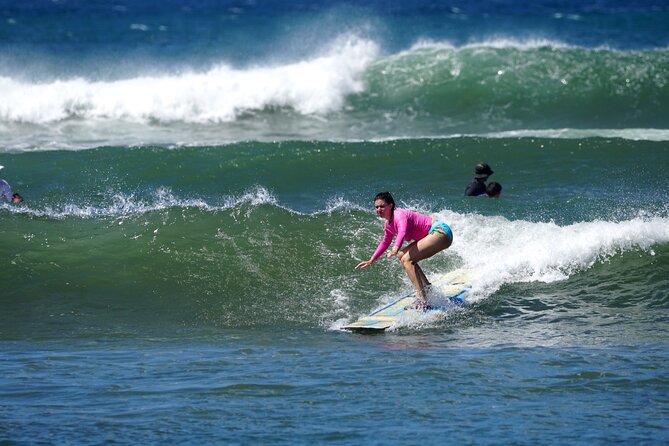
The safety briefing is not a formality. The North Shore has real surf, and the ability to swim or your comfort in the ocean affects how relaxed you will feel. The activity states that most people can participate, but it does not describe a formal swimming test or list a minimum swimming ability.
You should be honest with the instructor about your comfort level. Follow directions about where to wait and how to handle your board. If the conditions are poor, the session may be canceled because it requires good weather. In that case, you are offered another date or a full refund.
The teaching style seems to balance caution with fun. Instructors stay close while beginners learn, then offer better waves after a person has the basic skill. One participant became seasick, and Charlotte brought her back to shore and made sure she was all right. That is useful to know if you are unsure how your body will react to the water.
You may also tire faster than expected. Paddling, getting up, falling, and carrying a board all take effort. Do not pack a tight schedule immediately after the lesson if you want time to rest or enjoy the North Shore at an easy pace.
Clothing, comfort, and small practical details
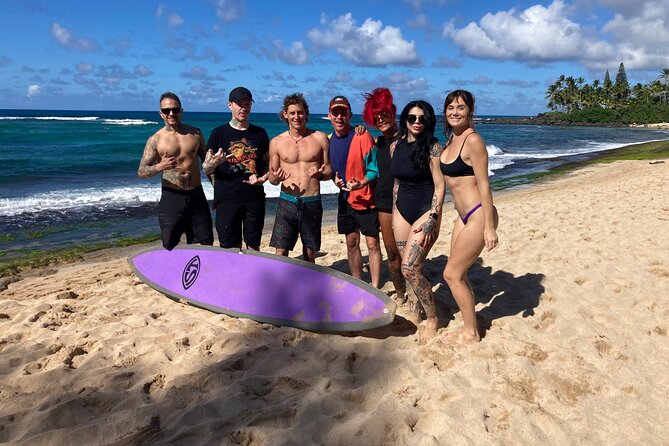
Wear a swimsuit that stays secure. A one-piece is useful, and covering your thighs can help prevent board burn. That advice is worth taking seriously. Repeated contact with a surfboard can rub your skin, especially when you are learning to move into position.
You should also expect to get fully wet. The provided details do not list a gear checklist, changing facilities, shower access, or a towel service, so bring what you need for the beach and do not assume those extras are available.
Mobile tickets are accepted, and confirmation is provided when you book. Service animals are allowed. The activity is offered in English, so you should be comfortable following English instructions during the safety talk and in the water.
The lesson lasts about one hour and 30 minutes. That is long enough to include instruction, practice, rest, and several attempts without taking over your entire day. Still, I would avoid scheduling a strict appointment right afterward. Ocean activities rarely end with the same precision as a museum visit.
How much value do you get?
No price is provided here, so I cannot judge the exact cost against other surf schools. I can judge what you receive for the time: a local big-wave rider’s school, beach safety instruction, a private group, in-water coaching, and a clear promise that you will get up and ride.
The biggest value comes from attention. A cheaper group lesson may be perfectly fine if you only want to try surfing once. This experience makes more sense if you care about getting several attempts, receiving direct corrections, or keeping nervous children close to an instructor.
A private session can also help a mixed-ability group. A confident adult may be ready for more challenging waves while a child or first-timer needs slow practice. The instructor can adjust the lesson rather than forcing everyone through the same routine.
The public score is 4.6 out of 5 from 10 ratings, and 90 percent of participants recommend it. That is encouraging, but the sample is small. I would place more weight on the specific strengths: patient coaching, beginner-friendly breaks, personal attention, and instructors who respond calmly when someone needs help.
Who should book this North Shore lesson?
I would recommend it to first-time surfers, families with children, couples, and small groups of friends. It is especially suitable if you want to learn in English from a local instructor rather than take a large, impersonal class.
It also works for someone who has tried surfing once and wants better advice on standing, timing, or reading a break. The one-on-one format can give you more useful practice than a crowded lesson.
You may want to choose another activity if you dislike open-water conditions, need a completely predictable schedule, or are looking for advanced big-wave training. Chance is a big-wave rider, but the session described here is built for beginners. The North Shore setting is exciting, yet the lesson begins with basic skills and safety.
Should you book it?
Book this lesson if your priority is personal coaching, beginner-friendly waves, and a real connection to Haleiwa’s surf culture. Chance King, Caleb, and Charlotte bring the patient, hands-on instruction a first session needs, and the private format can give you more chances to ride.
I would book an earlier time if possible, then leave room in your day. You may want to surf again, rest after the lesson, or simply enjoy the North Shore without rushing to your next appointment.
Skip it if you want a guaranteed calm-water setting or the absolute cheapest introduction. For everyone else, this is a well-focused way to get on a board, learn the basics, and find out why surfing takes more than one good wave.
FAQ
Where does the surf lesson meet?
The meeting point is Kahalewai Place, Kahalewai Place, Haleiwa, Hawaii 96712. The activity ends back at the same meeting point.
How long does the experience last?
The session lasts approximately one hour and 30 minutes. The first 15 to 20 minutes are spent on beach instruction and safety.
Who teaches the lesson?
Chance King owns Haleiwa Surf Surf School and is a North Shore local, big-wave surfer, and tube rider. Caleb and Charlotte may also teach sessions.
Is this a private activity?
Yes. Only your group participates in the activity.
Is the lesson suitable for first-time surfers?
Yes. The instruction covers how to stand on the board and navigate the surf break. Most people can participate, and the school promises that you will get up and ride during the session.
Is the activity offered in English?
Yes. The experience is offered in English.
Are service animals allowed?
Yes. Service animals are allowed.
What happens if the weather is poor?
The activity requires good weather. If it is canceled because of poor weather, you are offered a different date or a full refund.
Can I cancel for a full refund?
Yes. You must cancel at least 24 hours before the experience starts to receive a full refund. Cancellations or changes made less than 24 hours before the start time are not refunded or accepted.
Latest surf sessions around Oahu
- Waikiki 2 Hours Private Guided Surf Lesson★ 3.5 · 8 reviews
- Surf Honolulu: Ala Moana Stand-up Paddleboard Lesson★ 5.0 · 3 reviews
- Surf Activity on the Wai Kai Wave in Ewa Beach★ 5.0 · 8 reviews
- Semi-Private Surfing Lesson in Waikiki, Oahu★ 5.0 · 26 reviews
- Surf Lessons on the North Shore Great for Families and all Ages★ 5.0 · 27 reviews
- Private Group Surf Lesson★ 5.0 · 47 reviews
- Group Surf Lesson: Two Hours Of Beginners Instruction★ 5.0 · 32 reviews
- Waikiki Surf Lesson (Hawaiian Boy Surf School)★ 4.0 · 8 reviews
Oahu Surf Lessons, compared.
Oahu: Beginner-Friendly Waikiki Beach Surfing Lesson
Read our review →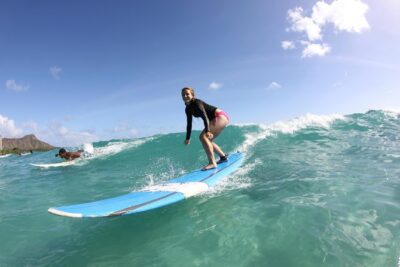

Family, Private & Group Surfing Lessons, Waikiki Courtesy Shuttle
Read our review →
Oahu: Waikiki 2-Hour Beginner Group Surf Lesson
Read our review →
Browse the lists this tour appears in