
Review · OAHU
Oahu: Kids Surfing Lesson in Waikiki Beach (up to 12)
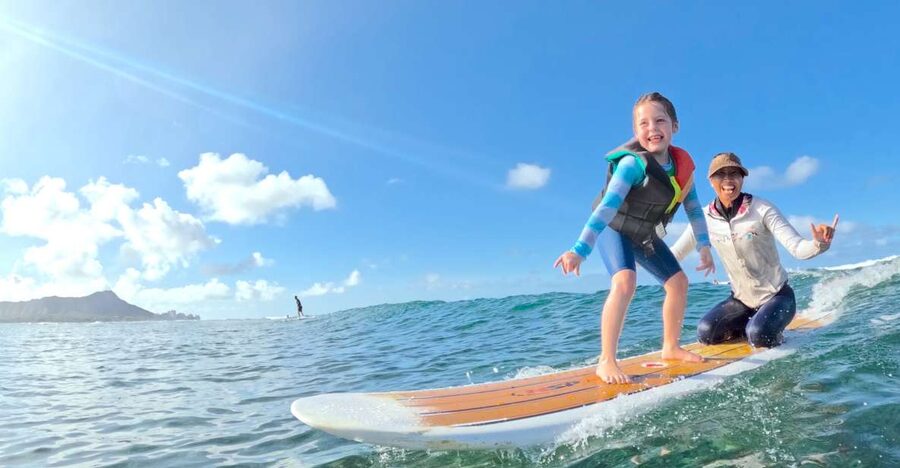
The best part of this Waikiki lesson is the one-to-one coaching. Your child is not lost in a large class. An instructor stays close, adjusts the lesson to the child’s confidence, and can hold hands for a tandem ride when standing alone feels like too much. That personal attention helped one hesitant 8-year-old stand four times, while another child simply kept paddling and did not want the lesson to end.
I like the thoughtful balance of beach instruction and open-ocean time. I also like that the staff can change tactics without making a nervous child feel pushed. The main consideration is the price: at $204 per person, this is a serious family splurge, and a few children may finish before the full two hours, especially if seasickness or fatigue gets in the way.
Key points for parents planning the lesson
- Designed for children ages 4 to 12: The teaching is built around young surfers, not adults scaled down to child size.
- One instructor per child: Your child receives close coaching rather than general tips from the edge of a group.
- Tandem surfing is part of the plan: If independent surfing feels too hard, the instructor can ride with your child while holding hands.
- More than an hour in the ocean: At least 20 minutes is spent on beach technique, safety, etiquette, and standing on the board.
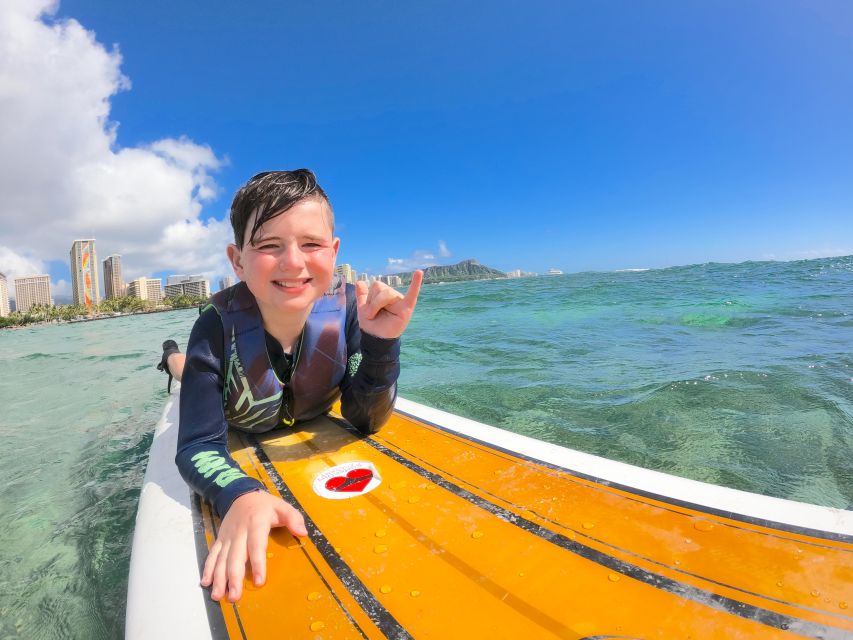
- Useful equipment is included: Your child gets a surfboard, leash, HURLEY rash guard, reef shoes, and an optional wetsuit.
- A small keepsake comes with the lesson: Each child receives a Surfer Girl Academy sticker, while photos and video are optional extras.
Why this Waikiki lesson works for young children
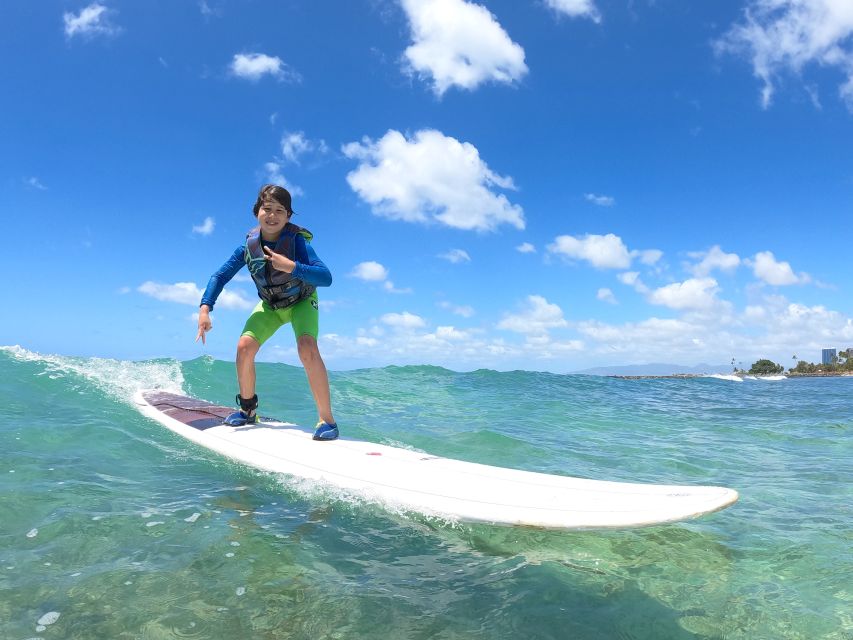
Many first surf lessons are really adult lessons with smaller boards. This one is aimed at keiki, the Hawaiian word for child or little one, from ages 4 through 12. That age range matters. A four-year-old who needs physical help and an 11-year-old eager to surf alone should not receive the same lesson.
The instructors use one-to-one teaching, so your child has someone focused on balance, paddling, timing, and safety. The close supervision also gives you peace of mind while watching from shore. One parent described an instructor moving quickly to a child after each fall, which is exactly the kind of attention I want in an introductory ocean lesson.
I especially appreciate the flexible approach for shy children. An 8-year-old arrived hesitant and was not ready to ride independently. Rather than treating that as a problem, the instructor changed to a tandem lesson. The child could still feel the board move and experience the thrill of standing, without being asked to manage every part of the ride alone.
That is a useful distinction. The goal is not to force a child to perform. The goal is to help your child feel safe enough to try.
More Family and Kids Surf Lessons in the USA
- Family, Private & Group Surfing Lessons, Waikiki Courtesy Shuttle
★ 5.0 · 216 reviews - Family, Private & Group Standup Paddle Lessons in Waikiki
★ 5.0 · 143 reviews - Family, Private & Group Bodyboard Lessons in Waikiki
★ 5.0 · 106 reviews
The first 20 minutes on the beach
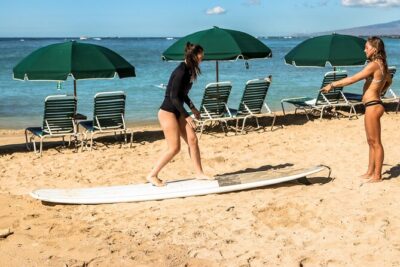
Plan on beginning with land-based instruction. The lesson includes at least 20 minutes of beach technique, covering how to stand on the board properly, along with safety and surfing etiquette.
This first section may look less exciting than the ocean portion, but it does real work. Your child learns the basic body position and the sequence for getting upright before waves and water add pressure. It also gives the instructor time to see how your child listens, balances, and responds to directions.
You should use this time to ask practical questions. Make sure your child understands how to handle the board, where to place feet, and what to do if a ride ends. Children often want to rush straight into the water, but those first instructions help the ocean portion feel less confusing.
The beach briefing also sets expectations. Your child may stand several times, may fall often, or may need a tandem ride. All three outcomes fit a first lesson.
More than an hour in the open ocean
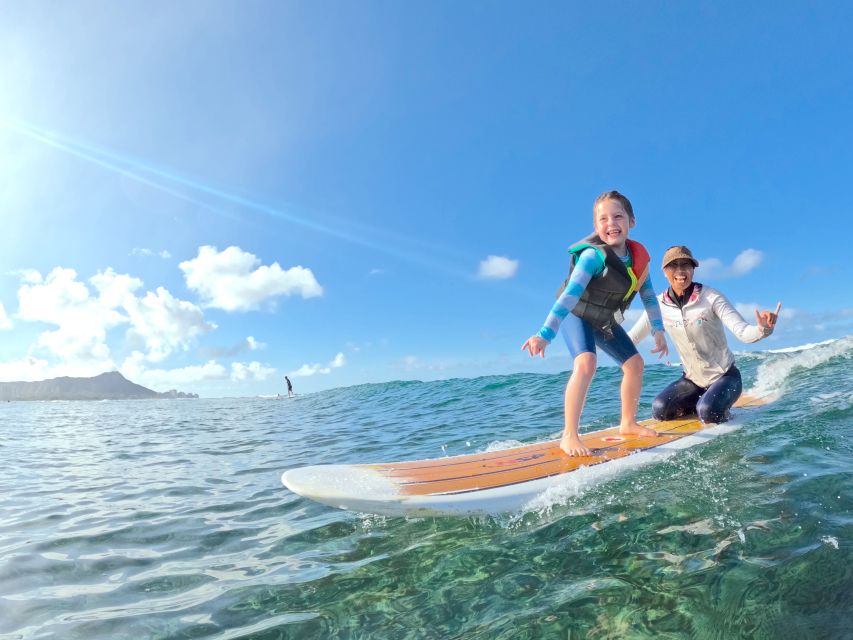
After the beach work, the lesson moves into more than an hour of ocean instruction. This is where the short land practice becomes a real test of balance and timing.
The instructor works directly with your child rather than leaving the child to copy a demonstration from far away. That means the lesson can move faster for a confident beginner or slow down when a child needs a reset. A parent reported that a child with little athletic confidence stood up almost right away, while another child needed more support. Both situations are handled within the same basic format.
The ocean time is also where the tandem option becomes useful. Your child can ride with the instructor, holding hands to stand together. This gives a nervous beginner a taste of surfing without requiring complete independence on the first attempt.
Do not measure success only by the number of rides. A child who paddles, follows safety directions, or agrees to try again after falling has made real progress. One child who became seasick had to stop early, but still enjoyed the time because the instructor stayed patient and kind. That is an important reminder: ocean activities can be tiring and unpredictable, even when the teaching is excellent.
What the private format really means
The activity is listed as a private group, with lessons available for up to 12 people, but the strongest feature is the one-to-one instruction for the child. You are not booking a generic large-group class where one teacher has to divide attention among many beginners.
For families with more than one child, confirm how the private arrangement will be handled when booking. The supplied details promise one-to-one instruction, but they do not spell out how multiple children rotate through the lesson. That is worth clarifying if siblings are joining together.
For a single child, the value is clear. The instructor can concentrate on one set of needs, whether that means building courage, helping with balance, or moving toward independent rides. This format also lets a child progress without feeling compared with stronger surfers.
The language options are English and Japanese. That may help families who want instructions delivered in Japanese, while English-speaking parents can follow the lesson in the same language they use at home.
More Family and Kids Surf Lessons in Oahu:
- Family, Private & Group Bodyboard Lessons in Waikiki
★ 5.0 · 104 reviews - Surf Lessons on the North Shore Great for Families and all Ages
★ 5.0 · 27 reviews - Private Kids Surfing Lessons
★ 5.0 · 8 reviews - Private Family Surf Lesson
★ 5.0 · 41 reviews
Equipment included, and what you still need
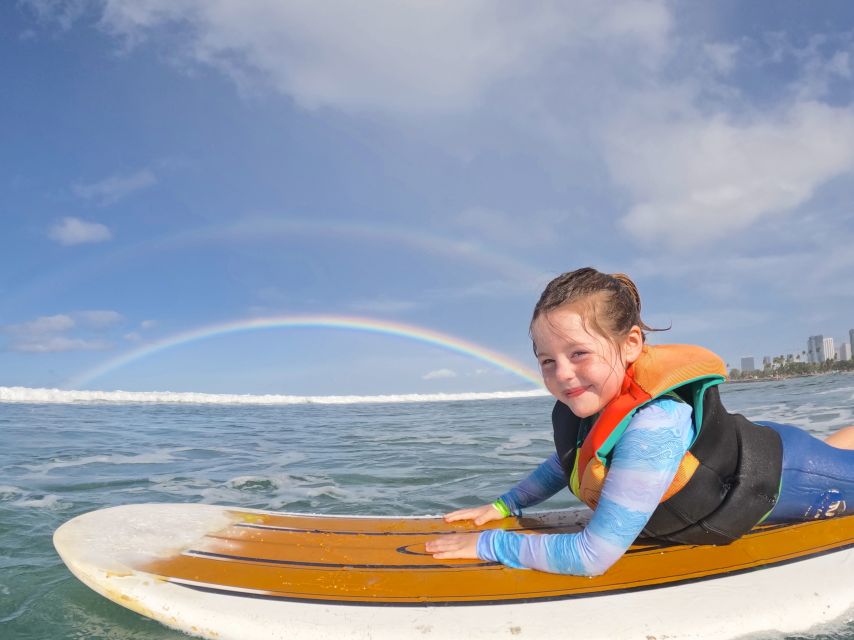
The academy supplies the main surfing equipment:
- Surfboard
- Leash
- HURLEY rash guard
- Reef shoes
- Wetsuit, if needed
- Surfer Girl Academy original sticker
That saves you from buying or packing specialist gear for a single lesson. Reef shoes are especially useful for young children who feel unsure around the ocean floor, though the supplied details do not specify conditions on the day.
Wetsuits are optional, so your child can use one if needed. You should arrive in a swimsuit and bring a towel, sunscreen, water, cash, and something easy to change into afterward. Water and sunscreen are not supplied, so do not assume the academy will cover those basics.
A simple change of clothes is more useful than a complicated outfit. Your child will likely be wet and tired after the lesson, and a quick change helps you move on with the rest of your Waikiki day.
Photos and video downloads are optional and cost extra. A photographer may be in the water, and one family found the resulting pictures especially meaningful. I would treat this as an add-on, not a required part of the experience. If the price already stretches your budget, you can keep the memory through the included sticker and your own observations from shore.
The instructors are the heart of the experience
The equipment gets your child into the water, but the instructor determines how the lesson feels. The strongest pattern here is patience with small children.
Yuko received particular praise for working with a 9-year-old, and other parents described instructors as friendly, attentive, and quick to help. The staff also handled a child who became seasick with care instead of treating the early finish as a failure.
That matters because children often remember the emotional part of an activity more than the technical lesson. A child who feels rushed may decide that surfing is not for them. A child who feels supported may ask to return, even after falling or getting tired.
You should still prepare your child for a little discomfort. Surfing means getting wet, falling, paddling, and trying again. The instructors can provide support, but they cannot guarantee that every child will stand independently or enjoy every minute in the water.
Is $204 per person a fair price?
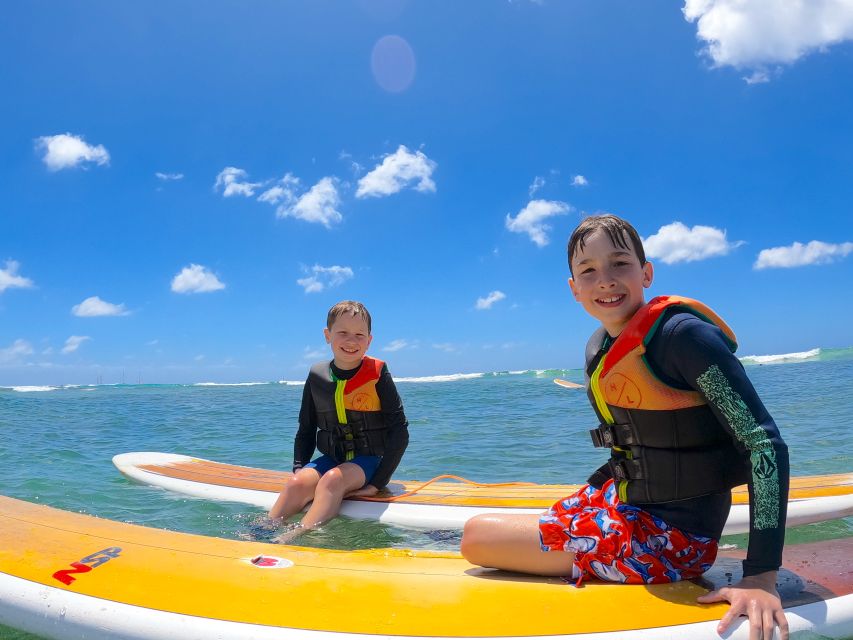
At $204 per person, this is not a casual beach activity. For a family of four, the cost adds up quickly, especially if you also buy optional photos and video.
The price makes more sense if you value private attention and a carefully supervised first attempt. You are paying for a two-hour session, specialized equipment, an instructor assigned closely to your child, and a format that can shift from solo practice to tandem surfing. For a child who has dreamed of surfing, that focused coaching can be worth more than a cheaper group class.
It is a weaker value if your child is unsure about ocean activities, tires quickly, or is likely to lose interest after a few attempts. One lesson ended at about one hour and 45 minutes for a child who still had fun, so you should not assume every child will spend a full two hours actively riding.
I would book it for a milestone day, a birthday treat, or a child who has repeatedly asked to surf. I would think twice if the child has never shown interest in the ocean and the cost would create pressure for a perfect result.
Timing, parking, and the practical details
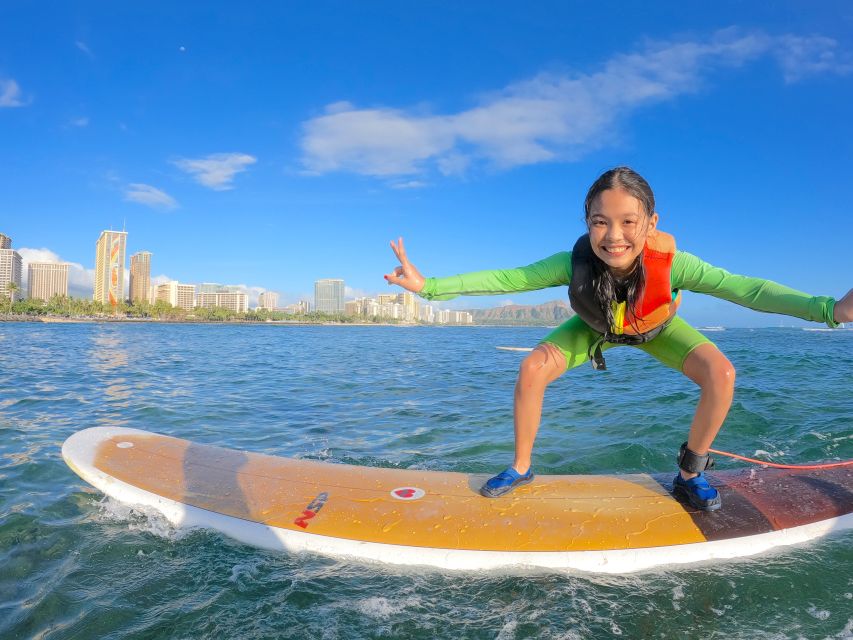
The activity lasts two hours, and starting times depend on availability. The meeting point is shown on Google Maps, with free parking by the ocean.
You will want to arrive ready rather than relying on a long preparation period at the beach. Have swimwear on, keep the towel and change of clothes close, and apply sunscreen before the lesson. Bring water for afterward since it is not included.
The free ocean-side parking is a useful help, but you should still check the exact map location before leaving. The meeting instructions provided are brief, so knowing where you are going will make the start less stressful, particularly when you are managing children and beach gear.
Cancellation is flexible: you can cancel up to 24 hours ahead for a full refund. You can also reserve now and pay later, which helps if your Oahu schedule is still shifting.
The activity is not suitable for pregnant women or wheelchair users. No other medical restrictions are provided, so if your child has a specific health concern, ask the provider before booking.
How to prepare a hesitant child
Do not promise your child that they will definitely surf alone. Say that the instructor will teach them how to try, and that tandem surfing is available if they need help.
A child can feel proud after standing once, even if the ride lasts only a few seconds. One 9-year-old stood quickly and talked about returning, while another nervous child stood four times with a mix of solo and tandem support. Those are good examples of how different successful lessons can look.
Pack water and a snack for afterward, though the activity details only specifically require water. Keep the mood light. If your child falls, treat it as part of learning rather than a setback.
You should also be ready for seasickness. It happened to one child, who had to stop early. The lesson may still be positive, but a child who feels unwell should not be pushed to continue.
Who should book this Waikiki surf lesson?
I would choose this for a child between 4 and 12 who is curious about surfing and benefits from close adult support. It is particularly well suited to a first-timer, a child who lacks confidence, or a young surfer who wants more individual help than a standard group class provides.
It also fits families who want to watch from shore while the child receives direct instruction. The English and Japanese options are helpful for families who prefer Japanese coaching.
I would be more cautious if your child strongly dislikes water, has a known tendency toward seasickness, or is uncomfortable with physical guidance. The instructors can adjust the lesson, but the activity still requires time in the ocean.
Should you book it?
Book this lesson if your child wants a real first taste of surfing and you value patient, close supervision over the lowest possible price. The tandem option is a major advantage for nervous beginners, and the combination of beach training with more than an hour in the ocean gives the lesson enough time to feel substantial.
Skip it if your child is unlikely to enter the water or if $204 feels too high for an activity that may end early. For the right child, though, standing on a board in Waikiki can become one of those small vacation moments that gets retold for years. The sticker is a nice extra, but the real souvenir is the confidence your child carries out of the water.
FAQ
What age range is this surf lesson for?
The lesson is for children ages 4 to 12.
How long does the activity last?
The scheduled duration is two hours. One child’s lesson lasted about one hour and 45 minutes, so the exact time in the water can vary.
Is the instruction one-to-one?
Yes. Professional instructors provide one-to-one instruction for the young surfer.
Can a child surf with the instructor?
Yes. If a child is not ready to ride alone, the instructor can provide a tandem surf and hold hands with the child while standing together.
How much beach instruction is included?
The lesson includes at least 20 minutes of beach technique, including how to stand on the board, safety, and surfing etiquette.
What equipment is provided?
The academy provides a surfboard, leash, HURLEY rash guard, reef shoes, and optional wetsuits.
What should I bring?
Bring swimwear, a beach towel, sunscreen, water, cash, and something easy to change into after the lesson.
Are photos and videos included?
No. Photos and video downloads are optional and are not included in the listed price.
Where is the meeting point?
You should meet at the location shown on Google Maps. Parking by the ocean is free.
Can I cancel the booking?
Yes. You can cancel up to 24 hours in advance for a full refund. You can also reserve now and pay later.
Latest surf sessions around Oahu
- Waikiki 2 Hours Private Guided Surf Lesson★ 3.5 · 8 reviews
- Surf Honolulu: Ala Moana Stand-up Paddleboard Lesson★ 5.0 · 3 reviews
- Surf Activity on the Wai Kai Wave in Ewa Beach★ 5.0 · 8 reviews
- Semi-Private Surfing Lesson in Waikiki, Oahu★ 5.0 · 26 reviews
- Private Group Surf Lesson★ 5.0 · 47 reviews
- Surf Lessons on the North Shore Great for Families and all Ages★ 5.0 · 27 reviews
- Learn to surf with a local big wave rider on the North Shore of Oahu★ 4.5 · 10 reviews
- Group Surf Lesson: Two Hours Of Beginners Instruction★ 5.0 · 32 reviews
Oahu Surf Lessons, compared.
Oahu: Beginner-Friendly Waikiki Beach Surfing Lesson
Read our review →

Family, Private & Group Surfing Lessons, Waikiki Courtesy Shuttle
Read our review →
Oahu: Waikiki 2-Hour Beginner Group Surf Lesson
Read our review →
Browse the lists this tour appears in