
Review · NEW ZEALAND
Greymouth: 2-Hour Beginner Surf Lesson
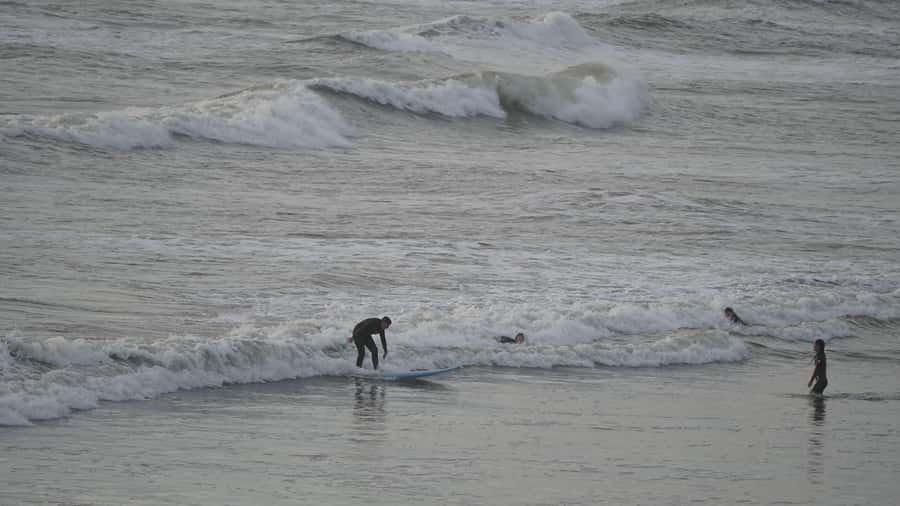
Greymouth’s beginner surf lesson gets you from beach briefing to your first attempt at standing on a wave in two focused hours. I like the practical split between ocean safety and board basics on the sand, followed by real practice in the water. The supplied equipment also keeps the $71 price simple.
I especially like the small-group setup, with no more than six students per instructor, and the instructor’s calm, useful approach to correcting technique. The main catch is timing: the lesson is planned around the tide, so you won’t know the exact start time until Out The Back contacts you after booking.
Key points to know before booking
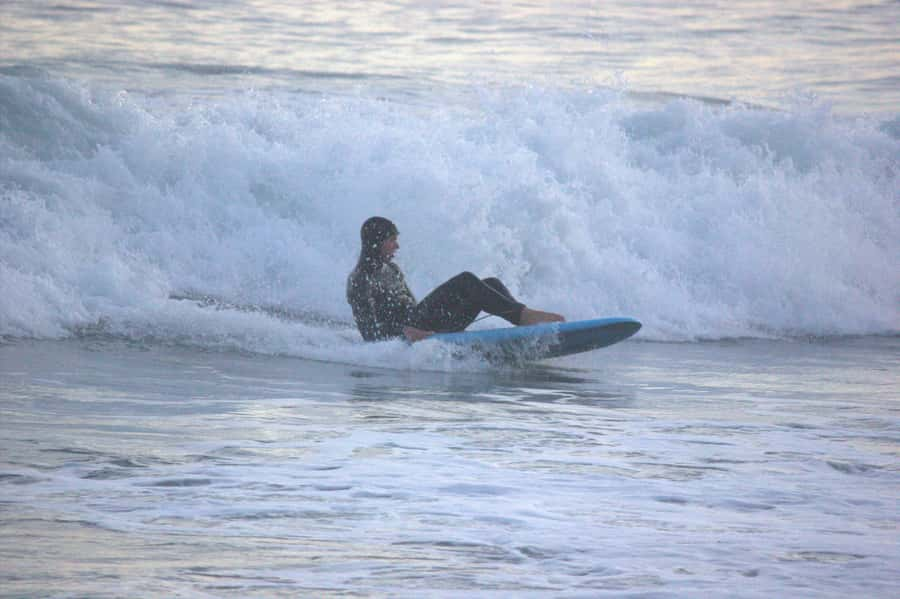
- Two-stage lesson: Learn safety and surfing basics on the beach, then return to the water to work on standing up.
- Small group: The student-to-instructor ratio is capped at 6:1, with the full group limited to eight people.
- Tide-based timing: Lesson times vary, with the operator aiming for lower tide conditions.
- Everything needed for surfing: Boards and other necessary equipment are included.
- Bring your own comfort items: Pack swimwear, a towel, sunscreen, water, and warm clothes for afterward.
- Not for every beginner: You must be at least eight, able to swim, and free from back problems.
Why this Greymouth lesson works for first-timers
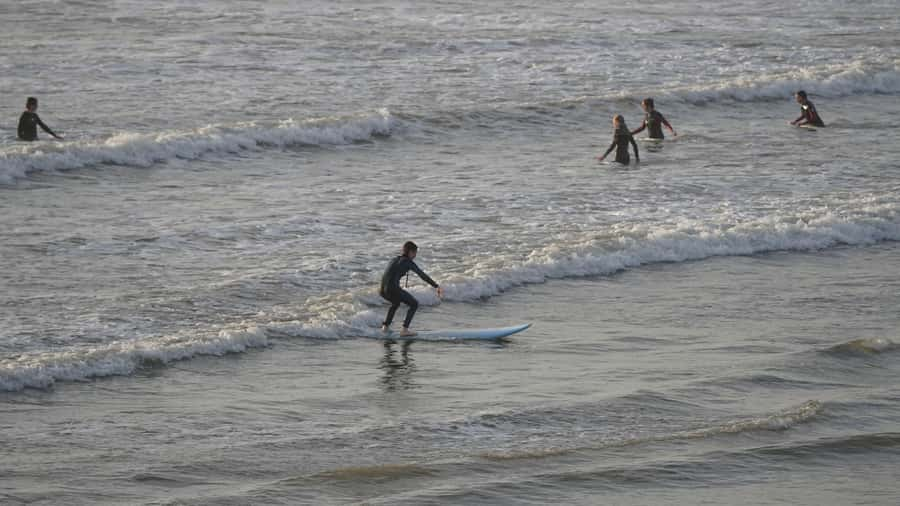
A first surf lesson can feel like a lot at once. You need to understand the board, read the moving water, remember safety rules, and try to stand before your arms tire. This Greymouth session handles those jobs in a sensible order.
You start on land, where the instructor explains the basic ideas without asking you to learn them while being pushed around by waves. You then take that knowledge into the water, first getting used to the board and white water, and later working on the pop-up and standing position.
I like that the lesson is not presented as a quick photo opportunity. You work on several small skills: moving around on the board, turning, catching white-water waves, and getting your feet under you. That gives you a better chance of understanding why an attempt works or fails.
The tone also appears well suited to people who need direct help without a hard-sell attitude. The instructor is described as kind, clear about what needs improving, and enthusiastic about the teaching. That matters when you are trying to stand for the first time and your legs have other plans.
More Beginner Surf Lessons in New Zealand:
- Mount Maunganui: Group Beginner Surf Lesson
★ 5.0 · 16 reviews - Beginner Surf Lesson at Te Arai Beach
★ 5.0 · 6 reviews - Group Beginner Surf Lesson in Mount Maunganui
★ 5.0 · 2 reviews
Meeting the instructor beside the surf trailer
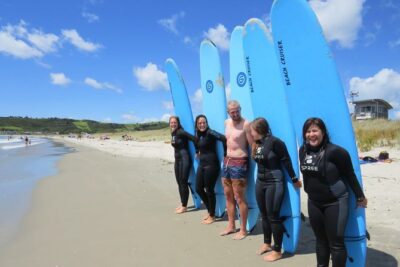
You meet in the car park near the public toilets. Look for the trailer with the surfboards. Transportation is not included, so you need to make your own way to this meeting point.
This arrangement is simple, but do not treat the original booking time as final. Out The Back contacts you directly with the correct lesson time on the day you have booked. The schedule changes with the tide, and the lesson aims for lower tide conditions.
That tide-based system is useful for the quality of the lesson, even if it makes your day harder to plan. If you have a train departure, another tour, or a tight driving schedule, leave plenty of room around the surf session. You should also keep your phone available for the operator’s message.
The car-park meeting point is easy to understand from the directions, but you still need to allow time to find the trailer and get ready. Since food, drinks, and transport are not supplied, plan those separately.
The beach briefing: safety before surfing
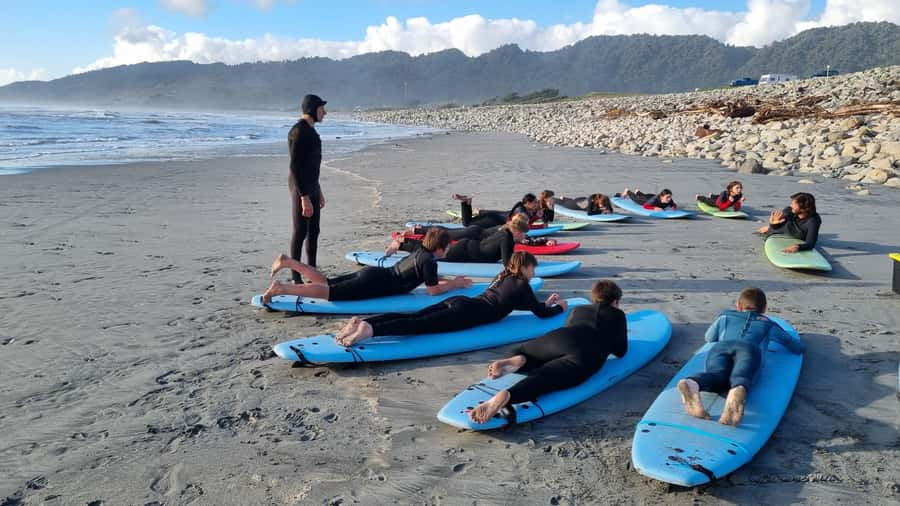
The first part takes place on the beach. You receive a safety briefing and a short introduction to surfing and ocean safety before going into the water.
This is an important part of the lesson, not wasted time. The sea is not a swimming pool, and a beginner needs to know how to behave around the board, how to move safely, and what to do when the water feels more powerful than expected.
The briefing also gives you a chance to see the basic movements before you are wearing a wetsuit and managing a board. You learn the ideas behind positioning and control, then try to repeat them later in the water.
I appreciate this order because it gives you a mental checklist. You are not simply told to paddle and hope. You are prepared to notice where you are on the board, how the board responds, and when a small change in body position can help.
You will still need to listen closely. A two-hour session cannot cover every part of surfing, so the lesson focuses on the skills that help you make an early attempt safely.
First water session: moving, turning, and catching white water
After the beach briefing, you head into the water with your board. The first aim is to get comfortable moving around on it.
That may sound basic, but it is one of the key hurdles for a new surfer. A board feels different once it is floating under you, and you need to learn how your weight affects its movement. You practice finding a useful position and handling the board as the water moves beneath you.
The lesson then introduces turning techniques and catching waves of white water. White water is the broken part of a wave, and it gives beginners a more manageable place to start. You are working on timing and direction without being expected to handle a clean, unbroken wave right away.
This section is where the small group becomes valuable. With a maximum ratio of six students for one instructor, there is a reasonable chance to receive corrections while you are working. That does not mean constant one-to-one coaching, but it is more personal than a large class where you may spend much of the time waiting.
You may also make new friends during this stage. The activity is designed as a beginner group lesson, so everyone is learning the same basic movements. That can make an awkward first attempt feel less serious.
More Two-Hour Experiences in New Zealand:
- 2 Hour Surf Lesson – Te Arai Beach
★ 5.0 · 119 reviews - Private 2 Hour Surf Lesson
★ 5.0 · 5 reviews - Canggu: 2-Hour Surf Course
★ 4.8 · 1,053 reviews - Maui: Two Hour Beginner Group Surf Lesson in Kihei
★ 5.0 · 950 reviews
The land break and pop-up practice
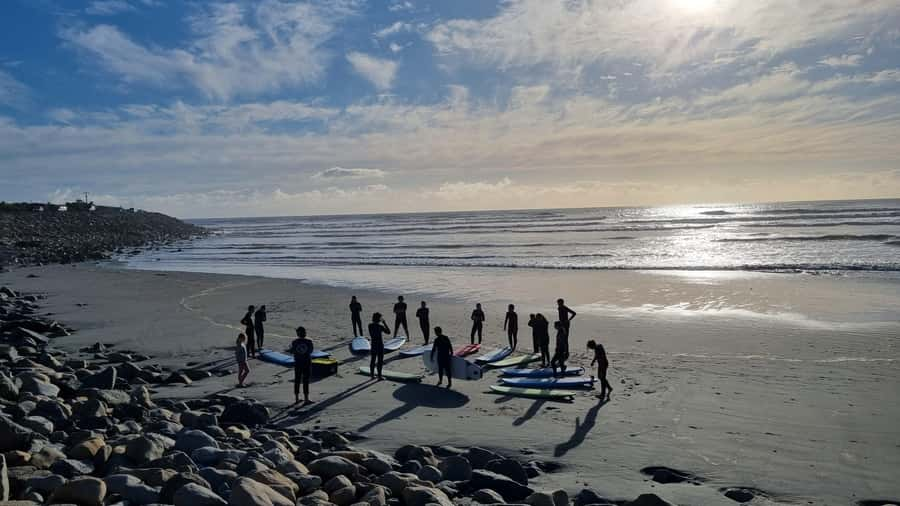
The group returns to land for hydration and a demonstration of pop-ups. The pop-up is the movement that takes you from lying on the board to standing on it.
This short land session is one of the most useful parts of the plan. You can focus on hand placement, foot position, and the general sequence without wave pressure. Repeating the movement on the beach gives you a clearer physical reference for the next water session.
Bring your own water because drinks are not included. It is also wise to have your towel and warm clothing close by. Even if the lesson itself is active, getting out of the water can feel chilly, especially on the West Coast.
The break divides the session into two clear goals. First, you learn to move on the board and catch white water. Then you return with a better idea of how to get your feet underneath you.
Second water session: working toward your first stand
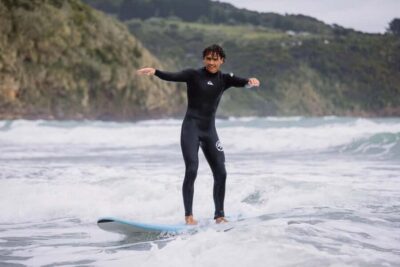
The final water session focuses on standing on a wave. You take the pop-up practice from the beach and try to apply it while the board is moving.
This is likely to be the most exciting part of the lesson, but it is also the section where patience helps. You may catch a wave but lose balance. You may get your feet into position but stand too late. Those attempts are still useful because the instructor can point out what to change.
The teaching is not just about standing for a second. You also need to understand how the board reacts, how to keep your body balanced, and how to stay in control as the wave carries you. The earlier work on board movement and turning supports this final goal.
I like that the lesson aims for a first wave rather than promising an advanced result. You are given a clear target, but the experience remains suitable for a true beginner. If you stand successfully, you have a memorable first step. If you do not, you still leave with a basic understanding of the process.
How the $71 price compares with what you receive
At $71 per person, the price covers a two-hour lesson, the safety briefing, instruction, and all necessary equipment. For someone without a board or other surf gear, that is a useful package because you do not need to arrange separate rentals.
The value is strongest if you want a proper introduction rather than simply borrowing a board. The beach instruction, water practice, pop-up demonstration, and second water session create a full learning sequence.
The class size also helps justify the cost. A maximum 6:1 instructor-to-student ratio gives the lesson a more personal feel than a large introductory group. The total group is limited to eight participants, although the stated instructor ratio is the more important detail to check when you book.
The price does not include transport, food, drinks, a towel, or warm clothing. Those costs are easy to manage, but you need to bring the basics yourself. If you are already carrying beach gear and have your own way to the meeting point, the price is straightforward.
What to bring for a comfortable session
Pack more than just swimwear. You need:
- Swimwear to wear under the wetsuit if you wish
- A towel
- Warm clothing for after the lesson
- Sunscreen
- Water
The supplied equipment covers what you need for the surf lesson, but your personal comfort items remain your responsibility. Warm clothes are particularly important because being wet and exposed to coastal weather can make the time after the lesson less pleasant.
Sunscreen is still needed on a cloudy day. Water is also worth carrying since the activity includes active time in the sea and does not provide drinks.
Alcohol and drugs are not allowed, and littering is prohibited. These rules are basic, but they matter around a coastal activity where safety and clean public spaces affect everyone.
Who should book, and who should skip it
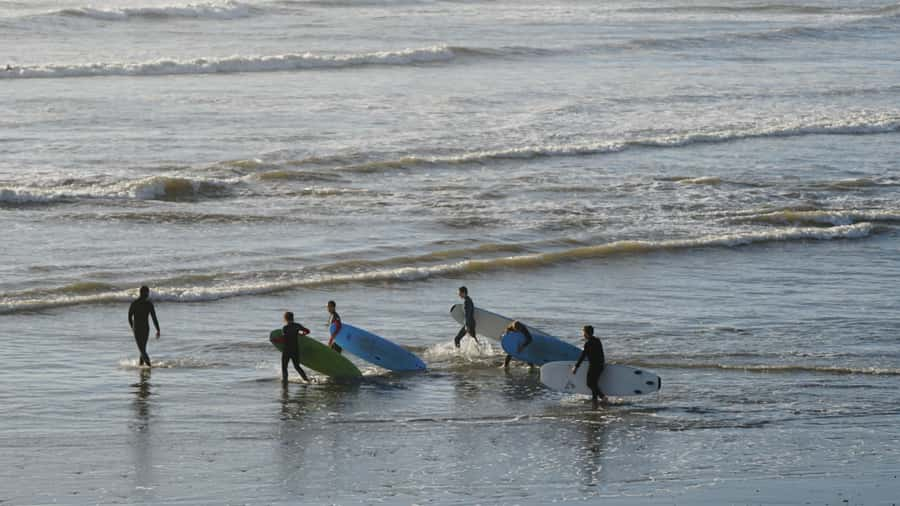
This lesson suits adults and children aged eight or older who want a first introduction to surfing and can swim. It is a good choice if you like learning by doing and do not mind a few failed attempts before something clicks.
It also works well for people who prefer a small group instead of a private lesson. You get instruction and shared energy without joining a large class.
You should skip it if you are a non-swimmer or have back problems. The activity involves getting into the water, handling a board, and repeatedly moving from a lying position to standing. It is not a passive beach experience.
The tide-based schedule may also be a poor match for a tightly planned day. You need to accept that the final lesson time can change and that Out The Back will contact you with the correct time on the date you booked.
The lesson is conducted in English. If you need instruction in another language, this may not be the right fit.
Cancellation and booking flexibility
You can cancel up to 24 hours in advance for a full refund. The reserve-now-and-pay-later option also lets you hold a place without paying at the time of booking.
That flexibility is useful for a West Coast plan, where weather and road schedules can affect your day. Still, you should pay attention to the 24-hour deadline and keep your contact details current so the operator can send the tide-based lesson time.
Should you book the Greymouth beginner surf lesson?
I would book this if you want a structured first surf lesson with equipment included and a small group. The strongest reasons are the sensible two-part teaching plan, the focus on ocean safety, and the chance to work toward standing on a wave rather than simply paddling around.
The $71 price is fair for two hours of instruction and gear, as long as you remember to arrange your own transport and bring water, a towel, sunscreen, and warm clothes. The main compromise is the variable start time, which is set around the tide.
Book it if you can keep your schedule flexible, swim, and meet the age and health requirements. Skip it if you need a fixed timetable, are not comfortable in the water, or want a private instructor. For a first taste of surfing in Greymouth, this is a practical, well-paced choice.
FAQ
How long is the Greymouth surf lesson?
The lesson lasts two hours.
How much does the beginner surf lesson cost?
The price is $71 per person.
What does the lesson include?
It includes a two-hour beginner surf lesson, a safety and ocean safety briefing, all necessary equipment, and instruction with a maximum 6:1 student-to-instructor ratio.
Where do I meet for the activity?
Meet in the car park near the public toilets and look for the trailer with the surfboards.
Will the lesson start at the time shown when I book?
Lesson times vary according to the tide. After booking, Out The Back contacts you directly with the correct time for your lesson on the day you booked.
What should I bring?
Bring warm clothing, swimwear, a towel, sunscreen, and water.
Do I need to bring my own surfboard?
No. All necessary surfing equipment is included.
Is the lesson suitable for children?
The lesson is not suitable for children under eight years old.
Can non-swimmers join the lesson?
No. The activity is not suitable for non-swimmers.
Can I cancel for a refund?
Yes. You can cancel up to 24 hours in advance for a full refund.
Latest surf sessions around New Zealand
- Group Beginner Surf Lesson in Mount Maunganui★ 5.0 · 2 reviews
- Beginner Surf Lesson at Te Arai Beach★ 5.0 · 6 reviews
- Private 2 Hour Surf Lesson★ 5.0 · 5 reviews
- Raglan: Private 1:1 Surf Lesson★ 5.0 · 2 reviews
- Raglan: 3 Day Surf Lesson Package★ 5.0 · 2 reviews
- Mount Maunganui: Private Surf Lesson★ 5.0 · 2 reviews
- Mount Maunganui: Group Beginner Surf Lesson★ 5.0 · 16 reviews
- Raglan: Private Surf lesson 2:1★ 5.0 · 3 reviews
New Zealand Surf Lessons, compared.


Auckland: Group Surfing Lesson with Muriwai Surf School
Read our review →
Queenstown: White Water Surfing Along the Kawarau River
Read our review →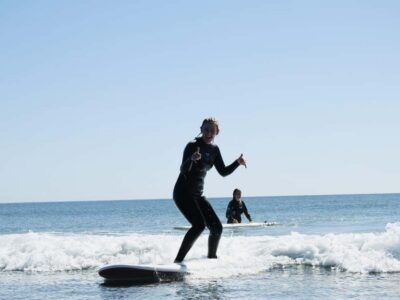

Browse the lists this tour appears in