
Review · NEW ZEALAND
Auckland: Group Surfing Lesson with Muriwai Surf School
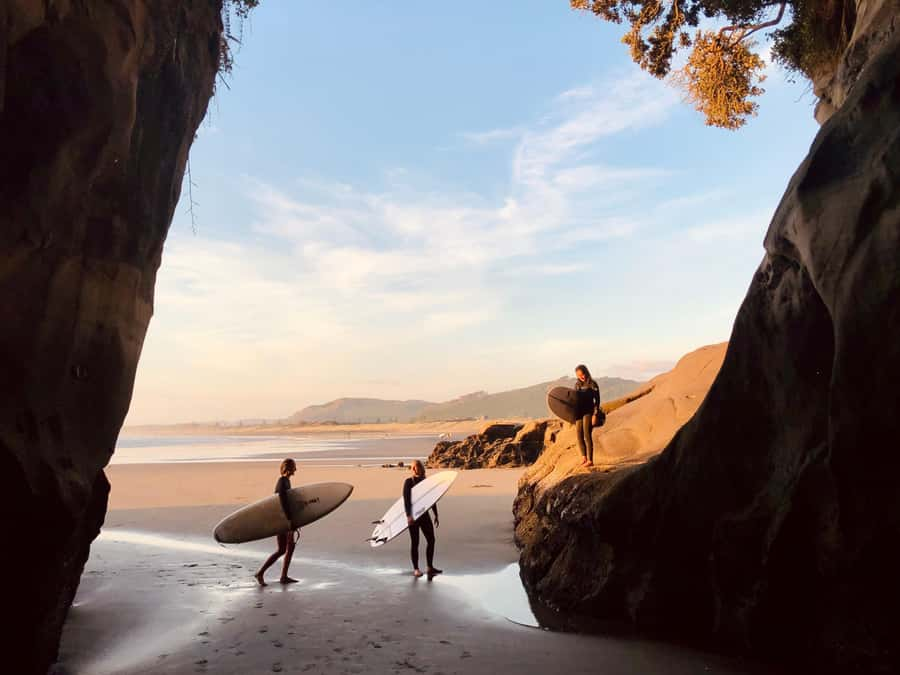
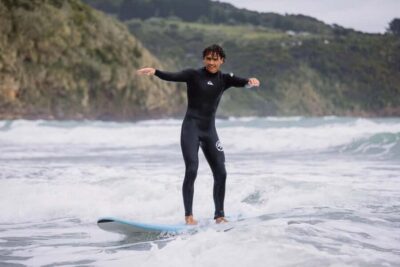
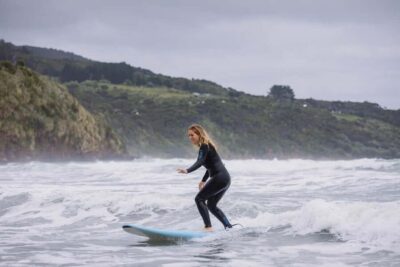
Muriwai’s black-sand west coast gives you a proper New Zealand surf setting, yet the lesson stays focused on first-timer basics. You’ll learn how to handle the board, stand up, read the waves, and stay safe in the water. I like the small groups and the fact that a wetsuit and board are included, so you do not need to build your own surf kit before breakfast.
I also like the steady encouragement in the water. Instructor Jacob has earned praise for clear explanations and patient help with complete beginners. The main consideration is simple: you must be able to swim, and you’ll need to arrange your own transport to Muriwai, about 40 minutes from Auckland City.
Key points to know before booking
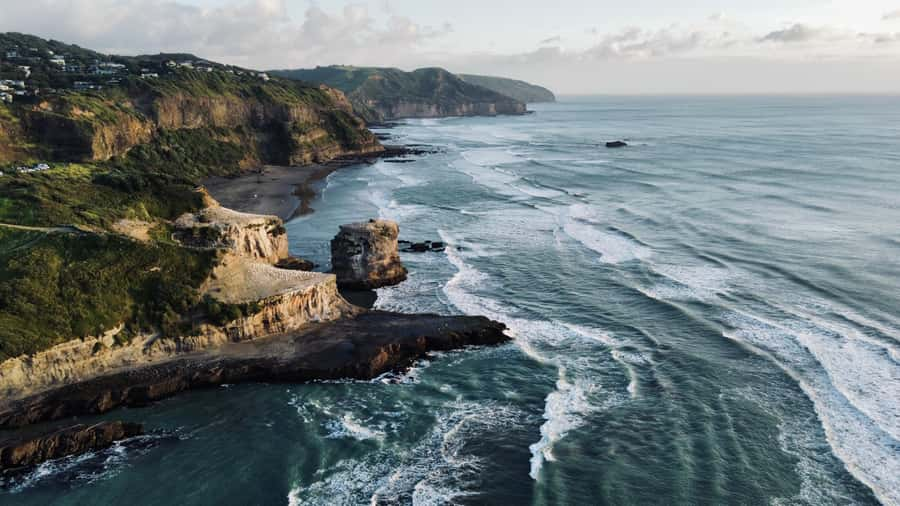
- Muriwai Beach setting: Learn on Auckland’s west coast rather than in an indoor pool or artificial surf venue.
- Two hours in the lesson: The session covers equipment, standing technique, safety, wave selection, and supported practice.
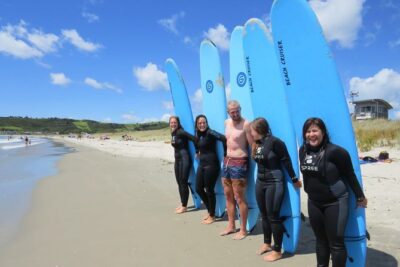
- Groups of up to 10: A small class gives you a better chance of receiving individual tips.
- Jacob and the instructor team: Expect clear guidance, practical feedback, patience, and plenty of encouragement.
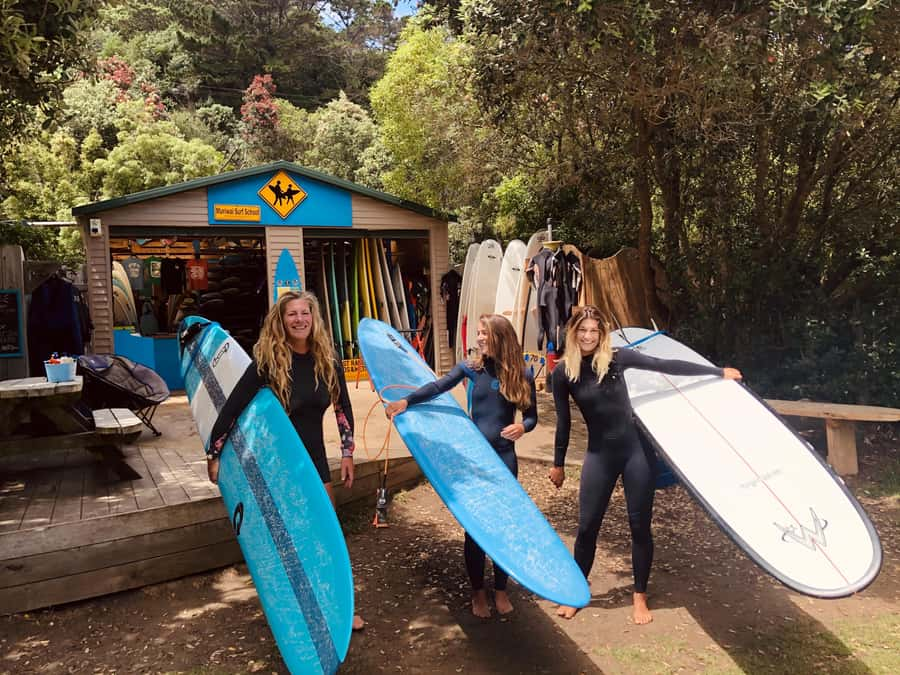
- Everything essential is supplied: Your $41 fee includes the surfboard, wetsuit, and qualified instruction.
- Best for swimmers aged 9 and older: Non-swimmers and children under 9 cannot take part.
Why Muriwai is a good place to start surfing
Muriwai Beach gives this lesson a stronger sense of place than a basic city activity. You head out to Auckland’s west coast, where the focus is the sea, the sand, and the practical work of learning to ride a board.
The beach is about 40 minutes from Auckland City, so this is not a quick walk-up activity in the central district. You’ll need to make your own way there, and transportation is not included. That extra planning is the main trade-off, but it also means the lesson takes place in a genuine coastal setting rather than somewhere built only for tourists.
For a first lesson, the setting matters. You are not simply being shown a few movements on dry land. You’ll learn the basics, check the waves, review how to enter the water safely, and then try the skills in the sea with an instructor nearby.
I like this approach because surfing has two separate challenges. First, you need to understand what your body and board should do. Second, you need to make those movements work while waves are moving beneath you. The lesson allows time for both parts.
More Group Surf Lessons in New Zealand:
- Raglan: Group Surf Lesson
★ 5.0 · 79 reviews - Group Surfing Lesson at Playa de las Américas, Tenerife
★ 5.0 · 1,072 reviews - Playa de las Américas: Private or Small-Group Surf Lesson
★ 4.8 · 980 reviews
What happens during the two-hour lesson
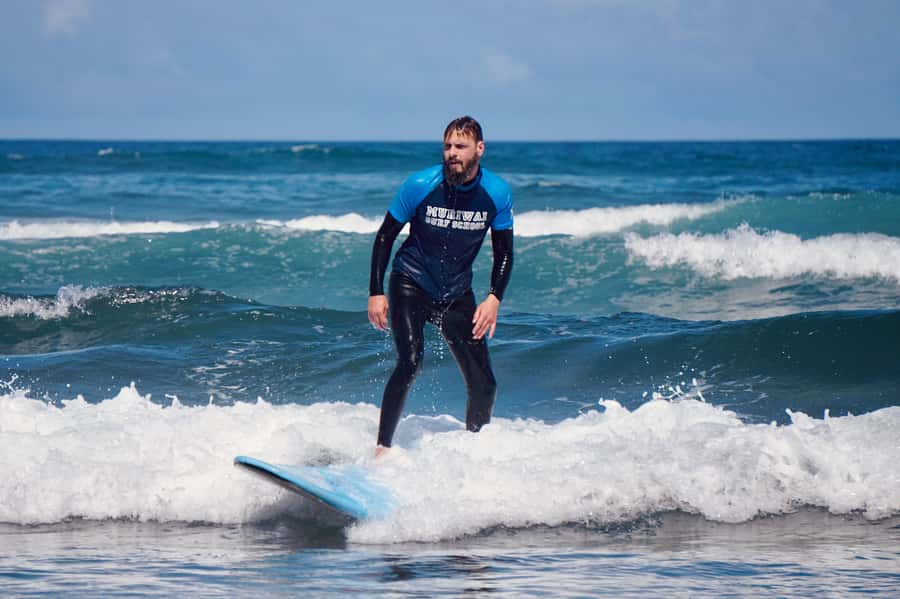
The session begins with an introduction to the equipment. Your instructor explains the surfboard and wetsuit, then takes you through the basic technique for standing up. This preparation is useful for absolute beginners, since a few minutes of clear instruction can save a lot of confusion once you reach the water.
You’ll work on the movement needed to get from lying on the board to standing. It sounds simple, but the timing and balance take practice. The instructor’s job is to break the action into manageable steps and help you understand what to do before you attempt it in the surf.
The group then heads down to inspect the waves and discuss water safety. This is one of the most important parts of the lesson. Surfing is not just about catching a wave. You need to know how to enter the water, how to manage your board, and when conditions are suitable for your level.
Once you are in the water, the instructor helps you choose and catch waves. You’ll receive tips as you go, rather than being left to repeat the same mistake on your own. The support is practical: positioning, timing, balance, and the attempt to stand up all matter.
The lesson also has a friendly, informal side. The instructor encourages you as you work, and the supplied description promises plenty of cheering when you manage a long ride toward the beach. That matters more than it may sound. Beginners can spend much of a first session falling off, so a bit of good humor helps you keep trying.
Jacob’s patient approach for first-timers
The strongest praise connected with this experience focuses on the instructors, especially Jacob. Stephanie from the United States described him as a major help for someone who had never surfed before, noting that he explained the process clearly and gave strong assistance.
That tells you something useful about the class. It is not aimed only at people who have already stood on a board. The instruction is designed for someone who may be starting with no surfing experience at all.
A separate German-language assessment describes Jacob as helpful, friendly, and patient. It also notes a small group of five people, which is a good example of how the maximum group size can work in practice. The official limit is 10 participants, but the actual group may be smaller depending on the date.
I would put the instructor quality high on your list when comparing surf lessons. A board and wetsuit are easy to provide. Good timing advice and calm correction are harder to replace. If Jacob is leading your session, you can expect a clear introduction and direct help in the water based on the available feedback.
The instruction is in English. If you are comfortable following basic spoken directions in English, you should be able to understand the core steps and safety guidance.
What the $41 price really includes
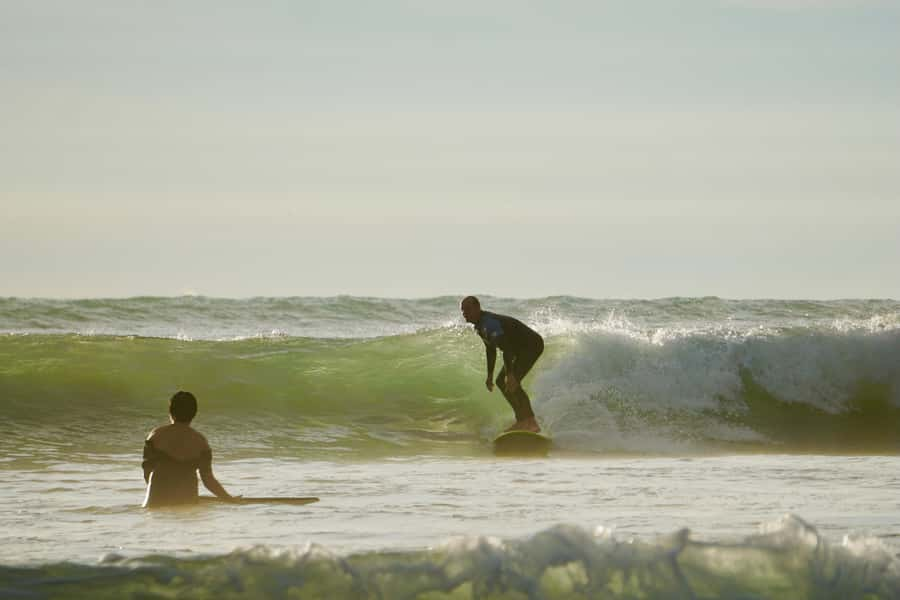
At $41 per person, the lesson offers fair value for a two-hour introduction because the fee covers the main costs you would otherwise need to arrange yourself. You receive the surfboard, wetsuit, and qualified instruction.
That makes the price easier to judge than a lesson where equipment is extra. A beginner normally needs a board suited to learning and a wetsuit appropriate for the water. Renting those items separately could add both cost and planning, while this package keeps the essentials together.
The lesson also includes instructor support from the beach briefing through the water practice. You are paying for more than access to the beach. You are paying for a structured introduction, safety guidance, feedback, and help catching waves.
Food, drinks, personal expenses, and transport are not included. Bring your own water and make your own arrangements for getting to Muriwai. If you are staying in Auckland and do not have transport, check that point before booking. The price is attractive, but it does not cover a ride from the city.
There is no mention of photos, meals, or extra activities being included, so do not expect those as part of the package. This is a straightforward surf lesson, which is a good thing if your goal is to spend the available time learning rather than adding unrelated extras.
More Surf Lessons around New Zealand:
- 2 Hour Surf Lesson – Te Arai Beach
★ 5.0 · 119 reviews - Queenstown: White Water Surfing Along the Kawarau River
★ 4.6 · 30 reviews - Mount Maunganui: Group Beginner Surf Lesson
★ 5.0 · 16 reviews - Beginner Surf Lesson at Te Arai Beach
★ 5.0 · 6 reviews
A small group can make a big difference
The class is limited to 10 participants. That is small enough to give the instructor a reasonable chance to watch individual attempts, especially when the group is smaller on your chosen date.
Surfing lessons can become frustrating when one instructor is trying to manage a large crowd. You want someone to notice if you are placing your feet incorrectly, standing too early, or choosing the wrong moment to paddle. A cap of 10 does not guarantee one-to-one attention, but it is more manageable than a large mass lesson.
The example of five people is encouraging for anyone who prefers a quieter class. With fewer participants, the waiting time between attempts may be shorter and the instructor can give more tailored advice. Group size can change, so I would treat five as a possible experience, not a promise.
The group format also suits people who like learning alongside others. You will not be taking a private lesson, and you may need to wait your turn or share the instructor’s attention. Still, the setting sounds social without making the activity feel crowded.
Getting ready for Muriwai Beach
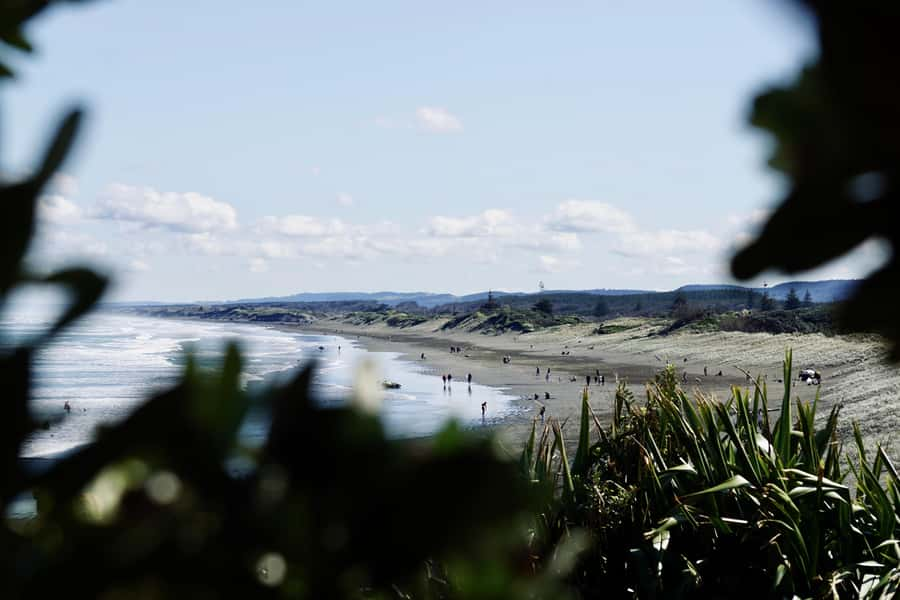
Arrive 15 minutes before the start time. That buffer is needed for preparation, changing into the wetsuit, and getting ready to listen to the initial briefing. Arriving late could cut into a two-hour session that already has several parts to cover.
Bring swimwear to wear under the wetsuit, plus a towel for afterward. Sunscreen is also important, even if the air feels cool. A wetsuit can keep you warm in the water, but it does not protect every exposed area from the sun.
Bring water as well. Food and drinks are not included, and the instructions specifically ask you to bring your own water. Keep your packing simple and practical, with dry clothes for after the lesson.
You should tell the instructor about any medical conditions before the session starts. This is not the kind of detail to keep quiet. The instructor needs to know about anything that could affect your ability to paddle, balance, or respond in the water.
Smoking, alcohol, and drugs are not allowed. That rule is sensible for a water activity and should be treated as a basic safety requirement rather than an inconvenience.
Swimming ability and age limits
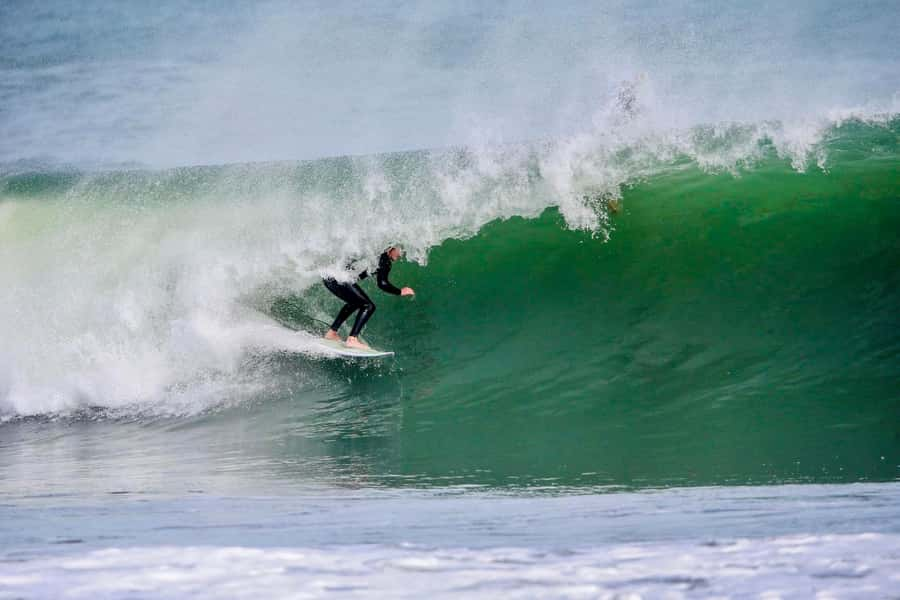
This lesson is for children aged 9 and older, but age alone is not enough. You must be able to swim. Non-swimmers are not suitable for the activity.
That restriction is important because the lesson moves from dry-land instruction into the sea. Even with an instructor’s help, you need enough water confidence to follow safety directions and manage yourself in the water.
If you are booking for a child, consider more than the minimum age. A nine-year-old who is comfortable swimming and can follow instructions may be a good fit. A nervous child or a child who cannot swim should not be booked simply because they meet the age requirement.
The same applies to adults. You do not need prior surf experience, but you do need to meet the swimming requirement and be ready for a physical activity that involves balancing, paddling, and repeated attempts.
The practical limits of a two-hour lesson
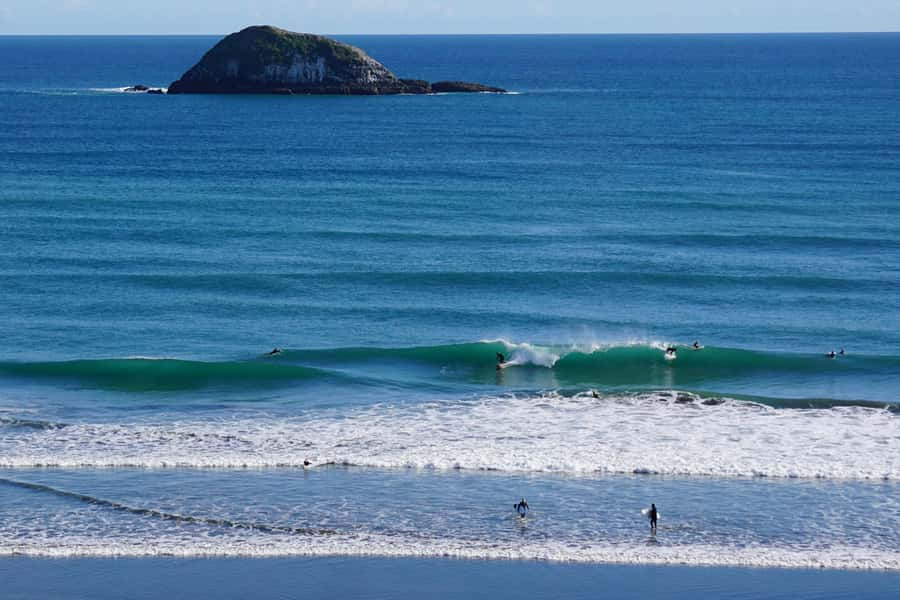
Two hours is long enough to cover the basics and get into the water, but it is not enough to turn you into an experienced surfer. Think of this as a first step. Your realistic goal should be to understand the equipment, learn the standing technique, catch a few waves, and leave with a better idea of what practice requires.
The session may feel fast because it includes several stages. Equipment instruction comes first, followed by standing practice, wave checking, safety information, and water time. The instructor must keep the group moving, so you should listen closely and make the most of every attempt.
The feedback will help you improve, but surfing still requires personal practice. One review sums up the activity in a useful way: people can show you how, but you still need to figure out the balance and timing yourself. That is not a criticism of the lesson. It is an honest description of learning to surf.
If you stand up only briefly, the session can still be worthwhile. You will have learned what the board feels like, how waves affect it, and which parts of the movement need work. If you want a guaranteed long ride, no beginner lesson can promise that.
Who should book this Muriwai lesson
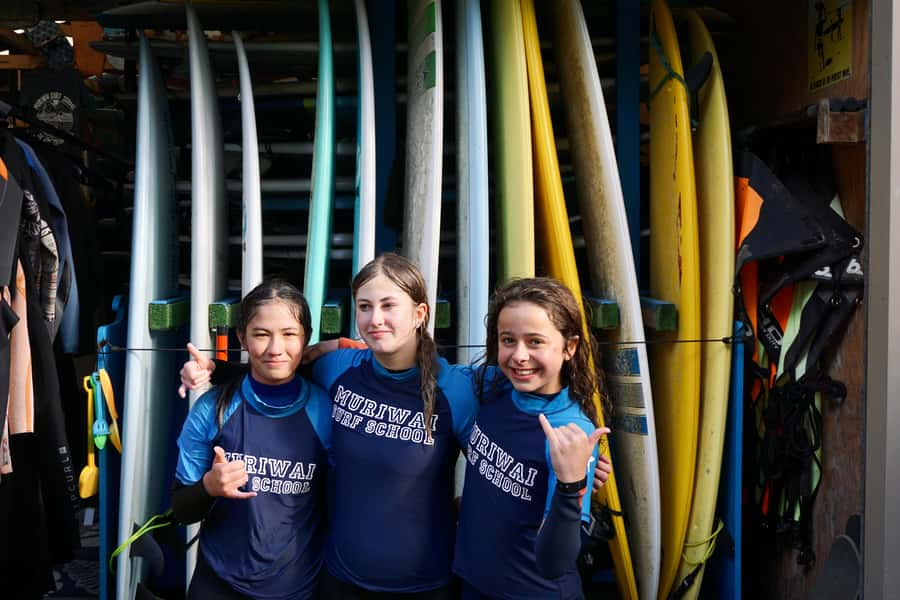
I would recommend it to a first-time surfer who wants instruction rather than simply renting a board. The included equipment removes a lot of hassle, and the instructor support gives you a safer way to make your first attempts.
It also suits Auckland visitors who are happy to spend part of the day getting to the west coast. Muriwai is not a central-city activity, so you should see the beach setting as part of the outing rather than an inconvenience.
The lesson is a good match for:
- Adults who have never surfed
- Children aged 9 or older who can swim
- Small groups of friends or family members
- Visitors who want a practical activity outside Auckland’s center
- Beginners who value patient instruction and direct feedback
I would be more cautious if you cannot swim, dislike group lessons, or have only a very short window in Auckland. The transport is not included, and the activity needs a 15-minute early arrival, so build in enough time for the trip to Muriwai and back.
Free cancellation up to 24 hours before the lesson and the option to reserve now and pay later also make planning less rigid. Check the available starting times before you commit, since the exact schedule is not fixed in the activity details.
Should you book the Muriwai Surf School lesson?
Book it if you want a well-priced first taste of surfing near Auckland, especially if you value a small group, included equipment, and an instructor who gives hands-on help. The strongest reason to choose this lesson is the combination of a real west coast beach and patient beginner instruction.
Skip it if you need transport from Auckland, cannot swim, or want a private lesson. You should also keep your expectations sensible. This is an introduction, not a promise of instant surfing skill.
For $41, the package covers the important pieces: two hours, a board, a wetsuit, safety instruction, and support while you try to catch waves. Arrange your own transport, arrive ready, and give yourself permission to fall a few times. That is part of learning.
FAQ
How long does the surf lesson last?
The lesson lasts two hours.
Where does the lesson take place?
It takes place at Muriwai Beach on Auckland’s west coast, about 40 minutes from Auckland City.
Is transportation from Auckland included?
No. Transportation to and from Muriwai Beach is not included.
What does the price include?
The $41 price includes the two-hour lesson, a surfboard, a wetsuit, and a fully qualified and experienced surf instructor.
What should I bring?
Bring swimwear, a towel, sunscreen, and water.
Do I need previous surfing experience?
No. The lesson is an Intro to Surfing session that covers the basics and is suitable for beginners.
Do I need to know how to swim?
Yes. Non-swimmers are not suitable for the activity.
Can children take the lesson?
Children under 9 years old cannot take part. Participants aged 9 and older must also be able to swim.
What language is the instruction in?
The instructor teaches in English.
How large is the group?
The group is limited to 10 participants.
Can I cancel the booking?
Yes. You can cancel up to 24 hours in advance for a full refund.
Can I reserve without paying immediately?
Yes. The reserve now and pay later option allows you to book your spot without paying at the time of booking.
Latest surf sessions around New Zealand
- Group Beginner Surf Lesson in Mount Maunganui★ 5.0 · 2 reviews
- Beginner Surf Lesson at Te Arai Beach★ 5.0 · 6 reviews
- Private 2 Hour Surf Lesson★ 5.0 · 5 reviews
- Raglan: Private 1:1 Surf Lesson★ 5.0 · 2 reviews
- Raglan: 3 Day Surf Lesson Package★ 5.0 · 2 reviews
- Mount Maunganui: Private Surf Lesson★ 5.0 · 2 reviews
- Mount Maunganui: Group Beginner Surf Lesson★ 5.0 · 16 reviews
- Greymouth: 2-Hour Beginner Surf Lesson★ 4.5 · 2 reviews
New Zealand Surf Lessons, compared.

Queenstown: White Water Surfing Along the Kawarau River
Read our review →

Browse the lists this tour appears in