
Review · OAHU
1.5-Hour Private Surfing Lesson in Honolulu
Waikīkī is one of the gentlest places to learn surfing, and this one-on-one lesson makes good use of it. You start on the sand with ocean safety and wave reading, then move into the water for hands-on coaching aimed at your own pace and ability.
I like the personal attention and the care taken with children. I also like the practical focus: you learn not only how to stand up, but how to read a wave and behave properly in the surf. The main consideration is that 90 minutes passes quickly, especially if you are already comfortable on a board or need extra time to settle into the water.
Key points to know before you book
- Private instruction: Your instructor works with you or your private party, rather than splitting attention among a large class.
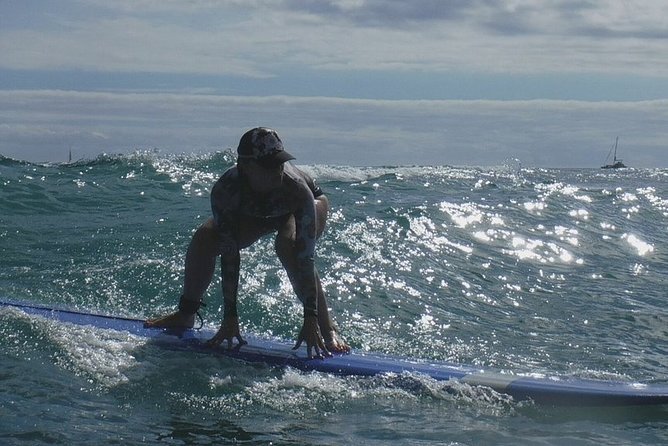
- Safety comes first: The lesson begins on the sand with ocean awareness, wave conditions, and surf safety.
- Beginner-friendly Waikīkī: The lesson takes place at Waikīkī Beach, where the waves are suited to first-timers when conditions cooperate.
- Children under 13 need private lessons: You can book several private lessons at the same time so your group can surf together.
- Swimming is required: Every participant must know how to swim and have a moderate level of physical fitness.
- Photos cost extra: A photographer may be present, but souvenir photos, shirts, and rash guards are not included.
Starting at 2169 Kālia Road in Waikīkī
Your lesson begins at 2169 Kālia Road, Honolulu. It ends at the same meeting point, which keeps the outing simple if you are fitting it between beach time, meals, or another Waikīkī activity.
The location is near public transportation, a useful detail if you are staying elsewhere in Honolulu and do not want to arrange a separate ride. The tour information does not promise hotel pickup, so plan to make your own way to the meeting point and allow enough time to arrive ready for the scheduled start.
This is a private activity. That does not mean you receive a custom itinerary around Oahu. It means your booked party receives focused instruction rather than joining a larger mixed group. For a first surf lesson, that distinction matters. Your instructor can spend more time helping you with your stance, timing, balance, and comfort level instead of moving from person to person.
More Private Surf Lessons in Oahu
- Private Surfing Lessons in Waikiki
★ 5.0 · 176 reviews - Oahu Private Surfing Lesson
★ 5.0 · 113 reviews - Private Surf Lesson at Waikiki Beach
★ 5.0 · 107 reviews
The first 15 minutes: safety on the sand
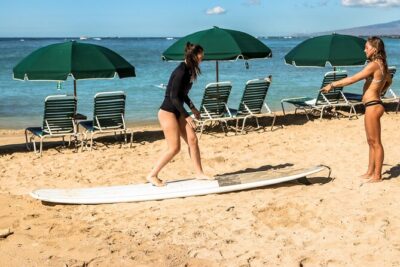
Gone Surfing Hawaii begins on the beach, not in the water. That is good practice. You receive an overview of ocean awareness, current wave conditions, and basic surf safety before handling the first real wave.
You also learn how to read the waves and where to position yourself for a takeoff. These details may sound technical, but they answer the questions that make beginners uneasy: Which wave should I choose? Where should I wait? How do I avoid getting in someone else’s way? What should I do if I fall?
The lesson also includes Hawaiian surfing etiquette. This is more than a local custom. Knowing how to share the water helps you avoid unsafe choices and shows respect for the people who surf Waikīkī regularly.
The safety briefing is especially useful for children and first-timers. Instructors are trained in first aid and lifeguard-level CPR, which does not remove the need for caution, but does add sensible reassurance. You still need to know how to swim, follow directions, and honestly judge your comfort in the ocean.
Waikīkī waves and the move into the water
After the beach briefing, you head into Waikīkī’s beginner-friendly surf area. The exact quality of the lesson depends on the ocean that day. High tide or poor weather can affect the available waves, and one scheduled lesson had to be moved because there were no useful waves at the original time.
That is an important point when planning. Surfing is weather-dependent, so the best schedule is not always the time you first choose. If conditions are poor, the operator offers another date or a full refund. If you have flexibility, keeping some room in your Honolulu plans can protect you from losing the chance to surf.
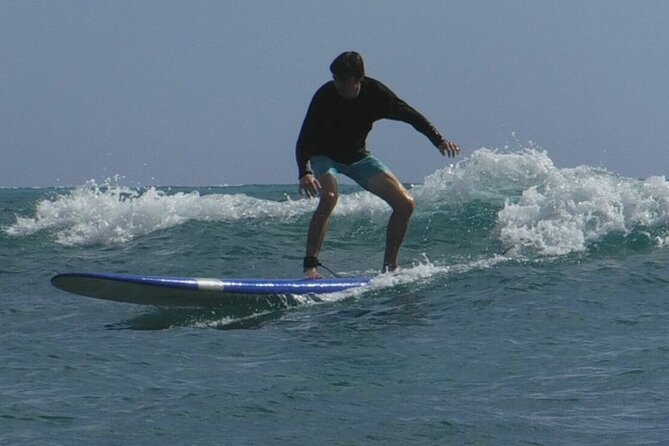
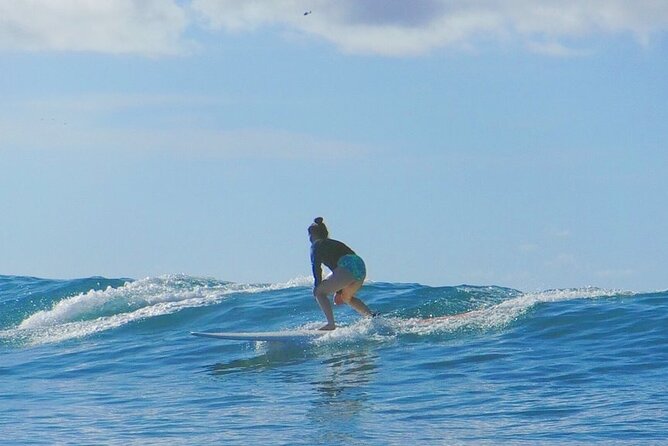
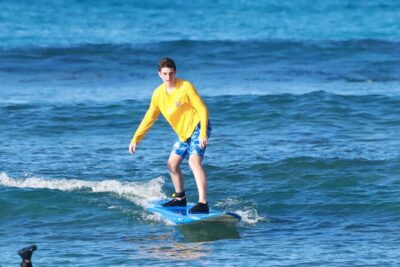
In the water, the instructor helps you find the right position for a takeoff and gives real-time feedback as you try. You learn by repeating the movement, adjusting your balance, and trying again. For a new surfer, that direct coaching is usually more useful than a long technical speech on the sand.
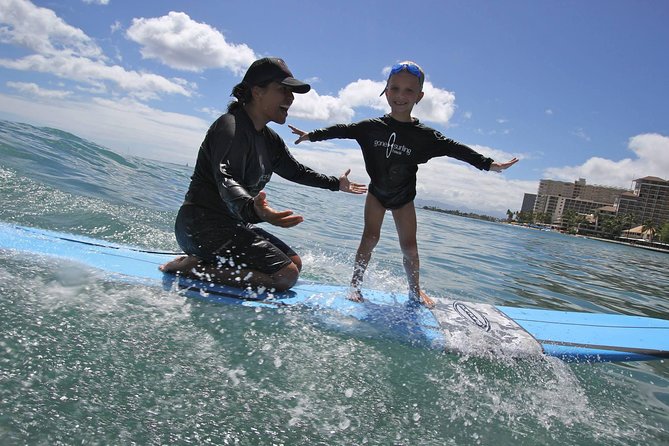
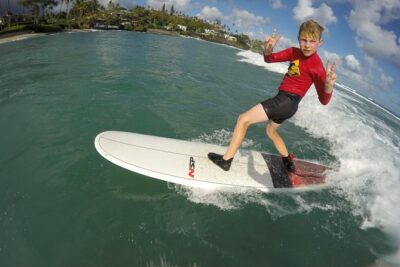
Some children have learned with an instructor riding tandem with them, which can help a nervous first-timer stay calm. That does not mean every child will surf the same way, but it shows why private instruction can be useful for younger participants. The instructor can respond to the child’s confidence, energy, and comfort in the moment.
Why private instruction can be worth the extra cost
No price is provided here, so I cannot judge the exact dollar value. I can judge what you are paying for: a 90-minute private lesson, a local instructor, all activities, and individual attention for your party.
The value is strongest if you are a complete beginner, have a child learning for the first time, or want an instructor to address a particular weakness. A private lesson also makes sense if one person in your group is much less confident than the others. The instructor can slow down, repeat an explanation, or bring someone back toward shore when needed.
A private lesson is less clearly worthwhile for a capable surfer who only wants extra time on a board. One person who already picked up the basics felt the 90-minute class did not adapt enough to their ability. That is a fair warning. Tell the instructor at the start if you have surfed before, and explain exactly what you want to improve.
You should also compare the length and format of other lessons before booking. A longer shared lesson may provide more water time for less money, while this private option gives you better control over the pace. The best choice depends on whether your priority is personal coaching, a lower price, or a longer session.
More Private Surf Lessons in the USA
- Private Surfing Lessons on the North Shore of Oahu
★ 5.0 · 87 reviews - Private Surf Lesson in Waikiki
★ 5.0 · 83 reviews - 1.5-Hour Semi Private Surfing Lesson in Honolulu
★ 5.0 · 76 reviews - Oahu Semi Private Surfing Lesson
★ 5.0 · 73 reviews
Instructors who make the difference
The strongest part of the experience is the instructor relationship. Names that have received especially warm praise include Trevor, Tommy, Aria, Owen, Jarret, James, Jill, and Kaz.
Trevor has worked particularly well with children, including a seven-year-old who caught waves while the parent felt comfortable with the safety arrangements. He has also been praised for encouragement and a friendly manner. Tommy helped a ten-year-old improve after an earlier surfing experience, giving steady support while listening when the child needed a break.
Aria helped a young surfer feel that the sport was easy to pick up. Owen made a complete beginner feel calm in the water. Kaz was praised for explaining the basics clearly enough for a first-time surfer to stand up with confidence.
These examples point to a useful booking habit: do not assume that the instructor will know your ability or goals. At the start, say if you are a first-timer, a returning surfer, nervous in deep water, or ready to work on technique. A good instructor can only tailor the lesson if you give clear information.
The experience is not perfect every time. One participant found communication with the instructor weak and felt they had to ask for more technical detail. Surfing skill and teaching skill are not identical. If you want a breakdown of your foot placement or body movement, ask for it directly rather than waiting for the explanation to arrive.
A realistic look at children and safety
The minimum age is five, but age alone does not decide if a child is ready. Every participant must know how to swim, and the activity calls for moderate physical fitness. Your child should also be able to listen, follow directions, and stay calm enough to try again after falling.
Anyone under 13 must be booked on a private lesson. If several people in your family want to surf, select matching dates and times so the party can still be on the water together, while each younger child receives the required private attention.
The instructor’s first-aid and lifeguard CPR training is a useful safeguard, but it is not a substitute for parental judgment. Children can get tired or cold, and one young surfer needed to come in after feeling cold. A child also received minor foot scrapes from the reef. Consider reef walkers if your child is prone to cuts, while remembering that the supplied information does not make them mandatory.
Private teaching also helps with confidence. A child who is anxious may need more encouragement and fewer distractions. A child who catches on quickly may need a little more challenge. That flexibility is one of the clearest reasons to choose this format for a family.
What the 90 minutes really feels like
Ninety minutes sounds generous on a holiday schedule, but the actual water time is not the full 90 minutes. The clock includes meeting up, getting ready, the beach safety talk, instruction, and time moving between the sand and the surf.
That is not a criticism. A proper safety briefing deserves time, and you need some explanation before trying to ride a wave. Still, you should set realistic expectations. This is an introduction to surfing, not a full-day training course.
For many first-timers, the goal is to understand the basic movement and catch at least a few manageable waves. Some beginners have stood up quickly with clear instruction, while others will need more practice. Your result depends on your balance, comfort, fitness, and the day’s conditions.
The lesson is also a workout. One family described it as a good mix of exercise and fun. Expect to paddle, push up, balance, fall, and try again. Wear what lets you move comfortably in the water, and consider reef protection based on your own needs.
Optional photos and what is not included
Souvenir photos are available for purchase, but they are not part of the lesson price. Shirts and rash guards are also extra.
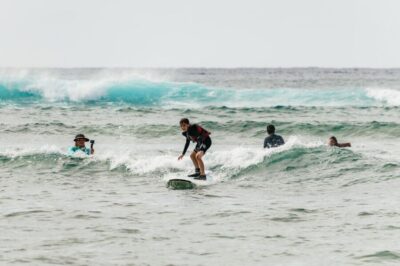
A photographer has sometimes been present in the water, taking pictures while participants surf. When the service works as expected, you receive an email preview and can download purchased images through a simple online process. That can be valuable because your friends or family on the beach may not be able to photograph you clearly from shore.
Do not assume a photographer will be assigned to every class. One booking created confusion because photos and videos were expected, but no photographer appeared, and the later email exchange did not resolve the issue quickly. If photos matter to you, confirm exactly what is included before the lesson and treat the purchase as optional, not guaranteed.
This is a small but important booking distinction. The surfing instruction and the photo service are separate parts of the experience. Ask about the photo option ahead of time rather than relying on a phone conversation to capture every detail.
Timing, weather, and cancellation
The experience requires good weather. If poor weather forces a cancellation, you can choose another date or receive a full refund.
For your own cancellation, you must cancel at least 24 hours before the local start time to receive a full refund. Changes or cancellations inside that 24-hour window are not accepted and are not refunded.
That policy makes it wise to book early enough to secure a preferred time, but not so early that your entire Honolulu schedule becomes rigid. If you have a short stay, check the forecast and keep a backup block of time available. Surf conditions can matter as much as rain, since high tide or a lack of rideable waves may make a lesson less useful even when the sky looks fine.
Who will get the most from this lesson?
I would consider this lesson a strong match for:
- A first-time surfer who wants close instruction.
- A parent booking for a child aged five to 12.
- A couple who wants to learn together with focused help.
- A returning beginner who needs better timing or confidence.
- A small group that prefers private coaching over a mixed class.
I would be more cautious if you are an experienced surfer seeking advanced technique. The lesson is built around beginners and basic skill development. You can still request more challenging coaching, but the 90-minute format may feel limited if you already surf comfortably.
The high rating of 4.8 from 57 reviews and a 95 percent recommendation rate support the idea that the experience usually works well. The less positive feedback is still useful: instructor communication can vary, photos need clarification, and the private format is not automatically better value for every ability level.
Should you book the Gone Surfing Hawaii lesson?
Book it if you want a friendly introduction to Waikīkī surfing, especially with a child or a first-timer who benefits from calm, direct coaching. The strongest reasons are the private format, the safety briefing, the beginner-friendly setting, and instructors such as Trevor, Tommy, Aria, Owen, and Kaz, who have helped new surfers feel at ease.
Before paying, confirm the lesson time, explain your ability, and ask whether a photographer is scheduled if you want pictures. Make sure every participant can swim, and leave some flexibility in your plans in case weather or tide requires a change.
If you want the lowest price or the longest possible time in the water, compare other lesson formats. If you want personal attention and a supportive first step into Hawaiian surfing, this 90-minute Waikīkī lesson is a sensible choice.
FAQ
Where does the surfing lesson start?
The lesson starts at 2169 Kālia Road, Honolulu, Hawaii 96815, USA, in the Waikīkī area.
Where does the activity end?
The activity ends back at the original meeting point.
How long is the surfing lesson?
The lesson lasts approximately 1 hour and 30 minutes.
What happens before entering the water?
The instructor begins on the sand with ocean awareness, current wave conditions, surf safety, wave reading, takeoff position, and Hawaiian surfing etiquette.
Is the lesson private?
Yes. Only your group participates in the private activity, and private one-on-one instruction is available.
What is the minimum age?
The minimum age is five years old.
Can children under 13 join a shared lesson?
No. Anyone under 13 must be booked on a private lesson. Matching private lesson times allow a group to surf together.
Do participants need to know how to swim?
Yes. Every participant must know how to swim and should have a moderate level of physical fitness.
Are photos, shirts, and rash guards included?
No. Souvenir photos, souvenir T-shirts, and souvenir rash guards are available for purchase separately.
What happens if the weather is poor?
If the experience is canceled because of poor weather, you can select another date or receive a full refund. Cancellations made at least 24 hours before the start time also qualify for a full refund.
Latest surf sessions around Oahu
- Waikiki 2 Hours Private Guided Surf Lesson★ 3.5 · 8 reviews
- Surf Honolulu: Ala Moana Stand-up Paddleboard Lesson★ 5.0 · 3 reviews
- Surf Activity on the Wai Kai Wave in Ewa Beach★ 5.0 · 8 reviews
- Semi-Private Surfing Lesson in Waikiki, Oahu★ 5.0 · 26 reviews
- Surf Lessons on the North Shore Great for Families and all Ages★ 5.0 · 27 reviews
- Private Group Surf Lesson★ 5.0 · 47 reviews
- Learn to surf with a local big wave rider on the North Shore of Oahu★ 4.5 · 10 reviews
- Group Surf Lesson: Two Hours Of Beginners Instruction★ 5.0 · 32 reviews
Oahu Surf Lessons, compared.
Oahu: Beginner-Friendly Waikiki Beach Surfing Lesson
Read our review →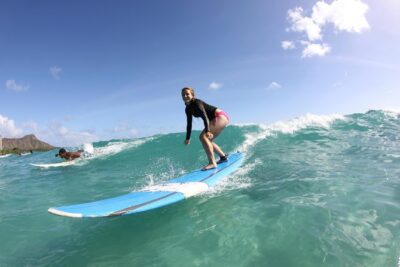

Family, Private & Group Surfing Lessons, Waikiki Courtesy Shuttle
Read our review →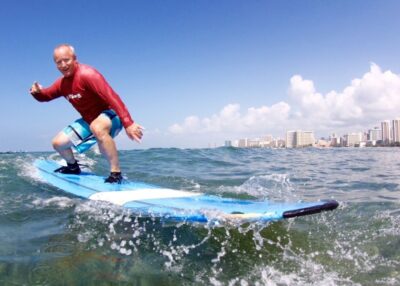
Oahu: Waikiki 2-Hour Beginner Group Surf Lesson
Read our review →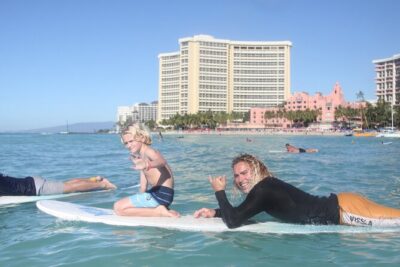
Browse the lists this tour appears in