
Review · USA
Surf Lessons on the Outer Banks
Surfing lessons on the Outer Banks are built around a simple promise: get you standing on a board as soon as possible, without skipping the safety basics. At this 90-minute Kitty Hawk session, you learn board anatomy, paddling, the pop-up, and foot placement before heading into the water to catch waves.
I like the small instructor groups, with one instructor for every four students and a maximum group size of eight. I also like that boards and wetsuits are supplied, so you do not need to pack or rent a pile of gear for a first attempt.
The main caution is the ocean itself. Conditions can change quickly, and one lesson may be rougher than expected. The experience is offered at low tide, but low tide does not guarantee easy waves every time. Families with young children should also confirm the age rule before booking, since the information gives both age six and age eight as minimums.
Key Points Before You Book
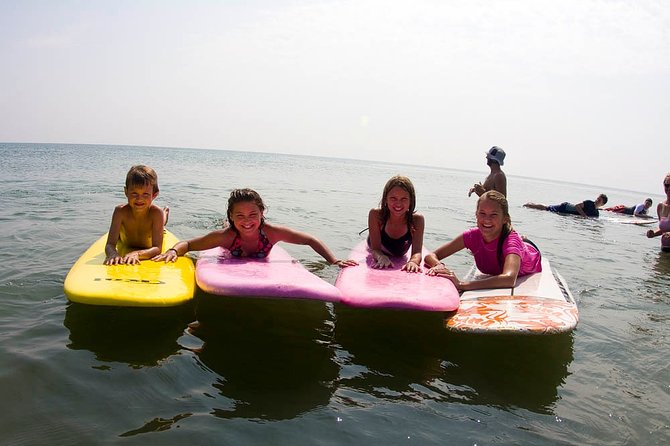
- 90 minutes in the water and on the sand: The lesson covers safety, equipment, paddling, pop-ups, and wave practice.
- One instructor for every four students: This is a useful ratio for beginners who need quick corrections.
- Boards and wetsuits are included: You can try surfing without buying or arranging equipment first.
- Low-tide scheduling: Lessons are planned for low tide, described as the best time for safer beginner conditions.
- Strong record of happy first-timers: The experience has a 4.9 rating from 57 ratings, with 96 percent recommending it.
- Age details need checking: One part of the information says ages six and up, while another says children eight and up.
What the 90-Minute Lesson Is Really About
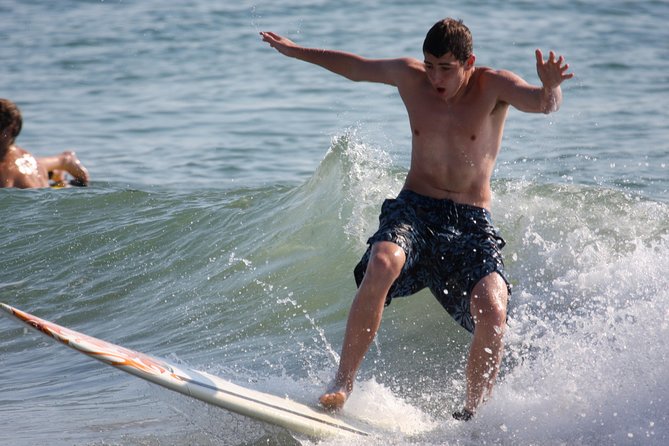
This is not a long surf camp or a full-day beach program. It is a focused introduction for people who want to try surfing without committing to several days of instruction.
The first part covers ocean safety and basic equipment. You learn how the surfboard is shaped and how to handle it before entering the water. That matters because many first-time surfers are busy worrying about balance and forget simple things such as board position, paddling direction, and where to place their feet.
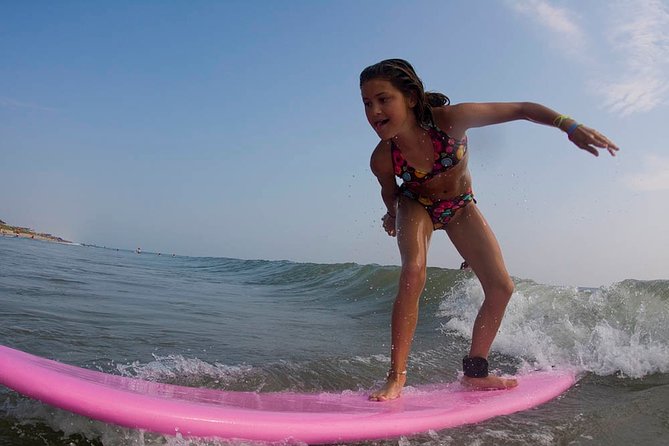
You then work on paddling technique and the proper pop-up. The pop-up is the move that takes you from lying on the board to standing. Instructors also cover foot placement, which helps you avoid the classic beginner problem of getting upright with your feet too close together or facing the wrong way.
The final goal is practice in the water. You are not simply shown a technique and sent home. The lesson includes help catching as many waves as possible, which gives you repeated chances to apply the steps while they are still fresh.
That format suits a first lesson well. You get enough explanation to understand what you are doing, but the session remains active. Several people were able to stand and ride waves during their first outing, while others came close to a full pop-up. Your result will depend on the day’s waves, your fitness, and how comfortable you feel in moving water.
More Surf Lessons around the USA:
- Maui: Two Hour Beginner Group Surf Lesson in Kihei
★ 5.0 · 950 reviews - UTV Dune Cruise and Surf at Coral Pink Sand Dunes
★ 5.0 · 785 reviews - Open Group Surfing Lesson in Waikiki, Hawaii
★ 4.5 · 582 reviews
Meeting in Kitty Hawk and Finding the Beach
The listed starting point is 6150 N Croatan Hwy, Kitty Hawk, North Carolina 27949. The activity ends back at the meeting point.
There is one practical detail to settle before the day arrives. The information also says the lesson may meet where the waves are, and some participants found that the exact beach location was not always clear. Call ahead if you are unsure about where to go, especially if you are driving from Nags Head or another Outer Banks town.
Allow extra time for parking. Beach access parking can be limited, and one family also noted that they had to visit the business before going to the beach to sign waivers. That step may take only a few minutes, but arriving early is wiser than trying to squeeze it in at the scheduled start.
The mobile ticket is convenient, and confirmation is provided when you book. Still, I would keep the meeting address and the provider’s phone details handy on lesson day. In a coastal setting, the best section of beach can change with the waves, and clear directions matter.
Why the Small Group Size Helps
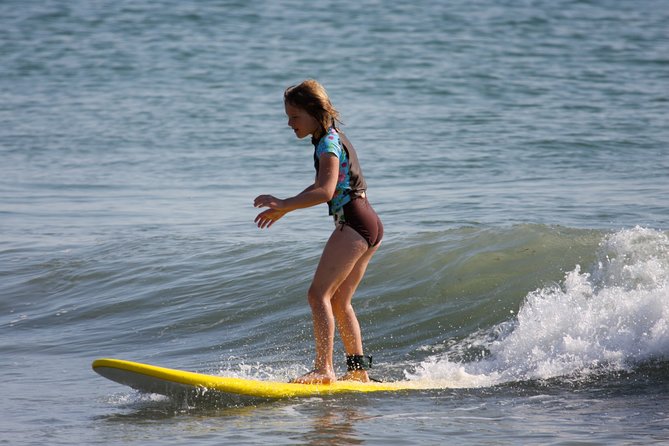
The advertised ratio is one instructor for four students, with a maximum of eight people. That is a better setup than a large beach class where you spend much of your time waiting for someone else to receive help.
Beginners usually need short, repeated corrections. You may need a reminder to paddle harder, shift your weight, keep your chest up, or place your front foot farther forward. A small class gives the instructor more chances to notice those details.
The lesson has included instructors such as Clark, Finn, Keegan, Liam, Stone, Keaton, and Henry. The strongest praise centers on patience, positive energy, and direct encouragement. Clark is especially noted for helping a hesitant surfer believe a pop-up was possible. Liam helped a first-time surfer catch waves within minutes, while Stone helped both members of a couple stand and ride.
Those details matter more than flashy surf talk. A beginner lesson can feel intimidating, particularly for adults who assume everyone else will learn faster. An instructor who gives clear instructions and keeps the mood light can make the difference between trying again and giving up after one fall.
Equipment, Wetsuits, and What You Do Not Need to Rent
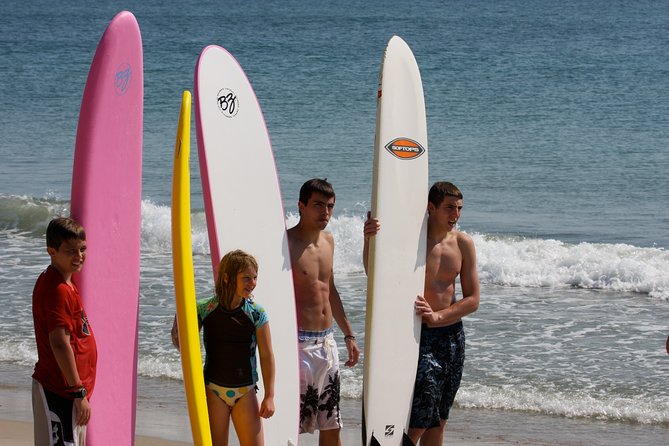
The price includes a surfboard, wetsuit, and instruction. That makes the $89 cost easier to assess, since you are paying for both gear and coaching rather than instruction alone.
A wetsuit is useful for warmth, but it also offers some protection from rubbing against the board. One family specifically found that wearing a wetsuit helped prevent a rash. The water can be cold, so even if you normally enjoy swimming without extra layers, the suit is a practical part of the package.
You should still bring the ordinary beach-day basics, though the supplied information does not list a full packing guide. Plan around being in the sun and water, and arrive ready for a moderate physical workout. The stated fitness requirement is moderate, and surfing asks you to paddle, push up, balance, and repeatedly climb back onto the board.
You do not need to own a surfboard or know how to surf before arriving. The lesson is designed to explain the equipment from the beginning.
Same water, another way to ride it:
- Outrageous Surf ScHool Lesson on Lahaina Side
★ 4.5 · 547 reviews - Los Angeles: Surfing Lesson in Venice Beach
★ 4.8 · 442 reviews - Oahu: Beginner-Friendly Waikiki Beach Surfing Lesson
★ 4.9 · 425 reviews - Po’ipu Surf Lesson
★ 5.0 · 361 reviews
Low Tide, Wave Quality, and the Limits of Any Surf Lesson
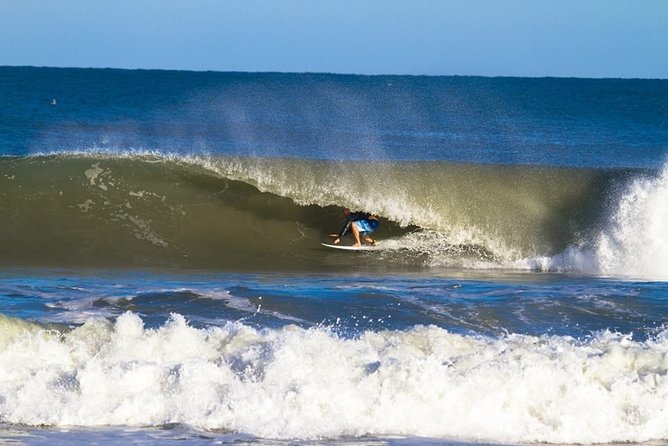
The classes are offered at low tide for what the operator describes as the best waves and a safer beginner experience. That scheduling choice is sensible for a first lesson because conditions affect how easily you can practice the basics.
Still, low tide is not a guarantee of perfect surf. One family had rough water and felt the group needed more help in those conditions. Another group had poor conditions but still found the instructors worked hard with what the ocean provided.
This is an important distinction. The instructors can explain technique, position you for a wave, and encourage you after a miss. They cannot create clean, gentle waves on demand. If the sea is rough, your lesson may feel more physical and less successful than expected.
The activity requires good weather and may be canceled if conditions are poor. In that case, you can receive another date or a full refund. That policy protects you from paying for a lesson that cannot run, but it also means your schedule may need some flexibility.
Is Surfing Suitable for Children and Teenagers?
The experience is a good fit for families with children who are comfortable in the ocean and able to follow instructions. Teenagers received especially strong praise, and families with children and adults ranging from eight to 42 have completed lessons together.
The age information needs a careful check. The highlights say the activity is suitable for ages six and older, while the detailed information says kids eight and up are welcome. Because those numbers do not match, contact the provider before booking for a six- or seven-year-old.
Parents should also think about conditions rather than age alone. A young child may manage an easy lesson well but struggle if the water is rough. One concern raised about a younger child involved having only one instructor nearby in difficult surf. The four-to-one ratio is helpful, but it does not remove the need for adult judgment.
For teenagers and older children, this can be a memorable change from ordinary beach time. Several family groups had children standing on boards within minutes, though that result depends on the individual and the waves.
The Value of $89 Per Person
At $89 per person, this is not the cheapest way to spend 90 minutes at the beach. It is also not simply a board rental. You receive equipment, a wetsuit, structured instruction, safety guidance, and time practicing in the water.
That package makes sense for a first attempt. Renting a board without instruction may save money, but it leaves you to work out paddling, timing, and the pop-up on your own. A lesson can help you avoid wasting the session lying on the board and missing every wave.
The value is strongest if you want a real introduction rather than a quick photo opportunity. Many first-timers were able to stand or catch several waves, and even people who had taken lessons before learned something useful.
The value is less certain if you already surf confidently or if you want guaranteed wave quality. Conditions are outside the provider’s control, and a rough-water day may produce more effort than riding. Still, the weather policy gives you some protection when the conditions are poor enough to cancel the class.
What Families, Couples, and Solo Beginners Can Expect
Families get a shared activity that works across a wide age range, provided everyone meets the age and fitness requirements. Watching a child catch a first wave can be the best part of the morning, and the lesson gives parents a chance to participate rather than simply sit on the sand.
Couples can learn together without needing prior experience. The instructors have helped first-time pairs catch waves on the same day, which makes the activity a good choice for a vacation memory that feels more active than a standard beach outing.
Solo beginners should not feel out of place. The small group format gives you a clear task and direct instruction, while an encouraging instructor can help with the nerves that come from trying something new in front of other people.
People who have surfed before can still find value if they want a refresher. One family with previous lesson experience still learned from the instruction. I would not book it as advanced coaching, though. The material is aimed at beginners and covers the fundamentals.
Physical Effort and Safety
Expect a moderate workout, not a gentle sightseeing activity. You will paddle, push yourself up, balance, fall, and repeat the process. Even a successful ride lasts only moments, but getting into position and returning for another wave takes effort.
The lesson begins with ocean safety, which is essential. You learn how to handle the board and how to approach the water before the main practice starts. That groundwork is especially useful for children and adults who have never surfed.
The instructor ratio provides a reasonable level of attention, but you should still be honest about your swimming ability and comfort in the ocean. The activity is not presented as a private lesson, and a maximum group of eight means the instructor’s attention is shared.
If conditions look rough on the day, ask how the lesson will be handled. The provider can cancel for poor weather, but not every uncomfortable or challenging surf day will necessarily trigger a cancellation. This is the most important safety question to raise if you are booking for young children.
Cancellations and Planning Around the Weather
You can cancel up to 24 hours before the start time for a full refund. Changes or cancellations made less than 24 hours before the lesson are not accepted for a refund.
The activity may also be canceled because of poor weather or because the minimum number of participants is not met. In either case, you are offered another date or experience, or a full refund.
I would avoid placing this lesson on the final morning of a tightly scheduled Outer Banks trip. Keeping one spare day gives you room if the weather changes or the class needs to move. The experience is available year round, but year-round availability does not mean identical water temperatures or wave conditions in every season.
Should You Book These Outer Banks Surf Lessons?
I would book this lesson if you are a first-time surfer, a family with older children, or a couple looking for an active Outer Banks experience. The included board and wetsuit keep the planning simple, and the four-to-one instructor ratio gives you a fair chance to receive useful help.
The strongest reasons to choose it are the patient instructors, the focus on getting into the water quickly, and the repeated reports of first-timers standing on boards. Clark, Finn, Keegan, Liam, Stone, Keaton, and Henry are all associated with especially encouraging instruction.
I would pause before booking for a child under eight until the age requirement is confirmed. I would also call ahead about the exact beach meeting point, parking, and expected conditions. If you need guaranteed calm water or one-on-one attention, this may not be the right fit.
For most beginners, though, $89 is a reasonable price for a properly guided first try. You may leave with only a few seconds of standing time, but those few seconds can be enough to make the lesson worthwhile.
FAQ
Where does the surf lesson start?
The listed starting point is 6150 N Croatan Hwy, Kitty Hawk, NC 27949, USA. The activity ends back at the meeting point.
How long does the lesson last?
The lesson lasts approximately one hour and 30 minutes.
What equipment is included?
The price includes a surfboard, wetsuit, and instruction.
What will I learn during the lesson?
You will cover ocean safety, surfboard anatomy, paddling technique, the proper pop-up, foot placement, and how to catch waves.
What is the minimum age?
The provided information gives two different minimum ages. One section says six and older, while another says children eight and older are welcome. Confirm the minimum age with the provider before booking for a child under eight.
How many people can join the activity?
The maximum group size is eight people. The stated instructor ratio is one instructor for every four students.
What happens if the weather is poor?
If the activity is canceled because of poor weather, you will be offered a different date or a full refund. You can also cancel up to 24 hours before the start time for a full refund.
Latest surf sessions around the USA
- Waikiki: Family, Private, and Group Surfing Lessons★ 5.0 · 4 reviews
- Waikiki: Surf Lessons Easy 60 min classes no crowds!★ 4.9 · 21 reviews
- Astonishing Scavenger Hunt: Surf, Sand and Sculptures!★ 3.0 · 2 reviews
- Two- Hour Group Surfing Lesson in Cocoa Wrightsville Beach, NC★ 5.0 · 13 reviews
- Electric Bike Rentals in Topsail Island and Surf City★ 5.0 · 2 reviews
- Surf Lesson in Santa Barbara★ 3.0 · 2 reviews
- 1-on-1 Private Surf Lesson in Santa Barbara★ 5.0 · 4 reviews
- Surf lesson with KTO Yoga Surf★ 4.0 · 5 reviews
USA Surf Lessons, compared.
Maui: Two Hour Beginner Group Surf Lesson in Kihei
Read our review →
UTV Dune Cruise and Surf at Coral Pink Sand Dunes
Read our review →


Oahu: Beginner-Friendly Waikiki Beach Surfing Lesson
Read our review →

Private Hanalei Sandy Bottom Surf Lesson on Kauai
Read our review →Browse the lists this tour appears in