
Review · SOUTH AFRICA
Plettenberg Bay: 2-Hour Surf Lesson
Plettenberg Bay’s two-hour surf lesson gives you a friendly introduction to the ocean without asking you to commit to a full day. You begin on the sand with safety guidance, then practice paddling, balance, and standing up before trying for real waves. I like the clear progression and the chance to use a proper wetsuit and board for $35.
I also like the small-group feel, with groups of about five reported, and the instructors’ hands-on encouragement in the water. Giovanni is specifically noted for careful safety guidance and clear teaching. The main consideration is the ocean itself: conditions can change, and one session switched to kayaking because the waves were not suitable for surfing.
Key points to know before you book
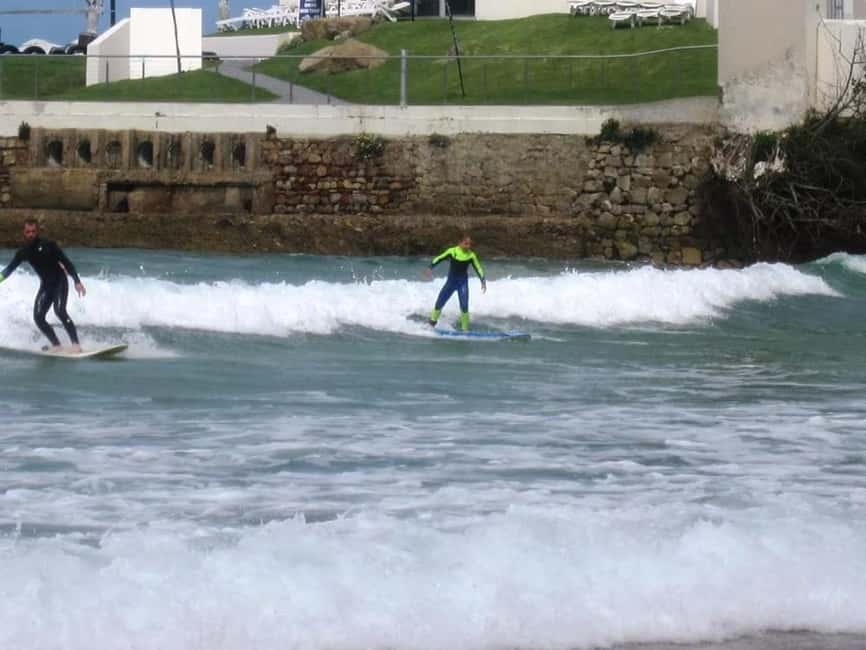
- Two hours in the water: The session covers beach instruction, safety, paddling, balance, wave selection, and time to practice.
- Equipment is included: Your price includes an instructor, wetsuit, and surfboard, with longboards, shortboards, and funboards available.
- Small groups help: Groups of about five allow for personal feedback without making the lesson feel crowded.
- Good attention to safety: Giovanni is specifically praised for thorough safety instruction and helping students feel secure in the water.
- Conditions can change: High waves or poor surf may affect the lesson, and a kayaking session may be offered instead.
- Bring your own basics: Pack swimwear, a towel, a change of clothes, and sunscreen. There are no refreshments or meals.
Starting on the sand in Plettenberg Bay
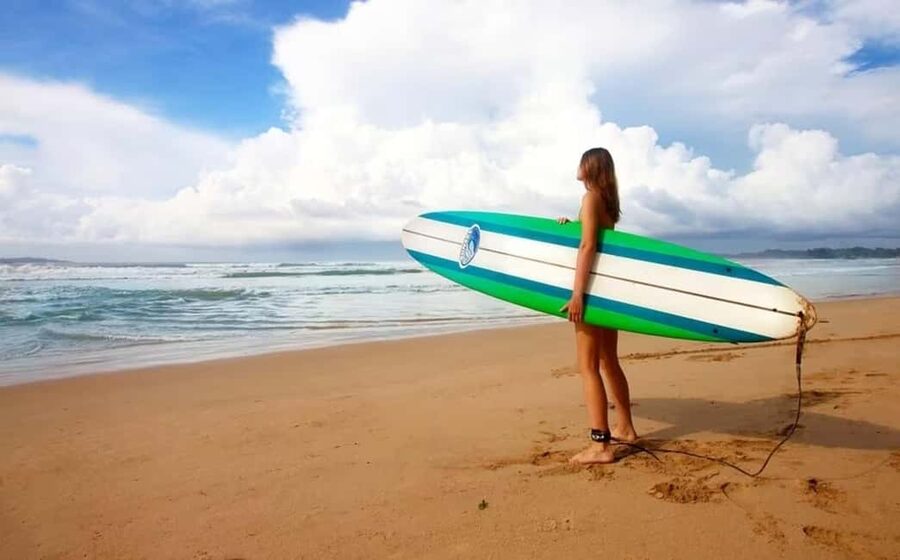
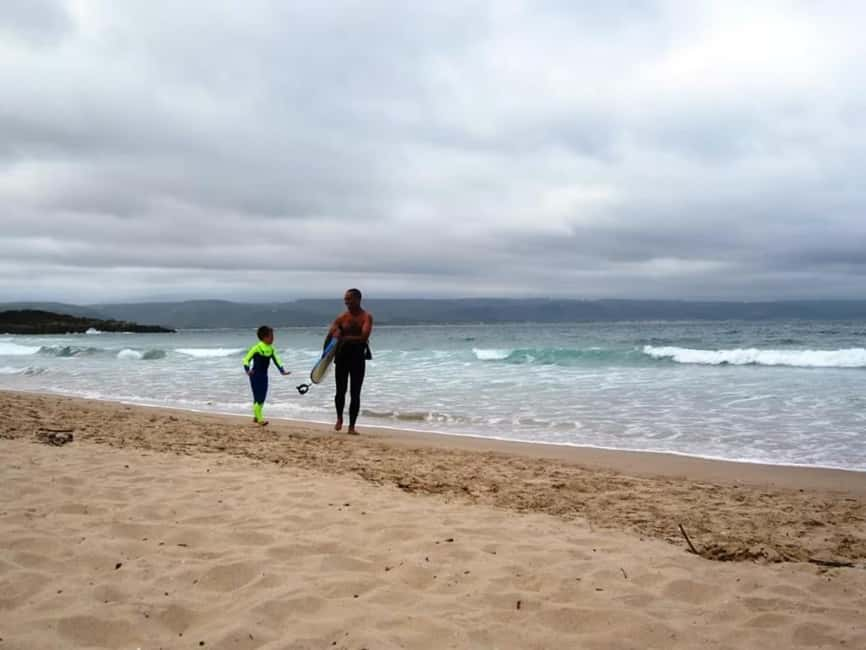
The lesson begins at the beach, where you meet your instructor, receive your surfboard, and get fitted with a wetsuit. This first stage matters more than it may sound. Surfing is not simply a matter of lying on a board and waiting for a wave. You need to know how to handle the board, where to place your hands, how to paddle, and when it is safe to try standing.
Your instructor covers ocean safety and awareness before you enter the water. That includes learning to pay attention to the waves and your surroundings rather than focusing only on getting upright. I appreciate this approach because a good first lesson should leave you excited, but also more comfortable with the sea.
The dry-land practice also gives you a chance to rehearse the movement. You learn how to go from lying on the board to standing in one quick motion. It may feel awkward at first. That is normal. The beach instruction lets you make those first mistakes without being pushed around by moving water.
More Two-Hour Experiences in the world:
- Canggu: 2-Hour Surf Course
★ 4.8 · 1,053 reviews - Maui: Two Hour Beginner Group Surf Lesson in Kihei
★ 5.0 · 950 reviews - Bondi Beach: 2-Hour Surf Lesson Experience for Any Level
★ 4.9 · 935 reviews
Learning the basics with a board that suits you
You can choose from longboards, shortboards, and funboards, depending on what is available and what the instructor considers suitable. For a first lesson, the board choice affects your experience. A larger board generally gives a beginner more room to find balance, while shorter boards can feel less forgiving.
You do not need to arrive knowing which board is right for you. The useful part of having several types available is that the instructor can help match the equipment to your level and the conditions. Ask about the choice before heading into the water, especially if you are new to surfing.
Your equipment package includes the surfboard and wetsuit, which makes the $35 price quite reasonable. You are not paying only for a short talk on the beach. You receive instruction, gear, and practice time in the ocean. A refundable R300 cash deposit is required for the equipment, so have South African cash ready even though the lesson itself can be reserved with flexible payment terms.
Taking your first waves in shallow water
The first water work takes place in shallow, clear water. You practice paddling and balancing while the instructor watches your technique and gives corrections. This is where the lesson shifts from theory to muscle memory.
Your first success may be modest. You might catch a small wave on your stomach, kneel briefly, or rise for only a second. That still counts as progress. The aim is to understand how the board moves and how your body affects its balance.
The instructor’s role is especially important here. A good push at the right moment can help you catch a wave, while a quick correction can prevent you from repeating the same mistake. Giovanni is praised for explaining the basics clearly on the sand and then helping students take their first waves in the water.
The instructors also use encouragement rather than turning the lesson into a contest. That suits beginners. You can focus on learning instead of worrying about how you look.
Moving into slightly deeper water
As your confidence grows, you move into slightly deeper water and begin working with more natural waves. The instructor continues to offer hands-on guidance, but you have more responsibility for paddling, positioning, and timing.
This is often the most exciting part of a first lesson. You begin to understand that catching a wave requires more than strength. You need to paddle at the right moment, keep your weight centered, and rise quickly without looking down.
Conditions can vary. One student described very high waves, while another session could not go ahead as a surf lesson and changed to kayaking. That is not a flaw in the ocean or the operator. It is simply part of booking a water activity. If the waves are too rough or not suitable, the plan may need to change for safety.
For that reason, I would avoid placing this lesson on the final morning of a tightly scheduled trip. Give yourself room for a weather or sea-condition change. You will have a better experience if you can accept that the ocean sets the timetable.
More Surf Lessons around the world:
- Tenerife: Surfing Lesson for All Levels, Photos included
★ 4.9 · 1,314 reviews - Group Surfing Lesson at Playa de las Américas, Tenerife
★ 5.0 · 1,072 reviews - Legian Beach, Bali: Beginner or Intermediate Surf Lessons
★ 4.9 · 1,019 reviews - Playa de las Américas: Private or Small-Group Surf Lesson
★ 4.8 · 980 reviews
What the small-group format means for you
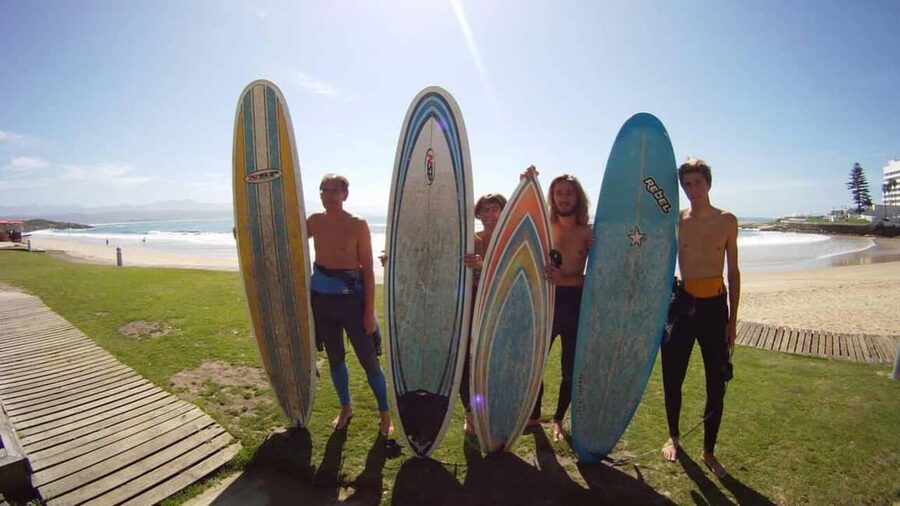
Groups of about five create a useful middle ground. You get the social feel of learning with other people, but the class is not described as a large crowd. That matters when you are trying to remember several instructions at once.
You can watch other students attempt the same movement and learn from their mistakes. At the same time, the instructor has a fair chance to give individual feedback. I would expect some waiting between waves, but that pause is part of the lesson and gives you time to catch your breath.
The beach setting also leaves room for quiet moments. Between attempts, you can look along the Plettenberg Bay coast and watch the water. Dolphins may be visible nearby, although you should treat that as a lucky possibility rather than a promise. One outing did not see dolphins.
Wetsuits, cold water, and practical comfort
The wetsuit is included, and one student specifically found the suit suitable even when the water felt cold. That is useful information for anyone who worries about comfort. You do not need to bring your own surf clothing to take part.
Still, bring swimwear to wear under the wetsuit, a towel, sunscreen, and a complete change of clothes. After two hours in the water, dry clothing will make the rest of your day much more pleasant. No meal, snack, or drink is included, so plan those separately.
Smoking is not allowed. The operator also places emphasis on keeping its activities low-impact, with minimal noise and no environmental pollution from the operation. That fits the calm, nature-focused setting and is worth noting if you prefer activities that keep their footprint small.
The value of $35 for two hours
At $35 per person, this is an accessible way to try surfing in Plettenberg Bay. The price includes the instructor, surfboard, wetsuit, and two hours of activity. If you would otherwise need to rent equipment separately, the bundled cost makes the lesson easier to compare with a simple board rental.
The real value depends on what you want. If your goal is to learn the basics and possibly stand on a board for the first time, the lesson offers a clear entry point. If you already surf confidently, two hours with beginner instruction may feel limited. The available boards and free practice time could still appeal to someone who wants a relaxed session, but this is aimed mainly at newcomers.
The refundable R300 equipment deposit adds a small cash-planning detail. It is not an extra final cost if the equipment is returned as required, but you must have the deposit available. Since the experience does not include refreshments, add the cost of your own food and drinks when setting your day’s budget.
Safety, confidence, and the role of the instructor
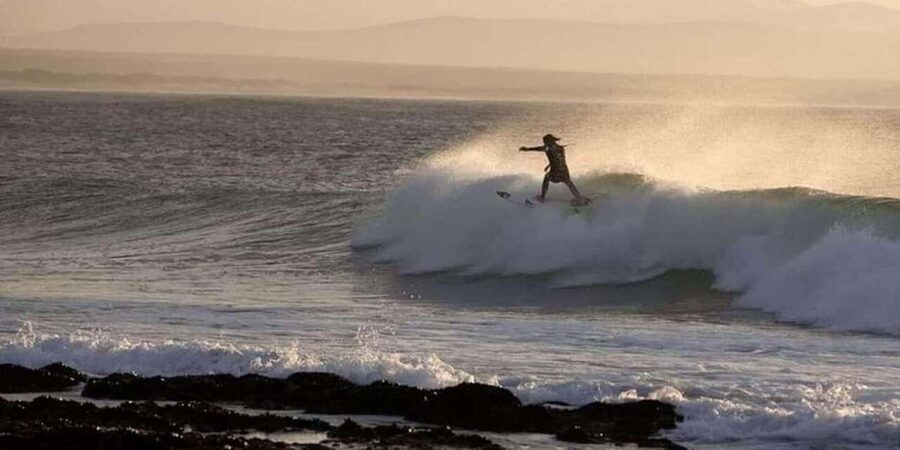
The strongest part of this activity is the teaching. Giovanni is described as thorough with safety, reliable, and excellent at making the lesson feel safe in the water. Another student found the sand instruction clear and the water coaching helpful when catching first waves.
That combination is exactly what I want from a beginner surf lesson. You need instructions that make sense before you enter the water, then quick, practical feedback when conditions are moving around you. Surfing is physical, but confidence is just as important as balance.
You should still be honest about your swimming ability. The lesson is not suitable for non-swimmers. The instructor can teach surf technique, but you must be able to manage yourself in the water before you attempt to ride waves.
Who will enjoy this lesson most
I would recommend this experience to first-time surfers, active couples, small groups of friends, and families with suitable swimmers. It works well for someone who wants a taste of surfing without spending a full day on the activity.
It also suits you if you enjoy learning outdoors and do not mind a little uncertainty. The sea may offer gentle beginner waves, larger waves, or conditions that make kayaking the safer choice. You need to accept that the exact water experience cannot be guaranteed.
This is less suitable if you dislike cold water, cannot swim, want a quiet sightseeing tour, or need a fixed activity with no chance of alteration. It is also not the right pick if you expect to become a polished surfer in one session. Two hours can teach you the building blocks, but surfing takes repeated practice.
Booking advice and cancellation timing
You can reserve your place and pay later, which helps if you are still arranging a South Africa itinerary. You can cancel up to 24 hours before the activity for a full refund. That policy is useful because surf conditions can be difficult to predict, though you should still check the forecast and confirm the day’s plan with the operator.
The lesson is conducted in English. Arrive ready to change into a wetsuit at the beach, and keep your schedule loose afterward in case you want to use the free practice time or simply warm up and change.
Should you book the Plettenberg Bay surf lesson?
I would book it if you are a swimmer who wants a practical first taste of surfing at a fair price. The wetsuit, board, instruction, safety briefing, and practice time make this more useful than simply renting a board and guessing what to do.
Book with flexible expectations. The best day may give you a first standing wave, clear water, helpful coaching, and fine coastal views. Another day may bring high waves or a change to kayaking. If you can handle that uncertainty, this is a friendly and well-priced way to meet Plettenberg Bay from the water.
FAQ
How long is the surf lesson?
The lesson lasts two hours.
Where does the activity take place?
The lesson takes place on the beach and in the waters of Plettenberg Bay, in South Africa’s Western Cape.
What equipment is included?
The price includes a surfboard and wetsuit, along with instruction from a skilled instructor.
Can I choose a surfboard?
A selection of longboards, shortboards, and funboards is available to rent. The instructor can help you choose a suitable board.
Is the lesson suitable for non-swimmers?
No. The activity is not suitable for non-swimmers.
What should I bring?
Bring swimwear, a towel, sunscreen, and a change of clothes.
Are food and drinks included?
No. Refreshments and meals are not included.
Is a deposit required?
Yes. A refundable R300 cash deposit is required for all equipment.
What language is the lesson conducted in?
The lesson is conducted in English.
What happens if the surf conditions are not suitable?
The activity may change from surfing to kayaking if the conditions are not right for surfing. One session was conducted as kayaking because the surf was unsuitable.
Can I cancel for a refund?
Yes. You can cancel up to 24 hours in advance for a full refund.
Latest surf sessions around the world
- Valencia: Excursión en Moto de Agua + Paddle Surf★ 4.9 · 9 reviews
- Waikiki: Family, Private, and Group Surfing Lessons★ 5.0 · 4 reviews
- Waikiki: Surf Lessons Easy 60 min classes no crowds!★ 4.9 · 21 reviews
- Tricana Surf Experience★ 5.0 · 3 reviews
- Uluwatu: Surf Lessons Beginner★ 5.0 · 3 reviews
- Astonishing Scavenger Hunt: Surf, Sand and Sculptures!★ 3.0 · 2 reviews
- Two- Hour Group Surfing Lesson in Cocoa Wrightsville Beach, NC★ 5.0 · 13 reviews
- Electric Bike Rentals in Topsail Island and Surf City★ 5.0 · 2 reviews
South Africa Surf Lessons, compared.
Private Surf Lesson in Cape Town – Transport & Photos Included
Read our review →
Jeffreys Bay: Private Surfing Lesson for Beginners
Read our review →

1h15min surfing lessons in Victoria Bay & Wilderness
Read our review →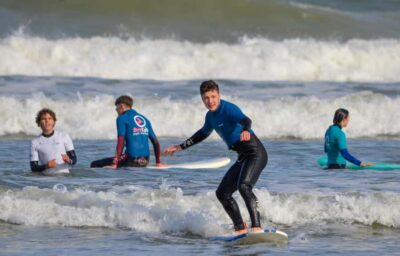
Cape Town:Learn to surf with the best view of Table Mountain
Read our review →Browse the lists this tour appears in