
Review · SPAIN
Maspalomas Signature Surf Experience – Gran Canaria
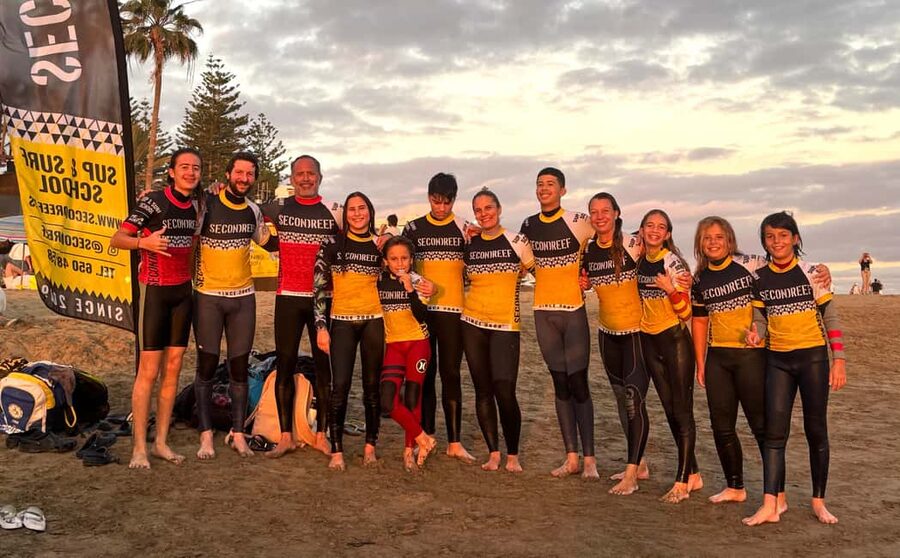
Maspalomas Signature Surf Experience treats surfing as more than standing on a board. Edu Díaz, a Canarian surfer and SUP pioneer, begins by showing you how to breathe, watch, and respect the sea before you enter the water. I like that the lesson gives equal weight to ocean awareness and surfing technique, and I like that your two hours in the water come with HD photos and videos to keep.
The other strong points are the small groups, with no more than six people per instructor, and the gentle finish with a healthy snack and Atlantic views. The main consideration is fitness: this is not a passive beach outing, and it is not suitable for people over 100 kilograms, people over 70, pregnant women, or anyone with a recent injury.
Key points to know before you book
- Edu Díaz leads the experience: You learn with a local professional surfer and SUP pioneer, or a member of his FESURF-certified team.
- The sea lesson starts before the surfing: Breathing, observation, and respect for the Atlantic are part of the welcome.
- Two hours are set aside for surfing: Your level guides the session, from first balance work to the thrill of a first take-off.
- Small groups keep help close: The maximum is six people per instructor, with one-to-one attention built into the class.
- Your memories are included: HD photos and videos come with the experience, not as an extra purchase.
- Transfers cover southern Gran Canaria: Hotel pickup and return are available from ten listed resort areas.
Why this Maspalomas surf class feels different
Many beginner surf lessons rush you from a beach briefing into the water. This one puts a ritual before the practical work. You learn to settle your breathing, notice the movement of the sea, and read the waves in the way local surfers do.
That approach may sound reflective, but it has a useful purpose. Surfing depends on timing. You need to see how a wave forms, where it loses power, and when your board should begin moving. A few quiet minutes of observation can help you understand why one wave is worth trying and another is not.
I also like the clear connection to Canarian surf culture. The experience is framed around freedom, respect, and a close relationship with the Atlantic. You are not simply ticking off a new sport for two hours. You are being introduced to a local way of approaching the water.
Do not expect a long technical course or a full day of training. The total outing lasts three hours, with two hours of surfing plus the briefing, transfers, and time to relax afterward. That makes it a manageable choice during a short stay in Gran Canaria.
More Surf Lessons around Spain:
- Tenerife: Surfing Lesson for All Levels, Photos included
★ 4.9 · 1,314 reviews - Group Surfing Lesson at Playa de las Américas, Tenerife
★ 5.0 · 1,072 reviews - Playa de las Américas: Private or Small-Group Surf Lesson
★ 4.8 · 980 reviews
Pickup from ten southern Gran Canaria areas
The day begins with pickup about 30 minutes before the activity. The SecondReef van collects you at the entrance to your hotel, apartment, or other agreed accommodation point, so you need to wait at the door rather than inside the lobby.
Pickup is offered from Playa del Inglés, Puerto Rico, Playa del Cura, Playa de Arguineguín, Bahía Feliz, Playa de Mogán, San Agustín, Playa de Amadores, Maspalomas, and Anfi Del Mar. The drive to the surfing area takes about 15 minutes.
That short transfer keeps the outing efficient. You are not spending most of your booking on a long ride across the island. The destination is in the southern part of Gran Canaria, generally Maspalomas or Playa del Inglés, with the exact beach shaped by the conditions and the needs of the group.
The tradeoff is that pickup times and the final surf beach can vary. You should check the available start time when booking and be ready at the door 30 minutes before the activity. Bring your beachwear beneath comfortable clothes if you want to change quickly.
A two-hour session built around your level
After the welcome and transfer, the main session begins with a pre-briefing. You receive your board and wetsuit, then learn the basic points needed to handle the equipment and approach the waves.
No previous surfing experience is required. Beginners can work on balance and the mechanics of getting onto the board, while anyone with some background can receive help reading the water and improving technique. The description promises a personalized session, but your exact progress will still depend on conditions, fitness, and how comfortable you feel in the sea.
The most memorable goal for a first-timer is likely the first take-off. That moment, when the board begins to glide and you try to rise into position, brings the adrenaline promised by the activity. It also explains why close instruction matters. A six-person maximum per instructor gives the teacher room to watch your balance, correct your position, and help you try again.
The water is described as warm and safe, but surfing remains physical. You will paddle, push up, balance, and repeat the process. The class is therefore best for people with a basic level of fitness who can manage a two-hour water session.
Learning to read the Atlantic, not just ride it
The sea-reading element gives this class its strongest sense of purpose. Edu Díaz is presented as both a professional Canarian surfer and an early figure in stand-up paddleboarding. His role is not limited to telling you where to place your feet. He introduces the habits that help surfers work with the sea rather than fight it.
The opening breathing and observation ritual can also help nervous beginners. Instead of being thrown straight into unfamiliar water, you get a moment to focus and understand the setting. That matters if your first concern is not technique but simply feeling at ease near the waves.
The instruction is in English. Edu Díaz may lead the session, or a FESURF-certified member of his team may teach you. If meeting the named founder personally is important to you, check the operating details for your date, since the experience allows for either arrangement.
The teaching style is intended to be kind, attentive, and service minded. That is useful for beginners who need encouragement without a hard-sell atmosphere. You can expect a lesson aimed at learning and enjoyment rather than competitive performance.
Same water, another way to ride it:
- From Nerja: Guided Paddle Surf Cliffs and Maro Waterfall
★ 4.5 · 400 reviews - Playa del Inglés Maspalomas: High Quality Surf Classes
★ 4.9 · 363 reviews - Fuerteventura: Surfing Lesson in the south of Fuerteventura
★ 4.8 · 354 reviews - Lezioni di Surf per Beginner e Intermedi (6 persone a istruttore)
★ 5.0 · 350 reviews
What the small group size means in practice
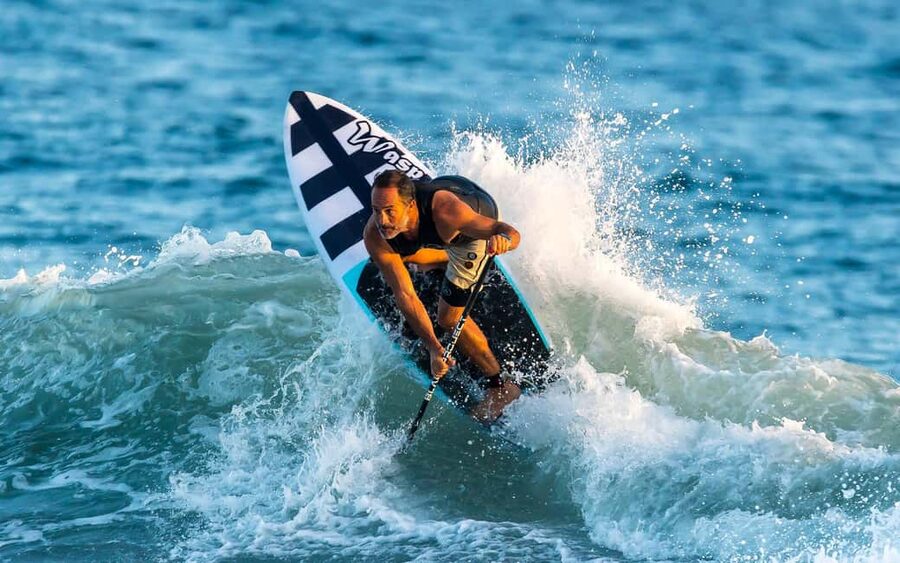
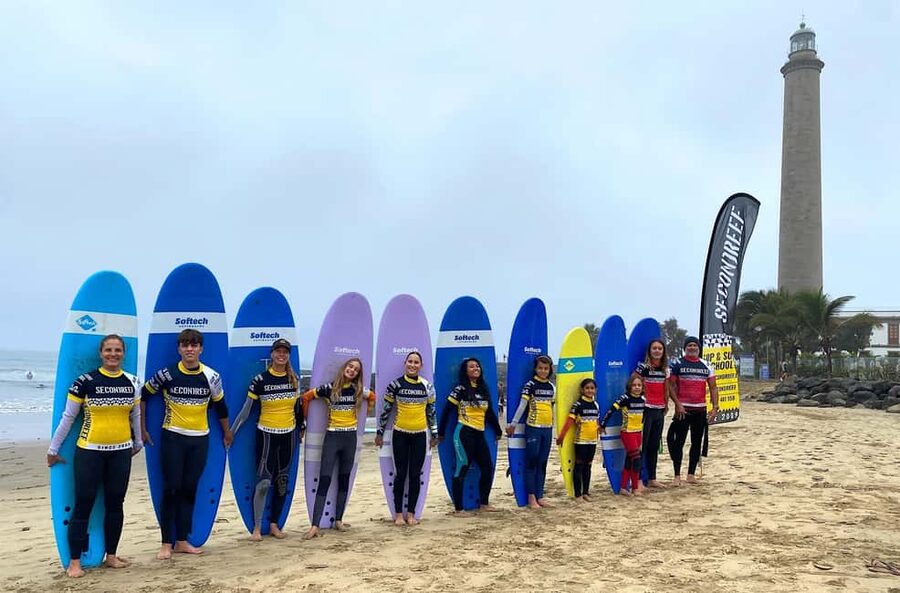
The maximum of six people per instructor is one of the best details here. Surf schools can vary widely in how much individual help they offer, and a crowded class may leave you waiting between attempts.
A smaller group gives you more chances to ask questions and receive corrections. It also means the instructor can adapt the session to different ability levels. One person may be working on standing for the first time while another is learning to choose a better wave.
The wording also identifies the group type as private. That is useful if you want a more personal outing rather than a large beach-school setup. Still, the maximum ratio means you should not assume a one-instructor, one-student class. If you want a fully private lesson, confirm the arrangement before booking.
The post-surf snack and Atlantic pause
After the water session, you get time to slow down with a healthy snack and water. This is a small feature, but it improves the rhythm of the experience. Surfing can leave you tired, hungry, and full of questions, so a quiet break gives you time to recover and talk through what happened.
You can share anecdotes and tips with the instructor while enjoying views of the Atlantic. The snack is local and health focused rather than a full meal, so you should still eat beforehand if you know you need substantial fuel for exercise.
I like this ending because it keeps the class from feeling like a simple equipment rental. You have time to reflect on the waves, your balance, and what you might do differently next time. The photos and videos also help preserve that final sense of achievement.
HD photos and videos add real value
The included HD photos and videos are a practical bonus, especially for a first surfing session. It is hard to know what your stance looks like while you are concentrating on staying upright. Images let you see the attempt clearly and share it without asking a companion to stand on the beach with a phone.
This also changes the value calculation. At $57 per person, you are paying for transport, instruction, board, wetsuit, insurance, snack, water, and visual records. If you booked a lesson and then paid separately for equipment, transfers, and media, the price could rise quickly.
The photos and videos should not be the only reason to book. Weather and wave conditions can affect the session, and a beginner may not produce a perfect standing shot. But having the media included means you do not need to decide later if an extra package is worth buying.
Is $57 a fair price?
For a three-hour experience, $57 is a reasonable package price if you value convenience and personal instruction. The important part is not just the two hours in the water. Your fee also covers the 15-minute transfer each way, equipment, a professional instructor, accident and civil liability insurance, snack, water, and HD media.
The small-group setup makes the price more appealing than a basic mass lesson. You are paying for a more focused experience with a maximum of six participants per instructor. That is especially useful if you are a beginner and expect to need repeated help with balance and timing.
The value is weaker if you already own equipment, have strong surf skills, or only want a quick rental. In that case, the included coaching, transfer, and ritual may not matter as much. For a first lesson in southern Gran Canaria, however, the package covers the main costs in one booking.
Reserve now and pay later is available, and you can cancel up to 24 hours ahead for a full refund. Those terms are helpful when your island plans depend on weather, although the activity itself remains subject to wave and weather conditions.
Who should book this experience
This outing suits a first-time surfer who wants more than a crowded introductory class. You will get equipment, instruction, and transport without needing to plan the beach logistics yourself.
It also suits couples, friends, and families with children aged 10 or older. Minors must be accompanied by an adult. The private-group format can make it easier to share the experience with people you already know.
You should have a reasonable level of fitness. The activity is not suitable for people with low fitness, anyone over 100 kilograms, people over 70, pregnant women, or anyone with a recent injury. These restrictions are important, not minor footnotes, because surfing requires repeated effort in the water.
Pack a towel, sunscreen, and biodegradable sunscreen, along with a change of clothes, beachwear, comfortable clothing, flip-flops, and a small daypack. Food is not allowed in the vehicle, and smoking, alcohol, and drugs are prohibited.
Weather can shape the experience
Surfing depends on the sea. If the waves or weather are not suitable, the session may be affected. That is normal for an outdoor water activity, but it means you should avoid placing this booking on the only day of your holiday when you must have a fixed result.
The class takes place in southern Gran Canaria, generally around Maspalomas or Playa del Inglés. The changing location is a practical advantage because instruction can be matched to conditions and ability. It also means the exact beach is not guaranteed in advance.
Bring sun protection even if the day feels mild. You will be outside, and the Atlantic setting makes sunscreen part of your basic kit. A towel is not included, so do not leave it behind at the hotel.
My verdict: book it if you want a thoughtful first lesson
I would choose Maspalomas Signature Surf Experience if you want your first surf class to combine practical coaching with a sense of place. The strongest reasons are Edu Díaz’s local connection, the small instructor ratio, and the useful bundle of transfers, equipment, snack, insurance, photos, and videos.
Book it if you are fit enough for two hours in the water and like the idea of learning to watch the sea before trying to ride it. Skip it if you want a private one-to-one lesson, a guaranteed beach or wave condition, or a relaxed activity with little physical effort.
At $57, it offers good value for a beginner-friendly half-day outing, especially when the included media and hotel pickup save you extra planning. Bring a towel, arrive ready for exercise, and let the day be shaped by the Atlantic.
FAQ
How long does the Maspalomas surf experience last?
The activity lasts three hours. This includes the transfer, pre-briefing, two-hour surf lesson, and time for the snack and ocean views.
Is hotel pickup included?
Yes. Pickup and return transfers are included from listed areas in southern Gran Canaria. The van arrives about 30 minutes before the activity, and you should wait at the door of your hotel, apartment, or other accommodation.
Where does the surfing take place?
The surf session takes place in the southern part of Gran Canaria, generally at Maspalomas or Playa del Inglés. The exact location depends on weather, waves, and the needs of the group.
Do I need previous surfing experience?
No. Previous experience is not required, and the session is adapted to your level.
Who leads the surf lesson?
The lesson is led by Edu Díaz, a professional Canarian surfer and SUP pioneer, or by a member of his FESURF-certified team.
How many people are in each group?
There can be no more than six people per instructor. The activity is also described as a private group experience.
What equipment is provided?
A surfboard and wetsuit are provided. The experience also includes the surf lesson, HD photos and videos, a healthy snack, water, and insurance.
What should I bring?
Bring a towel, sunscreen, biodegradable sunscreen, a change of clothes, comfortable clothes, flip-flops, beachwear, and a daypack.
Is the activity suitable for children and older participants?
The minimum age is 10, and minors must be accompanied by an adult. The activity is not suitable for people over 70, people over 100 kilograms, people with low fitness, pregnant women, or people with recent injuries.
Latest surf sessions around Spain
- Valencia: Excursión en Moto de Agua + Paddle Surf★ 4.9 · 9 reviews
- Surf lesson on Valencia beach★ 3.5 · 5 reviews
- Surfing Lesson in La Mata Beach★ 5.0 · 51 reviews
- Surfing lessons in Las Americas★ 5.0 · 32 reviews
- small group surf lesson in Playa de las Américas,Tenerife★ 5.0 · 31 reviews
- Tenerife Paddle Surf and Snorkeling Experience★ 5.0 · 4 reviews
- Surf Class Experience in Playa de la Américas★ 5.0 · 10 reviews
- Surf Lessons at El Médano Beach★ 4.5 · 7 reviews
Spain Surf Lessons, compared.
Tenerife: Surfing Lesson for All Levels, Photos included
Read our review →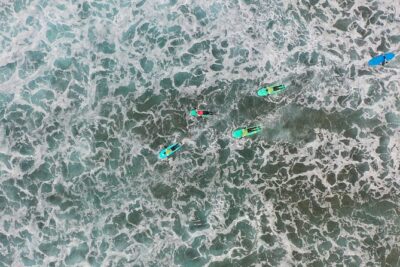
Group Surfing Lesson at Playa de las Américas, Tenerife
Read our review →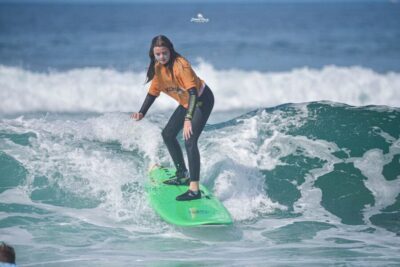
Playa de las Américas: Private or Small-Group Surf Lesson
Read our review →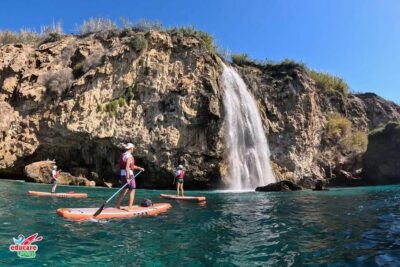
From Nerja: Guided Paddle Surf Cliffs and Maro Waterfall
Read our review →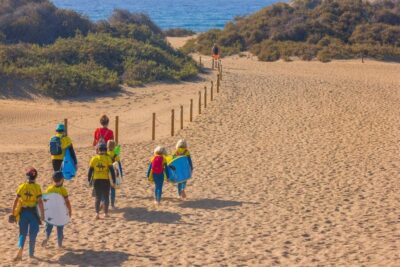
Playa del Inglés Maspalomas: High Quality Surf Classes
Read our review →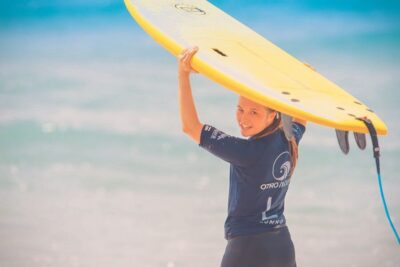
Fuerteventura: Surfing Lesson in the south of Fuerteventura
Read our review →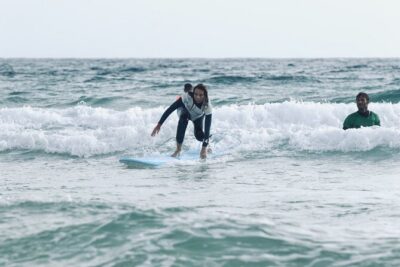
Lezioni di Surf per Beginner e Intermedi (6 persone a istruttore)
Read our review →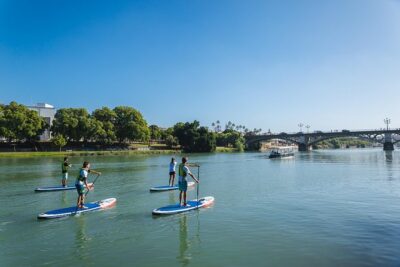
Browse the lists this tour appears in