
Review · PERU
Beginner Surf Lesson in Lima, Perú
The best part of this Lima experience is simple: after a short land lesson, you get into the Pacific and try to ride a wave. Most beginners stand during their first class, and instructors such as Jorge, Hector, Oscar, Javier, and Lorenzo focus on steady coaching rather than showing off.
I like the clear split between practice on land and an hour in the water. I also like the value: for $29, you get the board, wetsuit, aqua shoes, safety guidance, and hands-on instruction. The main consideration is physical effort. Surfing is tiring, and this class is not recommended if you cannot swim or have shoulder problems.
Key points before you book
- Thirty minutes of useful preparation: Learn to paddle and stand on the board before entering the water, then stretch to help prevent cramps.
- An hour in the sea: The real value comes from the water time, with instructors helping you choose and catch manageable waves.
- All basic gear is supplied: You receive a wetsuit, aqua shoes, and a beginner surfboard.
- Many start times: Classes run every two hours from 6:30 AM through 4 PM, all year.
- Patient, active coaching: Jorge, Hector, Oscar, Javier, and Lorenzo are praised for clear instructions, encouragement, rest breaks, and safety checks.
- A little beach-finding patience helps: Several surf schools operate in the same area. Look for the orange Pukana tent and allow extra time to walk down to the beach.
What the $29 Lima surf lesson actually gives you
This is a compact introduction to surfing, not a full-day surf camp. The advertised class lasts about 90 minutes, with half an hour on land and roughly an hour in the sea. That is enough time to learn the basic movement and get several attempts, but not enough to turn a first-timer into a polished surfer.
At $29 per person, the price is strong for a hands-on activity. Your fee covers local taxes, booking charges, and the surfing equipment. You are not paying extra for the main things you need to take part. Food and drinks are not included, and hotel pickup and drop-off only come with the option that includes them.
The value comes from the instruction. A board and wetsuit alone would not teach you how to read a wave, paddle at the right moment, or rise without losing balance. Here, an instructor is in the water with you, offering corrections after each attempt. That matters far more than a long lecture on the beach.
Some people find the class so enjoyable that they book another session the next day, or even another one two hours later. You should not count on that exact schedule, but the frequent class times make a second lesson possible if availability allows.
More Beginner Surf Lessons in the world:
- Legian Beach, Bali: Beginner or Intermediate Surf Lessons
★ 4.9 · 1,019 reviews - Maui: Two Hour Beginner Group Surf Lesson in Kihei
★ 5.0 · 950 reviews - Uluwatu: Beginner & Intermediate Surf Lesson with Equipment
★ 4.9 · 832 reviews
Pukana Surf School and the walk to the water
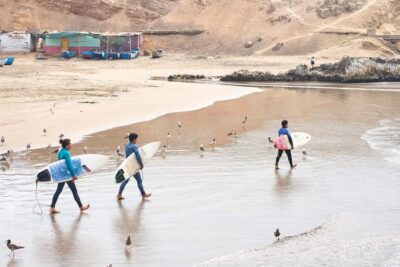
Your meeting point is at Cto. de Playas 5 in Lima, with the activity ending back there. The school is in a busy surf area with several operators close together, so the arrival can feel a little confusing at first.
Look for the orange Pukana tent. Give yourself extra time to walk down to the beach, especially if you are trying to arrive exactly at the class start. The beach area can have multiple instructors and boards in motion, so patience helps while you find the right team.
The setting is practical rather than polished. This is a working surf school on the beach, not a resort with a quiet private changing room. One person described difficulty finding the correct spot, while another pointed out that the school was easy to locate once on the beach. The useful lesson is to follow the meeting instructions closely and avoid cutting your arrival too fine.
The school serves groups of up to 20 people. That is a reasonable maximum for a popular beach lesson, though your personal attention can vary with the group size. Private lessons are also mentioned in the experience details from some bookings, but you should confirm the exact option before paying if one-on-one instruction matters to you.
The first 30 minutes: land practice and safety
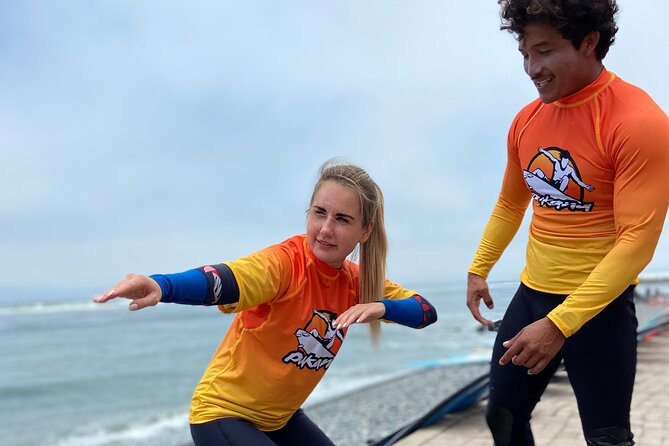
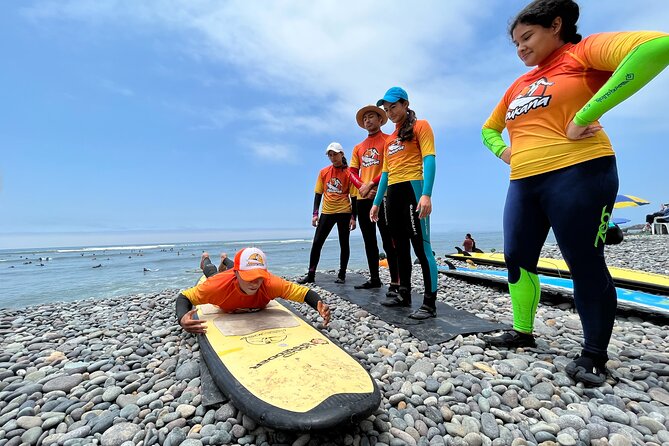
The class begins with a basic explanation of how to paddle and stand on the board. You practice the movement on land before dealing with waves, cold water, and balance.
This order makes good sense. On a surfboard, the stand-up motion is quick. You push up from your stomach, place your feet, bend your knees, and find balance before the board moves away from you. Practicing first lets you focus on the sequence instead of trying to remember every step while a wave is approaching.
There is also a small stretching session to help prevent cramps. That sounds minor, but surfing uses your shoulders, arms, legs, and core in ways many first-timers do not expect. The water portion is physical, and the instructors are reported to check how tired people are and make sure they rest.
Safety is part of the introduction. You are not simply handed a board and pointed toward the ocean. The instructor explains the basic technique and ocean safety before you enter the water. This is especially useful if you are nervous, have never surfed, or have had a bad experience in choppy water.
One especially positive sign is the attention given to confidence. An instructor named Jorge is praised for checking in after waves, explaining what to change, and helping a less confident surfer feel comfortable. Another instructor, Hector, is described as patient and clear. That kind of calm feedback is exactly what a beginner needs.
The next hour: catching your first wave
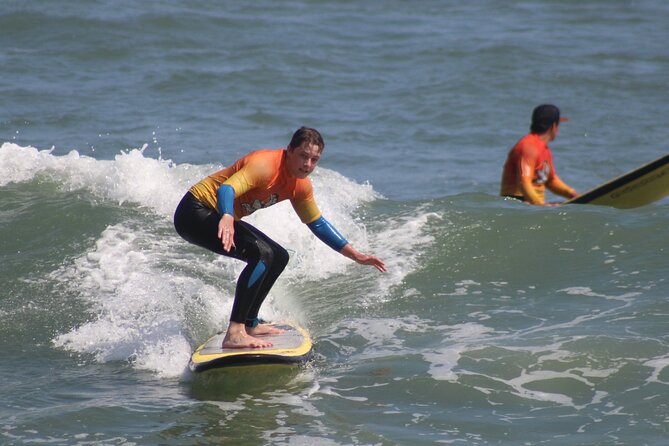
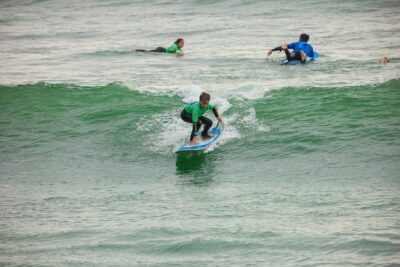
After the land session, you put on the supplied wetsuit and aqua shoes, take your beginner board, and head into the sea with the instructors. The water time is the heart of the class.
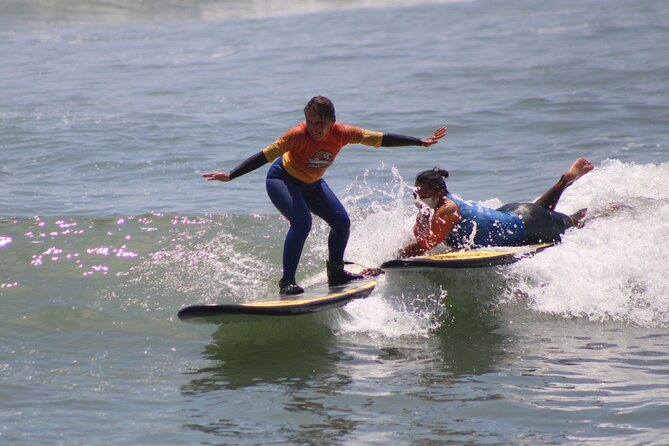
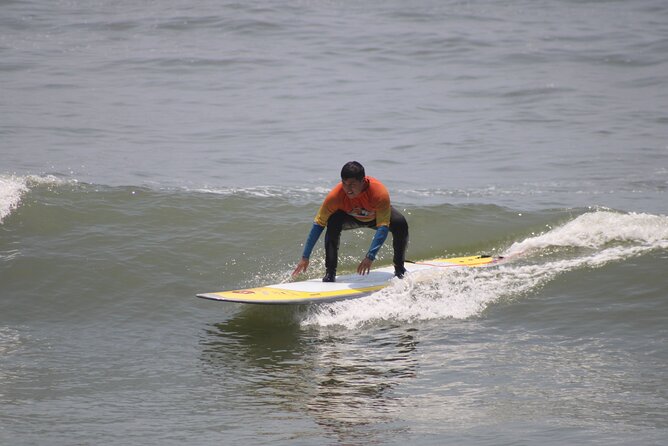
Your first goal should not be stylish surfing. It should be getting the timing right, paddling with purpose, and standing for even a short ride. Most beginners stand during their first class, but that result is not guaranteed. Ocean conditions, balance, fitness, and nerves all play a part.
The instructors help you find suitable waves and give feedback between attempts. Reports of Jorge, Oscar, Lorenzo, Javier, and Hector repeatedly point to encouragement, patience, clear directions, and close attention to safety. One instructor even helped a student who had struggled with balance and felt uneasy in rough water to ride each wave they attempted.
That does not mean the lesson is effortless. Several people describe surfing as hard work, even when they managed to stand on the first wave. You may finish because your arms and legs are tired before the formal time limit arrives. Take the suggested rests seriously. The goal is to learn and enjoy the water, not to exhaust yourself trying to catch one more wave.
The beginner-friendly waves are a major plus. The class is designed for people with little or no experience, and families describe small waves that worked well for children. Conditions can change, of course, so the instructor’s judgment matters on the day.
More Surf Lessons around the world:
- Tenerife: Surfing Lesson for All Levels, Photos included
★ 4.9 · 1,314 reviews - Group Surfing Lesson at Playa de las Américas, Tenerife
★ 5.0 · 1,072 reviews - Canggu: 2-Hour Surf Course
★ 4.8 · 1,053 reviews - Playa de las Américas: Private or Small-Group Surf Lesson
★ 4.8 · 980 reviews
The instructors make the difference
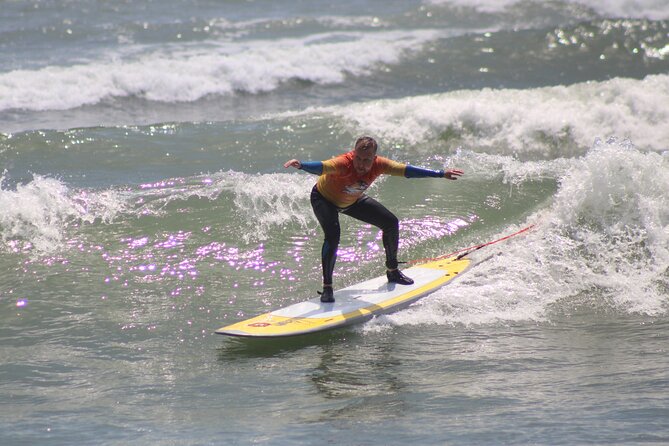
The strongest part of this experience is the human coaching. Names that come up often include Jorge, Hector, Oscar, Javier, and Lorenzo. Each is described as supportive, patient, attentive, or encouraging.
Jorge receives especially strong praise for explaining things clearly, checking on tired students, and helping people improve after every wave. Hector is valued for patience and useful feedback. Oscar is described as kind and positive, while Javier is praised for well-timed support and clear guidance. Lorenzo is credited with helping a beginner stand up on the first attempt.
You may not be assigned one of these specific instructors. Staff assignments can change, and the experience does not promise a particular teacher. Still, the repeated pattern is reassuring: instruction is active, personal, and aimed at helping you succeed safely.
There is one language point to keep in mind. The activity may be presented as English-friendly, but one person found that the assigned guide did not speak English. If detailed English instruction is essential for you, contact the school before booking and confirm the language for your class.
Equipment, changing, and practical comfort
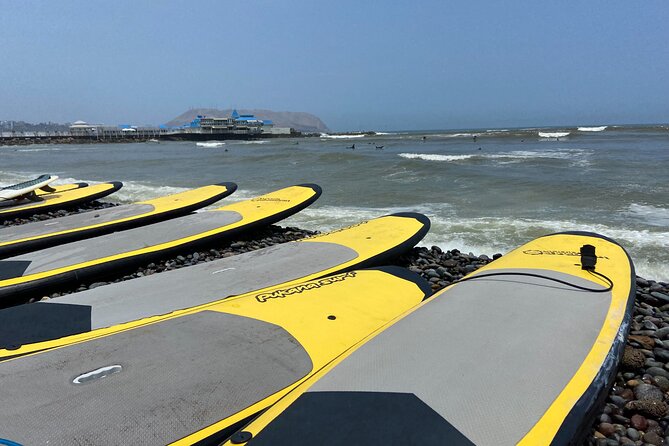
The included equipment is a real advantage. You receive a wetsuit, aqua shoes, and a special beginner surfboard. Several people found the wetsuits and boards to be in good condition.
You should bring whatever personal items you need for the time before and after the lesson, but food and drinks are not included. The school has been described as watching belongings while students surf, which is helpful, though you should still avoid bringing valuables.
Changing arrangements may be basic. One person was uncomfortable with being told to remove a rental wetsuit in a less private outdoor area. This is not a reason to reject the lesson, but it is a useful warning: ask about changing arrangements when you arrive, and bring a towel and suitable clothing for the beach.
Photography is another optional extra rather than part of the $29 price. An instructor may record you with a GoPro, but digital photos can cost more. The quality and effort can vary, so ask about the price and what is included before agreeing.
Who should book this class
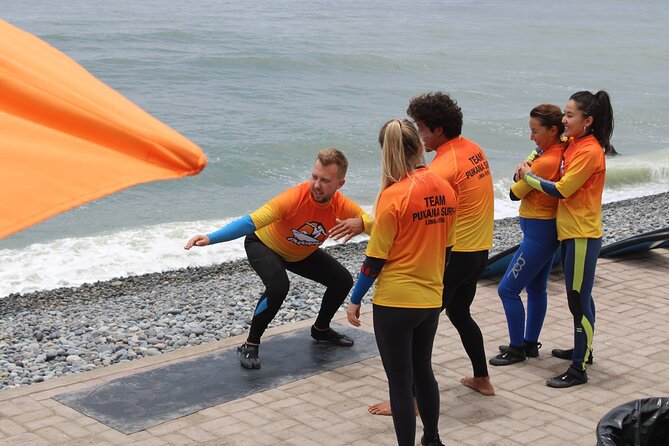
This works best for a first-time surfer, a casual beginner, a solo visitor, or a couple looking for an active morning in Lima. It also suits families with children who are old enough to follow instructions and comfortable in the sea. One family had individual instructors for the children, and a younger child rode with an instructor.
The class can also suit someone who has surfed only once or twice and wants a little more help with timing and balance. It is not limited to people who have never touched a board.
You need a moderate level of fitness. You should be able to swim, manage repeated paddling, and handle getting knocked off the board. The activity is not recommended for people who cannot swim or have shoulder problems.
If you are unsure about surfing because of nerves, the instruction may help. A calm teacher can make the first attempt feel manageable. But do not treat the lesson as a gentle sightseeing activity. You will work hard, get wet, and spend much of the class in the water.
How to fit the lesson into your Lima plans
The early classes begin at 6:30 AM, followed by sessions at 8 AM, 10 AM, noon, 2 PM, and 4 PM. This wide choice makes it easy to fit surfing around museums, meals, and other Lima plans.
An early class can leave the rest of your day open, but you may feel tired afterward. A later session gives you more time to wake up and eat, though you should avoid arriving immediately after a heavy meal. The supplied information does not promise a particular tide or wave condition for each time, so choose the slot that best fits your schedule rather than assuming one time is always ideal.
The lesson is booked, on average, nine days ahead. That is a useful sign that you should reserve before arriving if your Lima schedule is tight. Free cancellation is available up to 24 hours before the start time. Within 24 hours, you receive no refund and changes are not accepted.
What the listed Lima stops really mean
The activity information lists five stops:
- Pukana Surf School
- Museo Larco
- MAC, Museo de Arte Contemporáneo de Lima
- Huaca Pucllana
- La Casa Museo de Ricardo Palma
Only Pukana Surf School is described as part of the surf lesson itself. The other four locations are important Lima sights, but no visit time, admission, transport plan, or guided explanation is provided for them here.
Do not assume your $29 surf booking includes entry to Museo Larco, MAC, Huaca Pucllana, or Casa Museo de Ricardo Palma. They are best treated as separate ideas for your Lima itinerary unless your chosen booking option specifically confirms otherwise.
This is still useful planning information. You could pair a morning surf lesson with one museum later in the day, but leave enough time to dry off, change, eat, and recover. Surfing and museum-hopping make a good combination because one gives you active time by the Pacific and the other gives you a quieter afternoon.
Is $29 good value?
For a 90-minute beginner lesson with equipment, $29 is a fair price. The class gives you more than a board rental because an instructor teaches the basic technique, stays involved in the water, and helps you choose waves.
The price is especially good if you stand up and catch a few waves during the first class, but you should judge it by the quality of the instruction rather than by that single result. Some beginners may stand quickly. Others may spend the session learning to paddle, balance, and fall safely.
Possible extra costs include hotel transport if you choose that option, food, drinks, and digital photos. The main equipment is included, so the price is easy to understand before you arrive.
Should you book the Pukana lesson?
I would book it if you want a direct, affordable first taste of surfing in Lima and you can swim comfortably. The combination of a short land lesson, an hour in the water, included equipment, frequent start times, and patient instructors makes this a practical choice.
I would think twice if you dislike group activities, need guaranteed English instruction, have shoulder trouble, or want private changing facilities. Confirm the language and lesson format before booking if those details matter.
For most beginners, this is a worthwhile use of 90 minutes. Bring a flexible attitude, arrive early enough to find the orange Pukana tent, and expect to work for that first ride. If you stand up, you will have a fine Lima memory. If you do not, you will still leave knowing the basics and deciding if you want another try.
FAQ
How long does the surf lesson last?
The advertised duration is about 1 hour and 30 minutes. The first 30 minutes cover explanations, standing and paddling practice, and stretching. The following hour takes place in the sea with instructors.
What equipment is included?
The class includes a wetsuit, aqua shoes, and a beginner surfboard. Taxes, local fees, and booking charges are also included.
Where does the activity begin and end?
The meeting point is Cto. de Playas 5, Lima 15074, Peru. The activity ends back at the meeting point.
What time can I take the class?
Classes are offered every two hours at 6:30 AM, 8 AM, 10 AM, noon, 2 PM, and 4 PM. The school operates throughout the year.
Is hotel pickup included?
Hotel pickup and drop-off are not included unless you select an option that specifically includes them.
Is the class suitable for children?
The class is aimed at beginners of all ages. Children have taken part, including younger children who received close help from instructors. A moderate level of physical fitness and the ability to swim are required.
Can I take the lesson if I cannot swim?
No. The activity is not recommended for people who cannot swim.
Can I cancel for a full refund?
Yes, if you cancel at least 24 hours before the local start time. Cancellations made less than 24 hours before the start time are not refunded, and changes within that period are not accepted.
Latest surf sessions around the world
- Valencia: Excursión en Moto de Agua + Paddle Surf★ 4.9 · 9 reviews
- Waikiki: Family, Private, and Group Surfing Lessons★ 5.0 · 4 reviews
- Waikiki: Surf Lessons Easy 60 min classes no crowds!★ 4.9 · 21 reviews
- Tricana Surf Experience★ 5.0 · 3 reviews
- Uluwatu: Surf Lessons Beginner★ 5.0 · 3 reviews
- Astonishing Scavenger Hunt: Surf, Sand and Sculptures!★ 3.0 · 2 reviews
- Two- Hour Group Surfing Lesson in Cocoa Wrightsville Beach, NC★ 5.0 · 13 reviews
- Electric Bike Rentals in Topsail Island and Surf City★ 5.0 · 2 reviews
Peru Surf Lessons, compared.
Surf lessons in Lima, Peru surf lessons best experience
Read our review →
Lima: Surf Class – Perfect Wave for Beginners and Advanced
Read our review →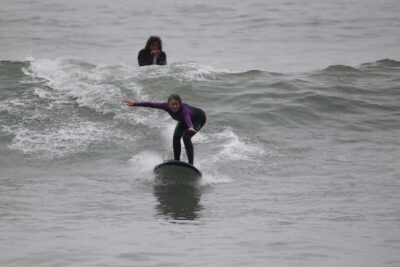
Browse the lists this tour appears in