
Review · PORTUGAL
AZORES: Surf Lesson for Beginners
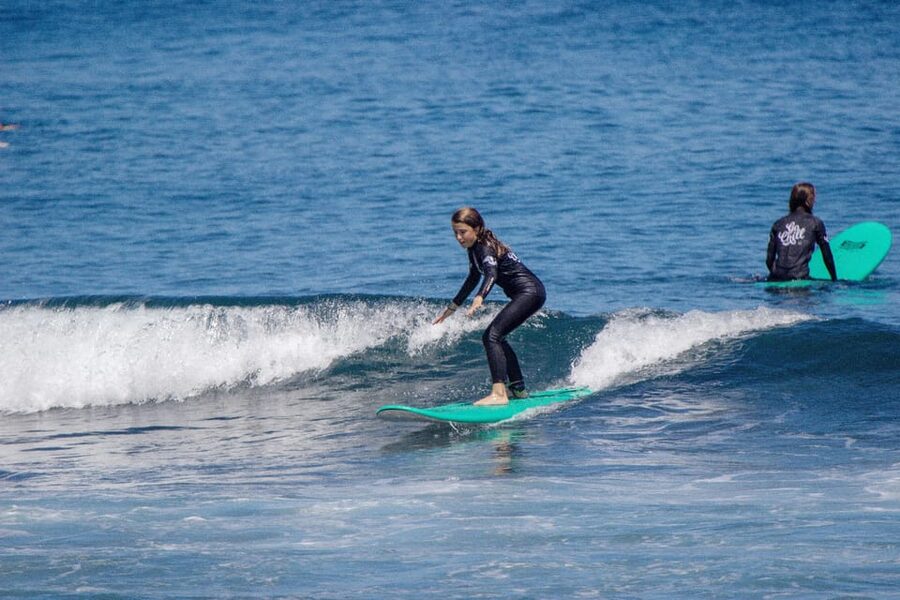
The best part of this Azores surf lesson is that you do not have to guess which beach will work. The team chooses a suitable spot according to the tide and sea conditions, then sends you the meeting location one day ahead. You get a proper introduction on the sand before trying the Atlantic.
I like the small group size, limited to six students per instructor, and the useful mix of practice and correction. I also like that the lesson is built for true beginners, with equipment, safety guidance, and insurance included. The main drawback is that you must arrange your own way to the beach, and the final location may change.
Key points
- Beach choice depends on the day: Lessons may take place at Milícias, Monte Verde, or Santa Bárbara beaches.
- Small groups mean more coaching: Each instructor works with no more than six students.
- The lesson covers real basics: You practice equipment use, safety, paddling, the pop-up, and standing on the board.
- All core equipment is supplied: A surfboard, leash, and wetsuit are included.
- You meet at the beach: Transportation is not included, and the exact meeting point arrives one day before.
- A short, active introduction: The 1.5-hour format suits first-timers and people refreshing old skills.
Learning to surf on an Atlantic island
Surfing in the Azores gives you a memorable setting for a first lesson. You are not practicing in a pool or on an artificial wave. You are learning on an island in the middle of the Atlantic, with the sea shaping the day’s plan.
That changing plan matters. The best beach is not always the closest beach or the one you expected to visit. The instructor may choose Milícias Beach on the south coast, or Monte Verde Beach and Santa Bárbara Beach on the north coast, depending on the conditions. You receive the meeting point one day before the activity, so keep your schedule open until then.
I see this as a sensible approach rather than an inconvenience. Beginners need manageable waves and a safe place to learn. Picking the beach according to the water gives the instructor a better chance of matching the lesson to the group.
The price is $53 per person. For 1.5 hours, that is not the cheapest possible activity, but you are paying for more than time in the water. The fee includes a licensed instructor, surfboard, leash, surf wetsuit, and insurance. If you had to hire those items separately and arrange instruction on your own, the value would be less clear. Here, the main cost is bundled into one simple booking.
More Beginner Surf Lessons in Portugal
- Albufeira: Learn to Surf in Chill Beach Vibes & Good Times
★ 4.7 · 439 reviews - Beginner Surf Lesson at the Beautiful Algarvian West Coast
★ 5.0 · 377 reviews - Peniche:Surf lessons Beginners ,Intermediate, advance level
★ 4.8 · 229 reviews
Meeting at the right beach
This is a beach-based activity, not a hotel pickup tour. You need to get yourself to the chosen location, and transportation is not included. That makes the lesson easier to run at the best surf spot, but it puts a little more planning on you.
Look for a white van with black sand box written on the back. The exact meeting point is sent one day before the class. Read that message carefully, since the location can change with the tide and sea conditions.
The three commonly used beaches give you a useful sense of the operating area:
- Milícias Beach is on the south coast.
- Monte Verde Beach is on the north coast.
- Santa Bárbara Beach is also on the north coast.
The information does not promise that every lesson will use one particular beach. Plan around the location you receive, not the beach you may have seen in a photo. Bring enough time to arrive, since a late arrival could cut into your short lesson.
Getting fitted for a wetsuit and board
Once you meet the instructor, you put on the supplied surf wetsuit and take the board and leash. The wetsuit is more than a comfort item. Atlantic water can feel cool, and staying warm helps you pay attention to the lesson instead of thinking about the temperature.
Bring your own swimwear to wear under the wetsuit. A towel, sunscreen, and water are also on the packing list. You should arrive ready to change and get moving, since the activity lasts only 90 minutes.
The surfboard and leash are included, so you do not need prior equipment knowledge. The instructor introduces the gear before asking you to use it. That is important for first-timers, since even simple details, such as how the leash connects to you and the board, are part of staying controlled in the water.
The lesson does not include alcohol, drugs, or smoking. That rule is unsurprising but useful to know before you arrive. You need to be alert and physically ready for an activity in moving water.
Starting on the sand before entering the water
The class begins with a warm-up on the sand. This gives you time to loosen up and listen before dealing with waves, wind, and other distractions.
The instructor explains the basic parts of surfing, how the equipment works, and the safety rules. You learn the body movement needed to get from lying on the board to standing. The lesson also covers paddling and the pop-up, two basic actions you will repeat during the water session.
This land practice is one of the most valuable parts of the lesson. A beginner who tries to work out the pop-up in the water may waste energy and miss the moment a wave arrives. Practicing first lets you focus on timing later.
The safety briefing also sets the tone for the class. The instructors are licensed, and the activity includes insurance. That does not remove the need to listen or follow directions, but it gives the session a more organized structure than simply renting a board and heading into the surf.
Same water, another way to ride it:
- Matosinhos: Surfing Lesson with Equipment
★ 4.8 · 926 reviews - Lisbon Surf Experience
★ 4.9 · 876 reviews - Albufeira: Surf Lesson
★ 4.7 · 699 reviews - Porto: Small Group Surf Lesson with Transportation
★ 4.9 · 594 reviews
One-on-one corrections inside a small group
The group limit is six students per instructor. That is small enough for personal attention without turning the lesson into a private class.
You will not receive constant one-on-one coaching, since the instructor must work with the rest of the group. Still, the format gives the instructor room to watch your attempts and offer specific tips. If you are making the same mistake repeatedly, the instructor may bring you back onto the sand to correct it.
That pause can save time and energy. The point is not just to try more waves. It is to understand what your body and board are doing, then return to the water with one clear change to make.
The strongest praise for this experience centers on the instructors’ friendly approach, clear control of the session, and ability to help students progress. The most satisfying result reported is simple: people who began as beginners managed to stand on the board and ride waves by the end.
That will not happen on every attempt, and the sea has the final say. But the lesson is arranged to give you a real chance. You practice the movement, receive corrections, and get back into the water rather than being left to struggle alone.
What happens during the water session
The water portion focuses on applying the sand lesson. You practice paddling, try to catch manageable waves, and work on standing. The instructor watches your technique and gives tips designed to help you progress faster.
Your first attempts may involve little more than balancing or getting the timing wrong. That is normal for a beginner lesson. The useful measure is not how many perfect rides you get. It is how much more clearly you understand the board and the wave by the end.
The instructor may ask you to get out of the water for another correction. This can feel like a pause when you are eager to continue, but it is part of the teaching method. A quick adjustment on land can make the next set of attempts more productive.
You should expect an active session. You will paddle, push up, balance, fall, and try again. Bring water for afterward, and use sunscreen even if the day feels cool. Sun exposure and exertion can catch you by surprise near the ocean.
A 1.5-hour format that keeps the focus clear
Ninety minutes is enough time for a proper introduction, but it is not a full-day surf camp. The schedule generally follows a straightforward pattern:
- Meet at the selected beach and find the white van.
- Put on the wetsuit and collect the board and leash.
- Warm up on the sand.
- Learn about the equipment, safety, paddling, and pop-up.
- Enter the water and work toward standing on the board.
- Receive corrections and repeat the key movements.
The pace may vary because the lesson location and sea conditions change. The activity page does not promise a fixed minute-by-minute schedule, and that is reasonable for an outdoor class.
If you want a relaxed introduction without giving up an entire day, the duration works well. You can fit the lesson around other plans in the Azores. If you want long practice sessions, repeated coaching, or several beaches in one outing, you will need a different type of surf package.
Is $53 a fair price?
At $53, this is a reasonable introductory price when you value guidance and included gear. A board, leash, wetsuit, licensed instruction, and insurance are all covered. The small group limit also helps justify the cost, since you are not joining a large class where the instructor can barely watch each person.
The value is strongest for someone who has never surfed before. Renting a board without instruction may cost less, but it does not give you the same help with safety, positioning, paddling, or the pop-up. Beginners often spend their first session repeating one problem without knowing how to fix it.
The price is less attractive if you already surf confidently and only need equipment. In that case, much of what you pay for is the beginner teaching structure. The experience can still work as a refresher, but the lesson is clearly designed around building basic skills and confidence.
The lack of included transportation is the main cost to consider. You will need to reach the beach yourself, and the chosen location may be on the opposite coast from where you expected. If your budget is tight, check the route and transport cost after receiving the meeting point.
Who will get the most from this lesson?
This activity suits first-time surfers who want a guided start. You do not need previous surfing experience, and the lesson is described as suitable for beginners of all ages.
It also works for someone who tried surfing before but never learned the basics properly. The instructor can help refresh paddling and the pop-up, then point out the mistakes that held you back.
I would choose this lesson for:
- A solo visitor who wants a social but small class.
- Couples or friends looking for an active Azores activity.
- Families with beginners of different skill levels.
- Anyone curious about surfing but unsure about safety.
- A former beginner who wants to rebuild confidence.
You should be comfortable taking part in an ocean activity and following safety instructions. The available information does not give a more detailed fitness or accessibility description, so ask the provider if you have a specific physical concern.
The class is taught in English and Portuguese. That makes it practical for English-speaking visitors, while Portuguese speakers can take instruction in their own language.
How to prepare for a better session
Wear swimwear that will stay comfortable under a wetsuit. Pack a towel, sunscreen, and water. You do not need to bring a board, leash, or wetsuit because those are provided.
Keep your plans flexible around the beach announcement. The location arrives one day before, and the tide or sea can affect both the beach and lesson time. Check your messages before setting out.
Do not treat the lesson as a chance to show off. Listen closely during the safety talk, stay near the instructed area, and accept corrections. Surfing looks simple from shore, but the basics matter more than trying to stand immediately.
Allow yourself to fall. The lesson is about learning a new movement, not producing a perfect ride on command. A good session may leave you with one clean stand, several useful corrections, and a much better sense of what to practice next.
You can cancel up to 24 hours before the activity for a full refund. The reserve-now, pay-later option also keeps your plans flexible, which is useful when your Azores itinerary is still changing.
Should you book the Black Sand Box lesson?
Book it if you want a compact, well-organized introduction to surfing, especially if you value a small group and direct coaching. The strongest reasons are the beach choice based on conditions, the maximum of six students per instructor, and the full equipment package.
Think twice if you need hotel pickup, a guaranteed beach, or a long session. You must arrange transportation, the location can change, and 1.5 hours will pass quickly.
For most beginners, the balance is good. You get the essential safety and technique work, then a real chance to stand on an Atlantic wave. If that sounds like the right kind of Azores adventure, $53 is a fair price for a first try.
FAQ
Where does the surf lesson take place?
The lesson meets directly at the beach. Common locations include Milícias Beach on the south coast, and Monte Verde Beach and Santa Bárbara Beach on the north coast.
How do I find the meeting point?
The exact meeting location is sent one day before the activity. At the beach, look for a white van with black sand box written on the back.
Can the beach location change?
Yes. The lesson time and location may vary according to sea conditions and the tide.
Is transportation included?
No. You need to arrange your own transportation to the selected beach.
Do I need previous surfing experience?
No. The lesson is designed for beginners, and no prior surfing experience is required.
What equipment is included?
A surfboard, leash, and surf wetsuit are included. Insurance and instruction from a licensed surf instructor are also included.
How many people are in each group?
The group is limited to six participants per instructor.
How long does the lesson last?
The lesson lasts 1.5 hours.
What should I bring?
Bring swimwear, a towel, sunscreen, and water.
What languages are spoken?
The instructors teach in English and Portuguese.
Latest surf sessions around Portugal
- Tricana Surf Experience★ 5.0 · 3 reviews
- Exclusive Surf Lessons in S Miguel Azores★ 5.0 · 21 reviews
- Guided surf tours from Porto city to the beach★ 4.5 · 10 reviews
- Surf Lesson | Surf Lessons★ 5.0 · 39 reviews
- Self-guided tour Bike + Surf★ 5.0 · 6 reviews
- Surf Lessons in Porto with transfer at Porto Surf School★ 5.0 · 42 reviews
- Private Surf Experience – Transfer to Matosinhos – All Levels★ 5.0 · 7 reviews
- Small Group Surf Coaching in Porto with photos★ 5.0 · 28 reviews
Portugal Surf Lessons, compared.

Porto: Small Group Surf Lesson with Transportation
Read our review →
Albufeira: Learn to Surf in Chill Beach Vibes & Good Times
Read our review →

Browse the lists this tour appears in