
Review · BIG ISLAND
Go Surf Hawai’i (Kona Coast)
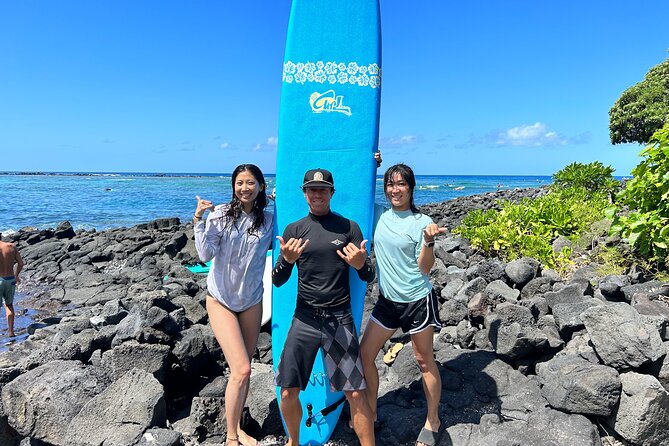
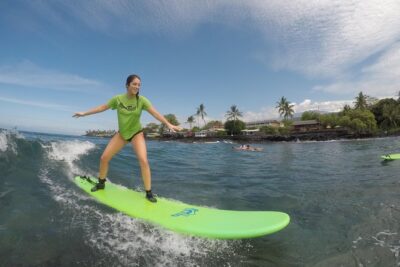
The best part of Go Surf Hawai‘i is its tiny group size. With no more than four people, the instructor can watch your feet, fix your balance, and help you catch more waves instead of shouting advice from far away. Coaches including Jared, Jace, Rory, and Renee tailor the lesson to the people in the water.
I like the careful start on land, where you learn to paddle, pop up, and stand before facing the ocean. I also like the local advice that comes afterward, covering beaches, board rentals, food, and places to explore around the Kona Coast. The main catch is the ocean itself: wave conditions change, and one scheduled lesson was rescheduled because the surf was too flat.
Key points to know
- Small groups of up to four: You get more direct coaching and more chances to try.
- A gentle first lesson: Soft-top boards, rash guards, dry-land practice, and a mellow break help beginners get started.
- Several praised coaches: Jared, Jace, Rory, and Renee are noted for patience, clear instruction, and calm support.
- Good for families: Children and teenagers have stood up on their first lesson, but private lessons are required for keiki under nine.
- Optional photography: A freelance photographer may be available to capture your session, but photo coverage is not guaranteed.
- Weather matters: If poor conditions cancel the lesson, you can choose another date or receive a full refund.
Why this Kona surf lesson works for first-timers
Surfing looks simple from shore. Lie down, paddle, stand up, ride. In practice, the timing is awkward, the board shifts under you, and the wave does not wait while you remember which foot goes forward.
Go Surf Hawai‘i deals with that problem in the right order. Your coach begins with basic instruction on land, then takes you to a beginner-friendly break and helps you apply those movements in the water. That structure matters. You are not left to copy a stranger and hope for the best.
The lesson lasts about 90 minutes. That is long enough to learn the movements and make repeated attempts, but short enough for most first-timers to stay engaged. You will spend part of the time preparing and getting into position, so do not expect 90 uninterrupted minutes of riding waves.
The instruction is in English. The activity starts and ends at 78-6680 Ali‘i Drive in Kailua-Kona, and confirmation is provided when you book. It is near public transportation, though no transfer service is included in the information provided.
More Surf Lessons around the USA:
- Maui: Two Hour Beginner Group Surf Lesson in Kihei
★ 5.0 · 950 reviews - UTV Dune Cruise and Surf at Coral Pink Sand Dunes
★ 5.0 · 785 reviews - Open Group Surfing Lesson in Waikiki, Hawaii
★ 4.5 · 582 reviews
Meeting Jared, Jace, Rory, or Renee
The people teaching the lesson are a major part of its appeal. Jared is repeatedly praised for his calm manner, encouragement, and care in the water. Jace is noted for clear explanations, patience, and useful corrections to stance, turning, and wave selection. Rory has worked with children and beginners who needed extra help paddling back out.
That range matters because first-time surfers arrive with very different needs. A confident teenager may want help catching more waves and turning. A nervous adult may first need to feel safe standing on a board. The coaching is meant to adjust to both.
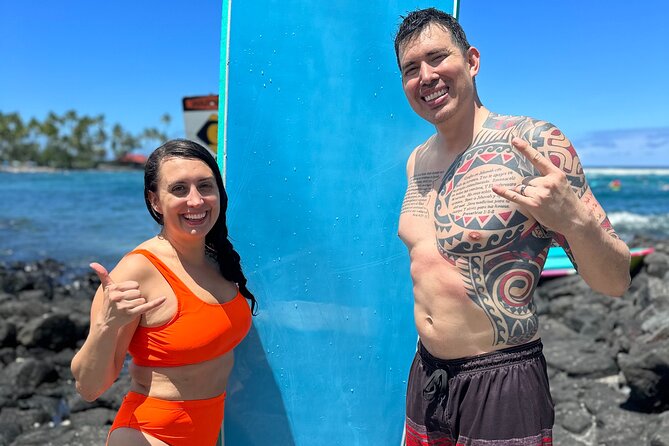
Several families were able to get everyone standing, including parents who did not consider themselves athletic. One couple had different comfort levels, and the instructor gave the more experienced partner room to catch waves while helping the nervous beginner with smaller waves and steady encouragement.
You should still expect to work. The activity requires a moderate level of physical fitness, and surfing involves paddling, pushing up, balancing, and getting back on the board. You should know how to swim before taking the lesson. The ocean is friendly only up to a point.
What happens before you enter the water
The equipment is supplied, which removes one of the annoying parts of trying a new sport. You receive a soft-top board and a rash guard. The soft board is a practical choice for beginners because it is more forgiving during wobbly starts than a hard performance board.
Your coach explains the basic body position and walks through the pop-up on dry land. You learn how to paddle, where to place your hands, how to bring your feet underneath you, and how to find balance once standing.
This is also the time to ask questions. If you are worried about falling, tell the instructor. If you have surfed before and want to improve, explain what you are trying to fix. The lesson is not only for someone who has never touched a board. It can also help an advancing surfer work on form and wave timing.
The pre-water coaching may feel slow if you are eager to get started. That is a good trade. A few clear practice runs on land can save repeated confusion once the board is moving.
The beginner break and the first wave
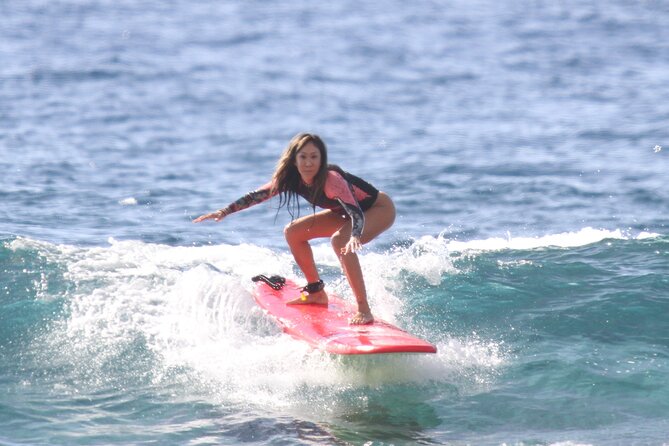
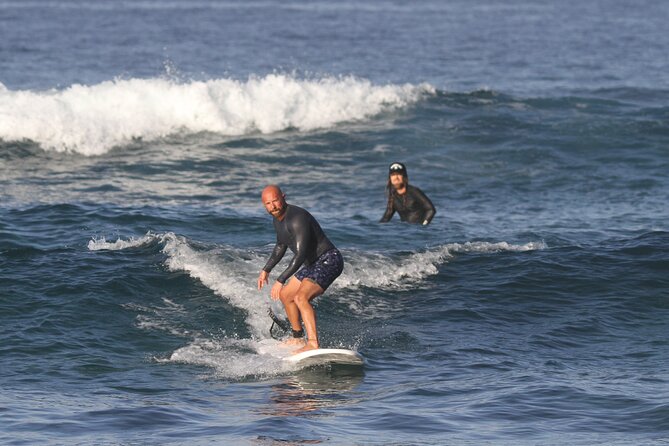
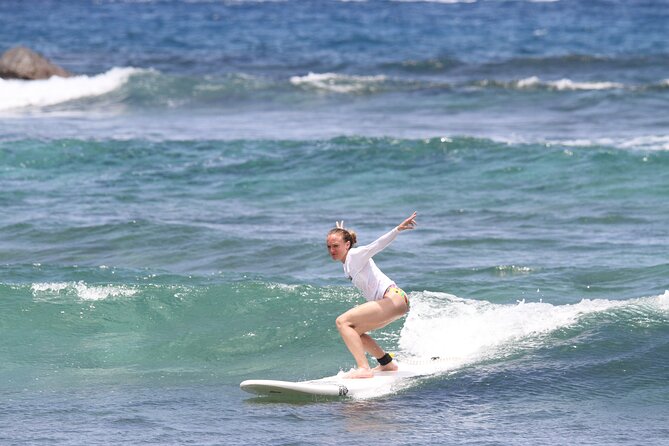
After the dry-land briefing, you head to a mellow break suited to beginners. Your instructor helps you position the board, paddle at the right moment, and stand when the wave begins to carry you.
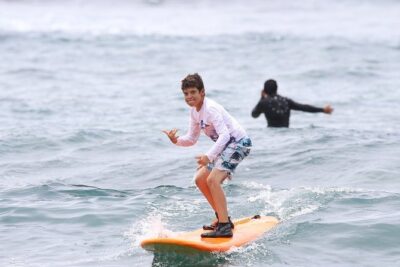
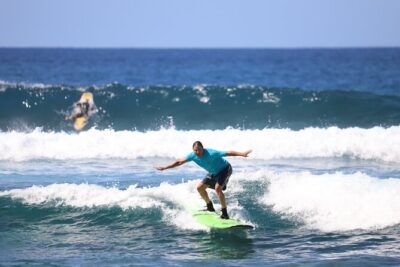
The strongest part of the lesson is the number of attempts. With a maximum of four people, the coach can give more personal help than you would get in a large class. Several families described children and adults catching at least a few waves, even on days when the surf was small.
Small waves are not a poor substitute for dramatic surf. For a first lesson, they are often exactly what you need. You have more time to get your feet under you, and a fall is less intimidating when the wave is gentle.
You may still struggle with direction. One first-time surfer found it difficult to turn the board and control arm and leg movements. That is normal, and it points to one limit of a 90-minute class: you can learn the basic sequence, but turning and wave selection may need another session.
The coach can help propel you into waves and offer corrections in real time. That personal timing is worth more than a long lecture. Surfing is learned through repetition, and you want an instructor close enough to tell you what to change on the next attempt.
Same water, another way to ride it:
- Outrageous Surf ScHool Lesson on Lahaina Side
★ 4.5 · 547 reviews - Los Angeles: Surfing Lesson in Venice Beach
★ 4.8 · 442 reviews - Oahu: Beginner-Friendly Waikiki Beach Surfing Lesson
★ 4.9 · 425 reviews - Po’ipu Surf Lesson
★ 5.0 · 361 reviews
Why the four-person limit matters
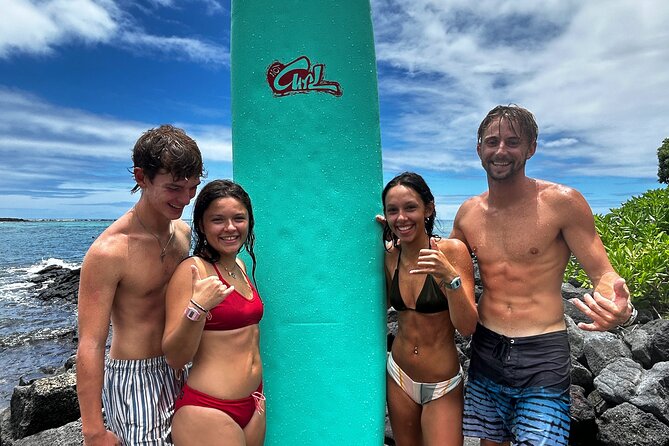
A four-person maximum sounds like a small detail, but it changes the feel of the lesson. In a larger class, you spend more time waiting for your turn and less time receiving corrections. Here, the instructor can give each person attention and adapt the pace.
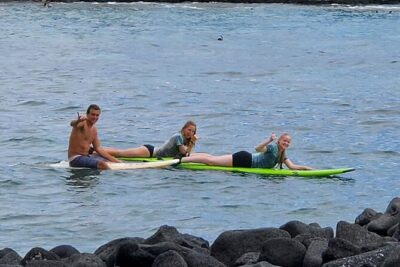
The small group also works well for families. A parent, two teenagers, and another family member can share the experience without splitting into separate lessons. Children who need reassurance get more direct support, while stronger surfers can keep practicing.
The group size is not always the same. One early class had only two people, giving the pair a particularly personal session. The advertised maximum is four, so you should plan for a small group rather than assume a private lesson.
Private lessons are required for keiki under nine. The information does not specify a minimum age for the regular small-group format, so families with younger children should confirm the private-lesson arrangement when booking.
Kona Coast setting and local advice
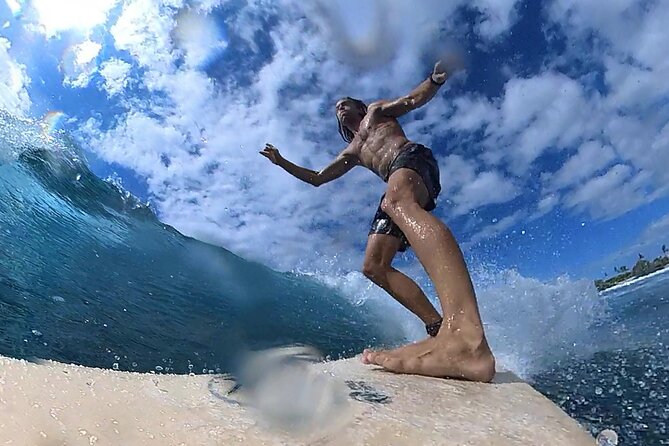
The lesson takes place in the Kailua-Kona area of the Big Island, a part of Hawaii with a strong connection to surfing. One class met at a location described as the birthplace of surfing, adding a bit of cultural interest to the activity.
The setting is not just decoration. Learning to surf in Hawaii gives the experience a sense of place that an indoor lesson or generic beach class cannot match. You are learning a sport in the environment that shaped it, with an instructor who knows the local break.
After the water session, the coach offers practical tips on where to surf, eat, and explore beyond the usual tourist stops. This can be especially useful if you have several days on the Kona Coast and want to continue practicing.
Ask specific questions. Find out which beach suits your ability, where you can rent a board, and what conditions to watch for during the rest of your stay. The local advice is one of the better reasons to choose a small independent lesson instead of a large resort activity.
Equipment, sun, and comfort
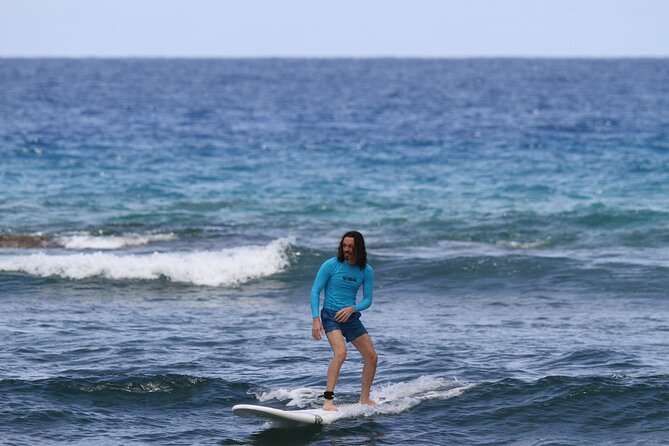
All main surf gear is provided. The soft-top board is suitable for learning, and the rash guard offers some protection from the sun and board friction. Even with a rash guard, bring or use sun protection as appropriate. One family specifically advised a long rash guard on bright days.
The supplied equipment saves you from renting a board before you know what size or shape you need. It also means you can make a single booking and arrive ready to learn. If you continue surfing during your trip, the instructor can offer advice on future equipment rentals.
At the end, some sessions have included fresh coconut juice served directly from a coconut. That is a small touch, but it makes a pleasant finish after paddling and standing attempts.
Photography is available through a freelance photographer when schedules allow. Tell the company in advance if you want photos, and understand that availability varies. Bring your own camera only if you can secure it safely, since the lesson keeps you active in the water.
Timing, weather, and the value of the lesson
No price is provided here, so I cannot judge the exact cost against competing schools. I can judge what is included: equipment, instruction, a small group, local guidance, and roughly 90 minutes in the water. For a first attempt, that package offers useful value because you are paying for coaching rather than simply board access.
The small group is the feature that most affects value. If the price is close to a large group class, I would favor Go Surf Hawai‘i for the added attention. If it costs much more than several competing lessons, compare the group limits and water time before booking.
Weather and surf conditions are part of the calculation. A lesson was postponed when there were no useful waves, then moved to a better morning. That is frustrating if you have a tight schedule, but rescheduling is better than forcing a lesson on a flat day.
The activity requires good weather. If poor weather cancels it, you can select another date or receive a full refund. For the best chance of keeping your plan intact, book early enough in your Kona stay to leave room for a change.
You can cancel for a full refund up to 24 hours before the start time. Changes or cancellations inside that 24-hour window are not accepted for a refund.
A few practical cautions
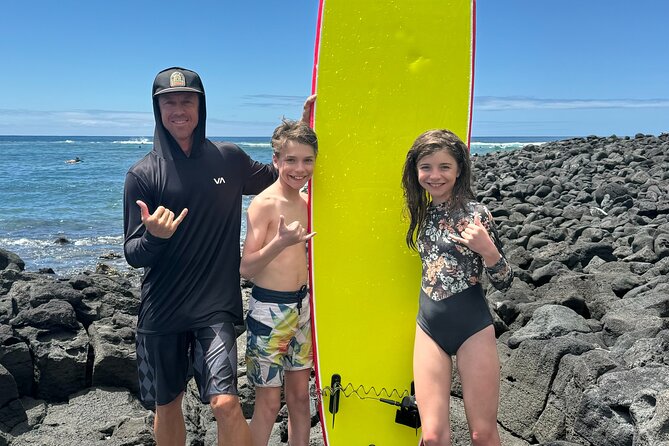
The meeting point is clear, but double-check your booking messages before leaving. One serious service problem involved a missed appointment and poor communication through a third-party booking channel. The company said the issue was connected to messages not reaching the instructor and that refunds and new dates were arranged.
That incident appears to be unusual compared with the rest of the available information, but it is still worth taking a simple precaution. Save the meeting address, confirm the start time, and make sure you have a working contact number before driving across the island.
You should also allow enough time to find the meeting point and prepare. The listed address is in Kailua-Kona, and the activity ends where it begins. No hotel pickup is included.
Surfing is physical even when the break is gentle. Expect to paddle and repeatedly climb onto the board. If you are unsure about your fitness or swimming ability, ask before booking rather than treating this as a passive sightseeing trip.
Who should book Go Surf Hawai‘i
I would choose this lesson for a first-time surfer who wants patient instruction and a real chance to stand up. It is also a good fit for families with children old enough for the regular group format, couples with different comfort levels, and visitors who want local beach advice along with the lesson.
The experience suits you especially well if:
- You want a small group rather than a crowded class.
- You prefer step-by-step instruction before entering the water.
- You need equipment supplied.
- You want help suited to mixed abilities within one family.
- You hope to keep surfing during the rest of your Hawaii visit.
- You value a calm instructor who can help with nerves.
I would think twice if your schedule cannot handle a weather change, if you want advanced performance coaching, or if you are looking for a guaranteed photo package. This is an introduction and skills lesson, not a competition clinic.
The strong rating of 4.8 from 83 ratings and the 94 percent recommendation rate fit the experience described here: a small, friendly lesson with especially strong marks for patience, safety, and personal attention. The most useful praise is not simply that people had fun. It is that beginners received enough help to stand, ride several waves, and leave with a better idea of how to continue.
Should you book this Kona surf lesson?
Book it if standing on a Hawaiian wave is on your list and you want a coach close by to help make it happen. The four-person limit, supplied gear, patient instruction, and beginner break give first-timers a fair start.
Choose an early date in your trip if possible. That gives you a backup day if the surf is too flat and leaves time to use the local advice afterward. Confirm the meeting details, tell the company if you want photography, and remember that children under nine need a private lesson.
For families and nervous beginners, Go Surf Hawai‘i offers the kind of personal help that can turn a clumsy first attempt into a genuine new skill. For experienced surfers, the value depends on how much you want local guidance and form correction. Either way, the Kona Coast is a fine place to learn the basics, one small wave at a time.
FAQ
Where does the surf lesson start?
The lesson starts at 78-6680 Ali‘i Drive, Kailua-Kona, Hawaii 96740. The activity ends back at the same meeting point.
How long does the experience last?
The activity lasts approximately one hour and 30 minutes.
How many people can join the lesson?
The activity has a maximum of four people. Some sessions may have fewer participants.
Is the lesson suitable for beginners?
Yes. The lesson uses a beginner-friendly surf break and includes dry-land instruction on paddling, standing up, and balance.
What equipment is provided?
A soft-top surfboard and rash guard are provided. Optional photography may be available through a freelance photographer.
Are children allowed to join?
Children can join the activity, and families with children and teenagers have taken part. Private lessons are required for keiki under nine.
Do I need to be physically fit?
You should have a moderate level of physical fitness. Surfing involves paddling, standing, balancing, and repeated attempts in the water.
Is photography guaranteed?
No. A freelance photographer may be available, but availability varies. You should ask about photos when arranging the lesson.
What happens if the weather is poor?
The experience requires good weather. If it is canceled because of poor conditions, you can choose another date or receive a full refund.
Latest surf sessions around the USA
- Waikiki: Family, Private, and Group Surfing Lessons★ 5.0 · 4 reviews
- Waikiki: Surf Lessons Easy 60 min classes no crowds!★ 4.9 · 21 reviews
- Astonishing Scavenger Hunt: Surf, Sand and Sculptures!★ 3.0 · 2 reviews
- Two- Hour Group Surfing Lesson in Cocoa Wrightsville Beach, NC★ 5.0 · 13 reviews
- Electric Bike Rentals in Topsail Island and Surf City★ 5.0 · 2 reviews
- Surf Lesson in Santa Barbara★ 3.0 · 2 reviews
- 1-on-1 Private Surf Lesson in Santa Barbara★ 5.0 · 4 reviews
- Surf lesson with KTO Yoga Surf★ 4.0 · 5 reviews
Big Island Surf Lessons, compared.

Premium group surf lessons- Kona’s Best Surf Lessons
Read our review →
Browse the lists this tour appears in