
Review · BIG ISLAND
Kona Surf Lesson in Kahaluu
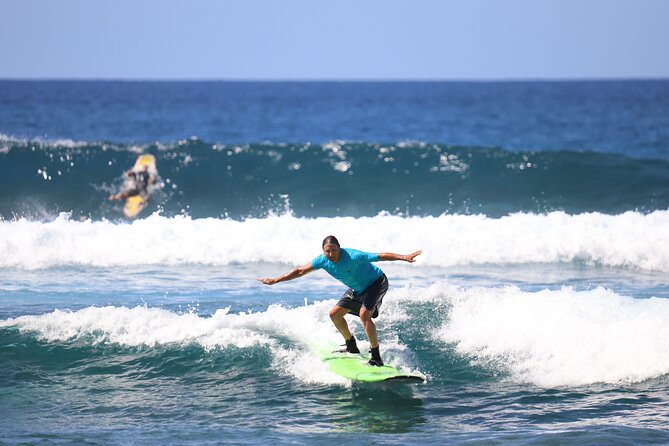
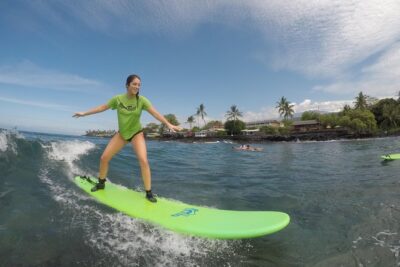
At Kahaluu Beach Park, you get a friendly first taste of surfing without having to bring much beyond a swimsuit, towel, and sunscreen. The lesson begins on shore with a clear demonstration, then moves into the bay, where instructors help you catch small waves and build confidence one attempt at a time.
I like the small-group attention and the practical gear package, especially the reef shoes and SPF surf shirt. I also like that instructors such as Koa, Carl, Kaleo, Max, Brady, and others have been praised for patience with young children, teens, nervous adults, and first-time surfers. The main thing to keep in mind is that Kona does not always have strong surf, and conditions can change from easy to challenging.
Key points to know before booking
- Two hours at Kahaluu Beach Park: Enough time for a short lesson, water practice, and several attempts at standing.
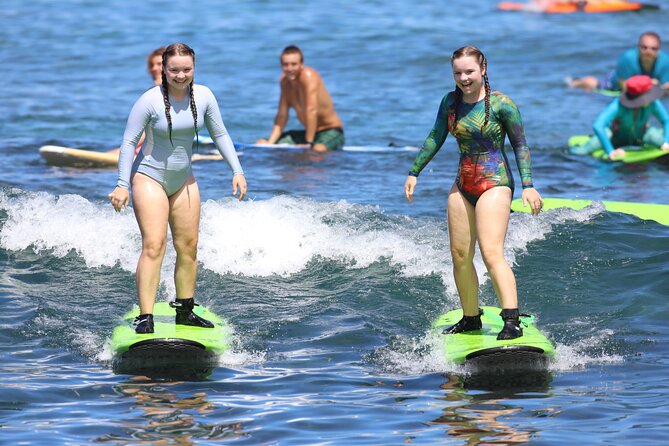
- Gear is supplied: You receive a foam-top board, reef walker shoes, and an SPF surf shirt.
- Built for beginners: The lesson covers pop-ups, surfing etiquette, and safety before you enter the water.
- Strong family appeal: Children, teens, parents, and even a nearly 70-year-old beginner have taken part successfully.
- Instructor support matters: Names frequently associated with positive teaching experiences include Koa, Carl, Kaleo, Max, Brady, Brandon, Parker, and Molokai.
- Conditions are the wild card: Calm, manageable waves can help first-timers succeed, but poor or difficult surf may limit the lesson.
Why Kahaluu is a sensible place to learn
Kahaluu Beach Park is in Kailua-Kona, along Alii Drive on the western side of Hawaii Island. This is a useful setting for a first lesson because the goal is not to master a powerful break. The goal is to understand the board, learn the basic movement, and feel what it is like to stand on a wave.
That distinction matters. Surfing looks simple from shore, but the first session asks you to manage balance, timing, body position, and safety all at once. A beginner-friendly location gives you a fair chance to put those pieces together without making the first attempt feel like a test of courage.
The beach also works well for families with mixed interests. One child can take the lesson while another family member enjoys the shoreline, and the surrounding bay has been noted as a place where non-surfers may snorkel. The lesson itself remains the focus, but you are not locked into a full day of surfing.
More Surf Lessons around the USA:
- Maui: Two Hour Beginner Group Surf Lesson in Kihei
★ 5.0 · 950 reviews - UTV Dune Cruise and Surf at Coral Pink Sand Dunes
★ 5.0 · 785 reviews - Open Group Surfing Lesson in Waikiki, Hawaii
★ 4.5 · 582 reviews
What happens during the two-hour lesson
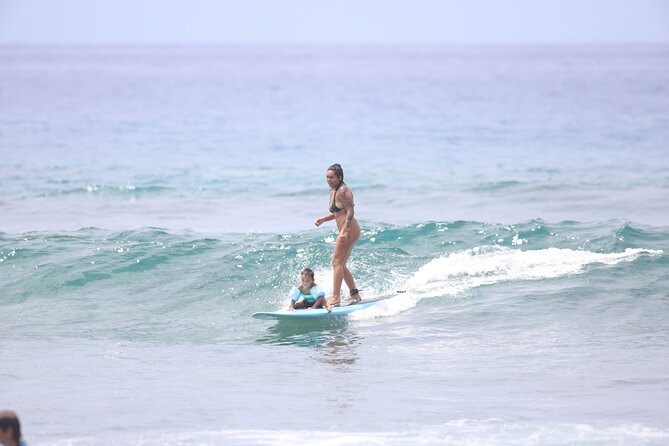
You meet at Kahaluu Beach Park and return to the same place at the end. The exact flow can shift with the group and sea conditions, but the basic order is straightforward.
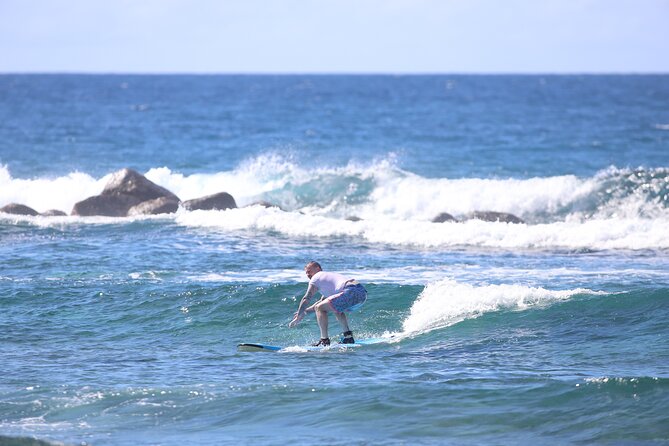
First, the instructors size you for equipment. You receive a foam-top surfboard, reef walker surf shoes, and an SPF surf shirt. The foam board is a sensible choice for beginners because it is designed for introductory practice and is less intimidating than a narrow hard board.
The reef shoes are especially useful at a beach where you may encounter a rocky or uneven bottom. They add comfort and foot protection while you work through the awkward early stages of getting on and off the board. The SPF shirt helps reduce sun exposure and the rubbing that can come from repeated contact with a board.
After you have your equipment, the instructors give a hands-on demonstration. You learn the basic pop-up method, including how to move from lying on the board to a standing position. You also receive instruction in surfing etiquette, which is not just a formality. Knowing where to position yourself and how to behave around other surfers helps keep a beginner session safe.
A safety briefing takes place both on shore and in the water. That is a good feature. Rules make more sense once you can connect them with the actual conditions around you, and a second explanation in the bay gives you a chance to ask questions when the board and waves are no longer just part of a demonstration.
The remaining time is spent practicing. You may get several chances to catch a wave, reset your position, and try again. Some people stand up quickly. Others need more time to coordinate the pop-up. The instructors’ role is to adjust the help to your ability, rather than expecting every person in the group to progress at the same speed.
The instructors are the main reason this works
The strongest part of this lesson is the teaching. Names that have received special praise include Koa, Brady, Andre, Carl, Kaleo, Max, Poa, Brandon, Parker, and Molokai. You may not get a specific instructor by request, but the pattern is clear: the staff is used to working with first-timers.
That matters more than flashy surfing ability. A good instructor can explain the same movement in several ways, spot the reason you are falling, and give you one useful correction instead of a long speech. Several instructors have been singled out for helping nervous students feel safe and for building confidence gradually.
Carl, for example, has been praised for combining surfing instruction with stories about the island and life on a board. Kaleo has been noted for explaining fundamentals in a way that made sense to children aged 12 and 15. Brady and Brandon have been particularly effective with preteen girls, keeping the mood relaxed while still giving practical advice about timing and strategy.
For families, this support is a big deal. A nine-year-old may need close attention, while a parent or older teenager may prefer to try independently after learning the basics. The teaching team has been able to divide that attention, with one instructor staying close to a younger child while others help the rest of the group.
The group limit is listed as 15 people. That is not a private lesson, but it is still a manageable size when enough instructors are present. One session was described as a larger group with five instructors, which meant plenty of help in the water. Staffing can vary, so do not assume every class will feel identical.
What first-time surfers can realistically achieve
You should approach this as a two-hour introduction, not a promise that you will become a surfer in one morning. Still, the lesson offers a good chance of standing on at least one wave if the conditions cooperate and you follow the instruction.
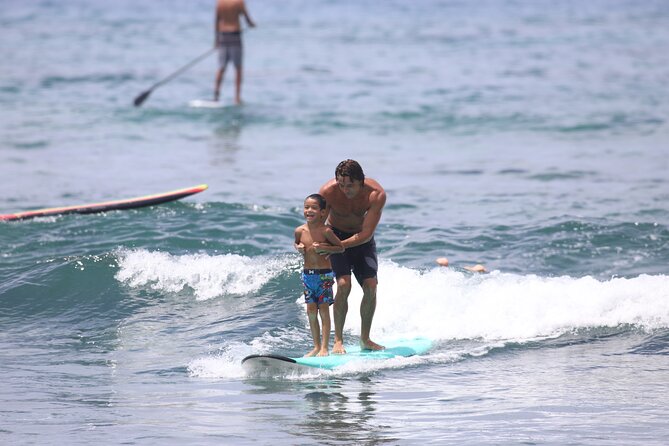
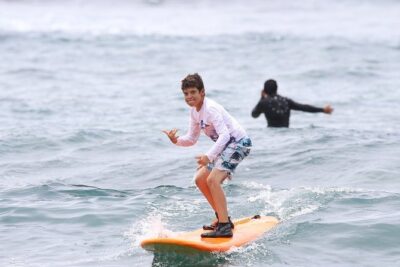
Several first-time families have managed multiple successful rides. A group including children aged 10, 12, and 15, along with a non-athletic parent, all got upright at least once. Another family brought a nearly 70-year-old beginner, two boys, and two adults, and everyone rode some waves.
That is encouraging, but it does not mean success is automatic. Ocean conditions, body size, balance, timing, and comfort in the water all play a part. You may spend part of the session paddling, repositioning, or falling before the movement starts to click.
The instructors can improve your odds by setting you up in a spot where you have a reasonable chance of catching a wave. One first-time surfer specifically appreciated being placed in an area where early success was possible. That is exactly the sort of small decision that can change the mood of a lesson.
If your children catch several waves, they may want more time afterward. Some older teenagers have rented boards for additional hours after the lesson. That possibility makes the two-hour class a useful test: you can see if surfing suits your family before committing to a longer rental.
Same water, another way to ride it:
- Outrageous Surf ScHool Lesson on Lahaina Side
★ 4.5 · 547 reviews - Los Angeles: Surfing Lesson in Venice Beach
★ 4.8 · 442 reviews - Oahu: Beginner-Friendly Waikiki Beach Surfing Lesson
★ 4.9 · 425 reviews - Po’ipu Surf Lesson
★ 5.0 · 361 reviews
The value of the supplied equipment
The $169.99 price is not low for a two-hour activity, so the included equipment matters. You do not need to arrange a separate board rental or buy protective clothing for the lesson. The foam board, reef shoes, and SPF surf shirt are included for every participant.
You still need to bring a swimsuit, towel, and sunscreen. The shirt provides added sun protection, but it does not replace sunscreen for exposed areas. Hawaii’s sun can be strong even during a short session, and you will spend much of the class outside before and after entering the water.
The equipment setup also reduces friction for a first-time surfer. You arrive without having to decide which board to rent or which shoes to wear. The staff handles the fitting, then moves you quickly into instruction.
One point deserves attention: equipment sizing may not be perfect for every body type. A family reported that there were not enough beginner boards suited to different body weights. That appears to be an occasional concern rather than the usual experience, but it is worth keeping in mind if your group includes people of very different sizes.
How weather and waves can change your day
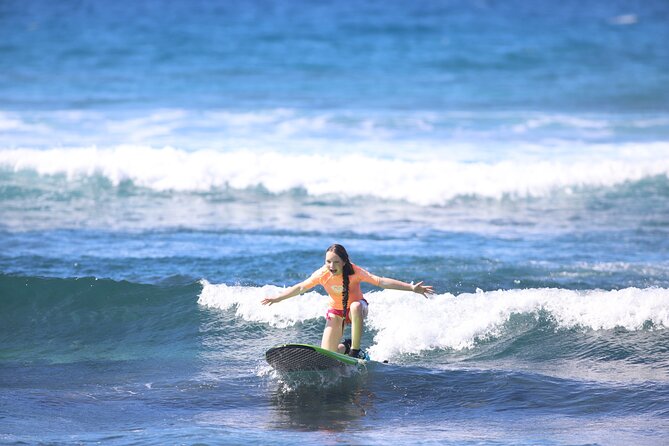
Surf lessons depend on conditions you cannot control. Many beginner sessions work best when the waves are small enough to manage but still have enough energy to move the board. Calm, easy waves have helped families and children stand up repeatedly.
Kona is not known for consistently strong surf, however. One session had few waves, and the group had to paddle farther into Kahaluu Bay to find rideable water. That can reduce the number of attempts you get and make the lesson feel less active.
The opposite problem can also occur. A session held in difficult conditions left a beginner group uncomfortable and led to concern that the lesson should have been canceled or moved. The instructor handled the situation as well as possible, but this is a useful reminder that a good teacher cannot make unsuitable surf become beginner-friendly.
The operator requires good weather and will offer another date or a full refund if poor weather causes cancellation. If the ocean looks rough on your scheduled day, pay attention to communication from the company rather than assuming the class will run exactly as planned.
Tide timing can be useful when choosing a slot. One person noted that the lesson took place about an hour after low tide. That is not a guarantee of better conditions, but it suggests that tide information may help you understand why one time of day has more workable water than another.
Families, teens, and nervous adults
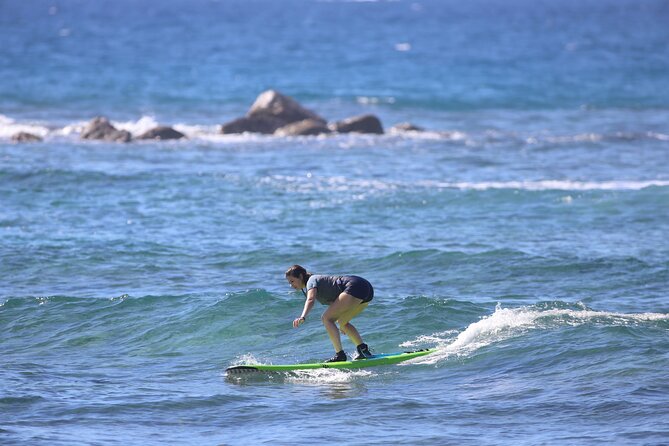
This is best suited to first-timers who want an active family outing. Children and teens have repeatedly done well when paired with patient instructors, and the format gives parents a chance to participate rather than simply watch from shore.
The activity requires moderate physical fitness. You will need to handle a board, move through the water, paddle at least some distance, and repeatedly get from a prone position to standing. You do not need to be athletic, but you should be comfortable with physical effort and being in the ocean.
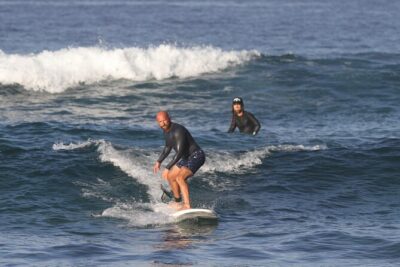
Nervous adults are also a good fit if you are willing to start slowly. The lesson includes safety instruction and coaching designed to build confidence. A 43-year-old first-time surfer was able to make progress with patient help, while a parent who considered herself non-athletic also managed to stand.
Children should be ready to listen and follow directions. The instructors can provide close support, but the ocean is not a place for a child to ignore safety guidance. If your family has mixed ages, tell the staff who may need extra attention.
Service animals are allowed, and the meeting point is near public transportation. The tour is offered in English, and confirmation arrives at booking. These are practical details, but they make planning easier when you are fitting the lesson into a wider Kona day.
Price, timing, and cancellation rules
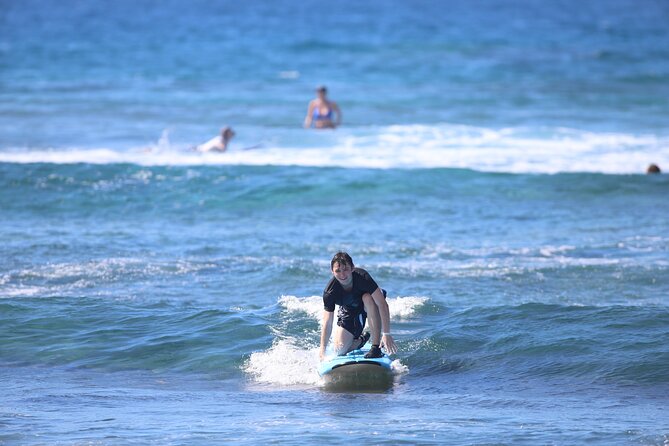
At $169.99 per person, this is a premium short activity. I think the price makes the most sense for someone who values instruction and wants equipment handled in one package. It is less compelling if you only want to try standing on a board without much coaching.
The two-hour length is well judged for a first attempt. A shorter session could feel rushed, while a much longer one might leave beginners tired from repeated paddling and falls. If you enjoy it, you may be able to arrange additional board time afterward, but the lesson itself gives you a clear introduction before you spend more.
The experience is often booked about 21 days ahead, so reserve earlier if your Kona dates are fixed. You can cancel for a full refund up to 24 hours before the start time. Cancellations or changes inside that 24-hour window are not refundable, except when poor weather leads the operator to cancel.
What to bring and how to prepare
Bring a swimsuit, towel, and sunscreen. The company supplies the board, reef shoes, and SPF surf shirt, so you can keep your packing simple.
Arrive ready to spend the full two hours in active instruction. You will likely benefit from eating beforehand, staying hydrated, and wearing sunscreen even though the supplied shirt offers added coverage. The practical information and map directions are sent in advance, so read them carefully before leaving for Kahaluu Beach Park.
Keep your first goal modest: learn the pop-up, stay safe, and catch one wave. If you stand several times, that is a bonus. If the waves are poor, a useful lesson may still mean learning how to handle the board and understand the ocean.
Should you book the Kona surf lesson?
Book it if you want a structured introduction to surfing and your group includes first-timers, children, teens, or adults who feel unsure about trying. The patient instruction, supplied gear, and two-hour format give you a good shot at a memorable first ride.
Think twice if your main goal is powerful surf or a guaranteed series of long waves. Kahaluu conditions can be gentle, sparse, or occasionally too difficult, and the board selection may not suit every body type perfectly.
For most families and beginners, I would book this activity while keeping your expectations realistic. Choose a time that fits the tide if possible, arrive prepared for changing conditions, and judge success by the quality of the lesson rather than by how many waves you ride.
FAQ
Where does the Kona surf lesson meet?
The lesson begins at Kahaluu Beach Park on Alii Drive in Kailua-Kona, Hawaii. The activity ends back at the same meeting point.
How long is the surf lesson?
The lesson lasts approximately two hours, including equipment fitting, demonstrations, safety instruction, and time in the water.
What equipment is included?
Each lesson includes a foam-top surfboard, reef walker surf shoes, and an SPF surf shirt.
What should I bring?
Bring a swimsuit, towel, sunscreen, and anything else you need for a beach outing. The board, reef shoes, and SPF surf shirt are provided.
Is this lesson suitable for beginners?
Yes. The instruction covers basic technique, the pop-up method, surfing etiquette, and safety on shore and in the water. The activity is designed as an introduction for new surfers.
How many people can join?
The activity has a maximum of 15 participants. The number of instructors can vary by session.
Is public transportation nearby?
Yes. The meeting point is near public transportation.
Can I cancel for a refund?
You can cancel at least 24 hours before the start time for a full refund. Cancellations or changes made less than 24 hours before the start time are not refunded. If poor weather causes the operator to cancel, you will be offered another date or a full refund.
Latest surf sessions around the USA
- Waikiki: Family, Private, and Group Surfing Lessons★ 5.0 · 4 reviews
- Waikiki: Surf Lessons Easy 60 min classes no crowds!★ 4.9 · 21 reviews
- Astonishing Scavenger Hunt: Surf, Sand and Sculptures!★ 3.0 · 2 reviews
- Two- Hour Group Surfing Lesson in Cocoa Wrightsville Beach, NC★ 5.0 · 13 reviews
- Electric Bike Rentals in Topsail Island and Surf City★ 5.0 · 2 reviews
- Surf Lesson in Santa Barbara★ 3.0 · 2 reviews
- 1-on-1 Private Surf Lesson in Santa Barbara★ 5.0 · 4 reviews
- Surf lesson with KTO Yoga Surf★ 4.0 · 5 reviews
Big Island Surf Lessons, compared.

Premium group surf lessons- Kona’s Best Surf Lessons
Read our review →
Browse the lists this tour appears in