
Review · TENERIFE
Tenerife: Surfing Lesson for Kids in Las Americas
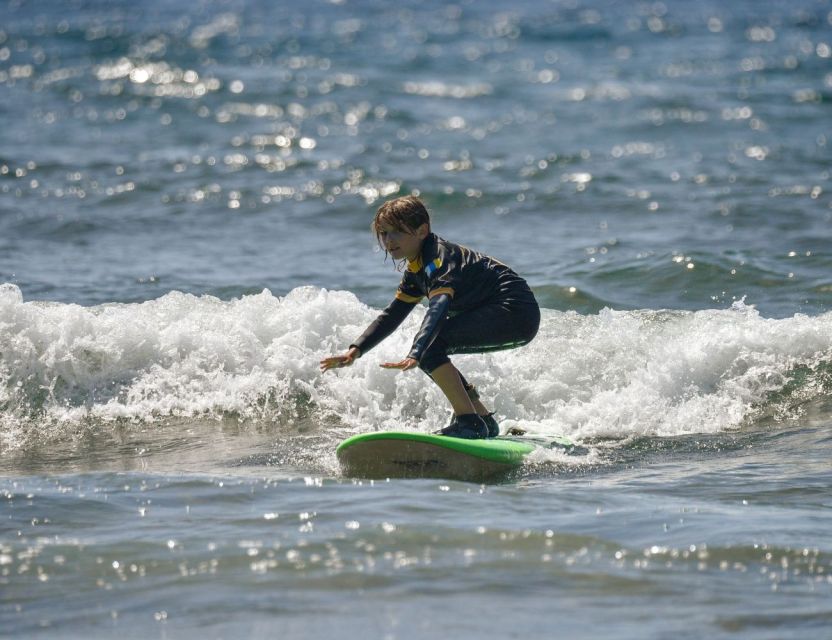
A private lesson at Playa de Las Americas gives your child more than a quick taste of surfing. The instructor can focus on one young surfer, explain each movement clearly, and adjust the pace instead of pushing a whole class along. I especially like the one-on-one format and the included wetsuit, reef boots, softboard, and accident insurance.
I also like the setting: your child learns with views toward Mount Teide, while the lesson stays focused on simple, useful skills. The main thing to watch is the ocean. Weather and wave conditions decide the start time, and a lesson can be postponed or canceled. Your child must know how to swim.
Key points at a glance
- Private two-hour instruction: Your child receives individual attention rather than sharing the lesson with a full class.
- A sensible first surf setup: The price includes a softboard, wetsuit, reef boots, and accident insurance.
- Designed for young beginners: Instructors cover paddling, basic board control, and standing up on a first wave.
- Spanish and English guides: Raffa is specifically praised for being kind, capable, and good with children.
- A weather-dependent plan: The exact time depends on sea conditions, so keep some flexibility in your holiday schedule.
- $93 per person: The cost is easier to justify for families who value private coaching and included equipment.
Starting at Playa de Las Americas
The meeting point is not described by a large beachside sign, so pay close attention to the directions. Find the big stairs next to the BBVA bank, go straight, then turn right. The local is at the end of the corridor.
That last approach sounds simple, but it is worth arriving with a few extra minutes. A child carrying swimwear, flip-flops, and holiday excitement is not the best person to send searching for an entrance. I would save the meeting directions on your phone before leaving your hotel.
The lesson takes place at Playa de Las Americas, a well-known base for surf activities in southern Tenerife. You get an open-water setting rather than a pool or artificial practice area. On a clear day, the view toward Teide adds a memorable backdrop, though your child will be looking mostly at the next wave once the instruction begins.
The exact beach conditions matter. Surf lessons require a suitable combination of waves, wind, and safety conditions, so the scheduled time may change. Keep the morning or afternoon free around the lesson if possible, and do not build a tight connection to another paid activity immediately afterward.
More Family and Kids Surf Lessons in Tenerife:
- Private Family Surf Lesson
★ 5.0 · 41 reviews - Kids Holidays Surf Camp
★ 5.0 · 2 reviews - Family, Private & Group Surfing Lessons, Waikiki Courtesy Shuttle
★ 5.0 · 216 reviews
The first steps: gear, safety, and the board
The lesson includes the main equipment your child needs: a softboard, wetsuit, and reef boots. That is useful for families who do not want to buy or pack surf gear for one session. The softboard is also a practical choice for a first lesson because it is intended for learning and basic balance work.
Your child should bring swimwear and flip-flops. The swimwear goes under the wetsuit, while flip-flops make the walk to and from the beach more comfortable. The provided reef boots are part of the lesson equipment, so you do not need to arrange those separately.
Safety comes first here, and that begins before anyone touches a wave. The instructor gives step-by-step guidance and works on the basic actions needed to handle the board. Accident insurance is included, which adds useful peace of mind, but it does not change the most important rule: your child must already know how to swim.
This is not suitable for a non-swimmer. A child may be young and completely new to surfing, but swimming ability is essential. If your child is nervous in open water or cannot swim confidently, choose a different activity rather than treating this as a test of courage.
Learning to paddle and control the softboard
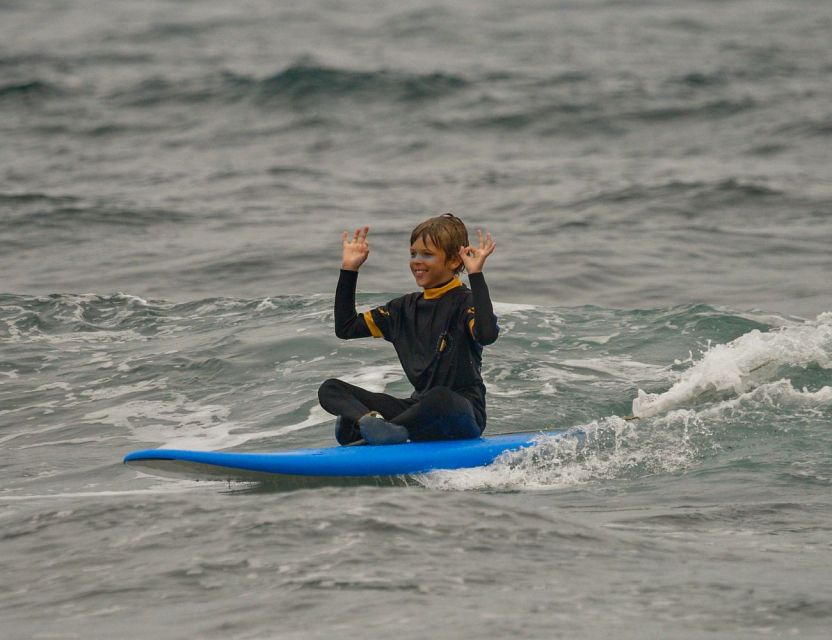
The early part of a lesson is likely to focus on getting comfortable on the board and learning how to paddle. Those skills can look basic from the beach, but they are the foundation of catching a wave. Your child needs to know how to lie on the board, move through the water, and keep the board pointed in the right direction.
Private coaching helps at this stage because the instructor can watch small details. A child who is too far forward, too far back, or paddling unevenly can receive an immediate correction. In a larger class, that kind of personal adjustment may take longer.
The lesson is described as suitable for children at different ability levels, from complete beginners to young surfers who already have some experience. In practice, the private format matters most for matching the session to the child. A total beginner may need more time with balance and board position, while a budding surfer can work on cleaner technique.
I like this structure because it treats surfing as a skill rather than a single photo opportunity. Your child may not become a polished surfer in two hours, but they can learn the basic sequence: prepare, paddle, catch the wave, and try to stand.
Catching that first wave
The most exciting part is working toward a first ride. The instructor helps your child understand when to paddle and how to move from lying down to standing. The aim is not to send a beginner into difficult surf. It is to build enough confidence for a controlled attempt in suitable conditions.
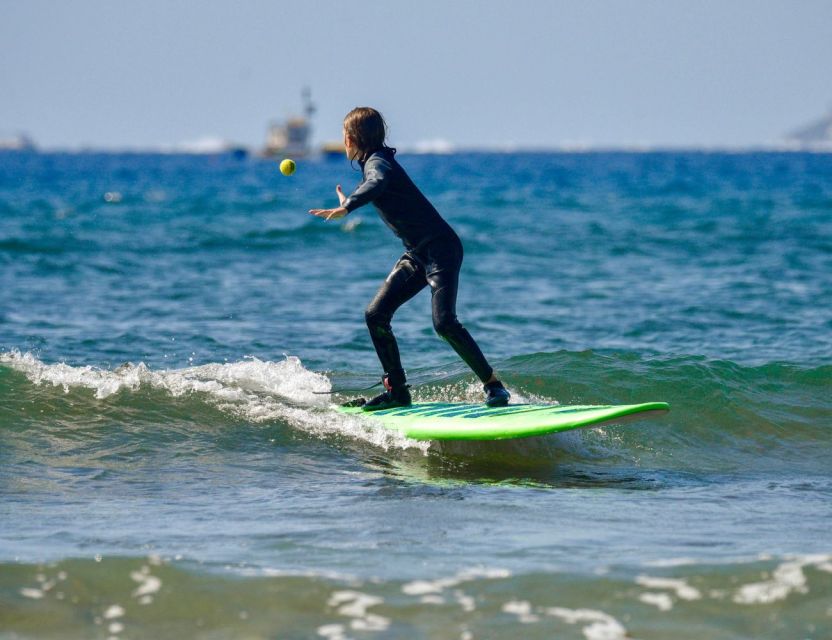
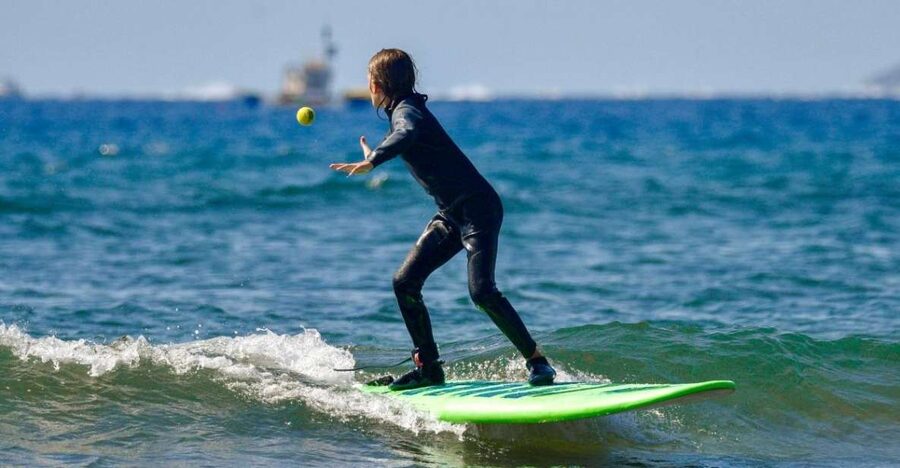
Expect plenty of repetition. Standing up on a moving board takes timing, balance, and a willingness to fall in the water. A private lesson gives the instructor room to explain the same movement in different ways until it makes sense.
The supplied information does not promise that every child will stand successfully, and that is an important point. Wave size, weather, age, fitness, confidence, and natural balance all affect the result. A good outcome may be learning how to paddle properly, understanding how waves work, or making several safe attempts.
The experience is best viewed as a first chapter, not a complete surfing course. One child may catch a wave quickly. Another may spend most of the session practicing the movement on the board. Both can leave with useful basics if the lesson stays patient and safety-focused.
More Surf Lessons around Tenerife:
- Tenerife: Surfing Lesson for All Levels, Photos included
★ 4.9 · 1,314 reviews - Group Surfing Lesson at Playa de las Américas, Tenerife
★ 5.0 · 1,072 reviews - Playa de las Américas: Private or Small-Group Surf Lesson
★ 4.8 · 980 reviews - Group Surf Lessons
★ 5.0 · 310 reviews
Raffa and the value of individual attention
Raffa is specifically praised for being kind, capable, and good with children. Those qualities matter more here than flashy surfing language. Young beginners often need calm instructions and encouragement, especially when they are trying to stand on a moving board for the first time.
The instructor speaks Spanish and English. That gives families a practical choice if children are more comfortable receiving instructions in one of those languages. Clear communication is especially important when learning how to position the body, respond to a wave, and follow safety directions.
A private lesson also gives parents a clearer sense of what their child is learning. You can ask the instructor about the child’s progress and what to practice next. The experience is not described as a parent-and-child lesson, so expect the child to be the student while the instructor handles the teaching.
The lesson is also suitable for a 14-year-old beginner. A private session can work well for an older child or teenager who wants direct coaching rather than a basic group introduction. One young surfer who took the lesson was happy with the basics and planned to return for a group session later, suggesting that the private format can serve as a useful introduction before a second lesson.
What two hours really gives you
Two hours is a good length for a first attempt. It allows time for preparation, instruction, repeated practice, and some actual wave work without making the session feel like a full day at the beach. Surfing uses more energy than beginners often expect, so a shorter lesson has practical value.
Do not read two hours as two hours of nonstop riding. Some of the time goes toward getting ready, receiving instructions, waiting for suitable waves, and resetting after each attempt. That is normal. The value comes from the quality of the coaching and the chance to repeat the correct movements.
A private session can make those two hours feel more productive than a shared class, particularly if your child needs extra explanation or has a specific goal. The drawback is price. At $93 per person, this is a serious expense for a single holiday activity, especially if you have several children.
The cost makes more sense if you compare it with what is included. You are paying for two hours of private instruction, all necessary surf equipment, and accident insurance. You are not paying for photos, which are specifically excluded, so bring your own camera only if it can be used safely and without distracting your child.
Views, memories, and the limits of the setting
The setting gives the lesson a strong sense of place. Playa de Las Americas puts your child in Tenerife’s surf culture, while Teide may appear in the distance as a striking contrast to the sea. That combination makes the activity feel tied to the island rather than like a generic indoor lesson.
Still, the scenery should not be the main reason you book. The child’s attention will be on the instructor and the water. Weather can also affect the view, the wave quality, and the schedule.
The promotional language promises big memories, but the practical version is more useful: your child gets a chance to try a new sport with personal coaching in a notable Tenerife location. Some children will love the challenge immediately. Others may prefer the preparation and beach setting to the actual standing-up attempt.
Photos are not included. If recording the moment matters to your family, ask about the practical options when you arrive, but do not assume a professional photo service is part of the package. The most important keepsake may simply be watching your child move from uncertainty to a first controlled attempt.
Who should book this lesson?
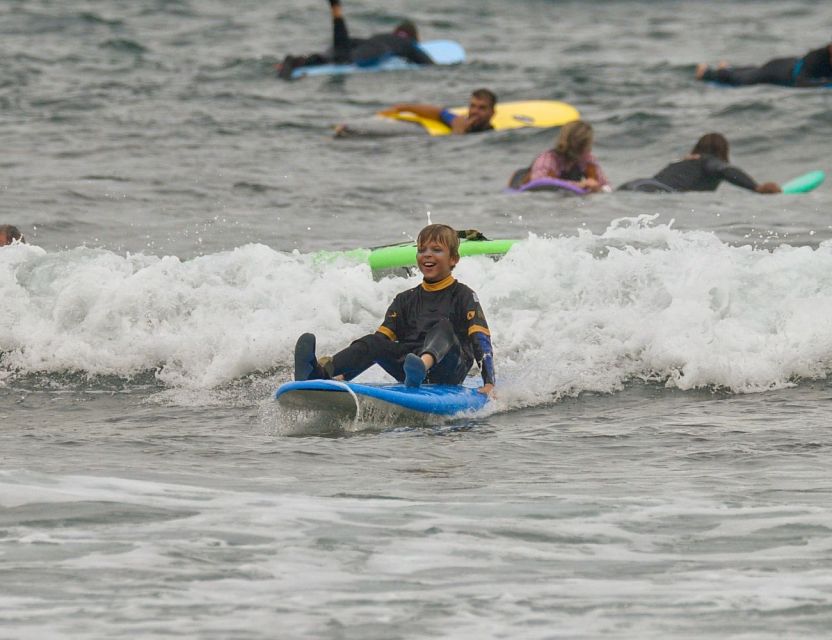
This activity suits a child who can swim, wants to try surfing, and benefits from direct support. It is especially useful for:
- A first-time surfer who may feel lost in a larger group
- A child who wants a clear introduction before taking another lesson
- A teenager who prefers private coaching
- Families who want equipment supplied rather than rented separately
- Young surfers who need an instructor to adjust the pace to their ability
It is less suitable for a non-swimmer or for a family that needs a fixed start time. It may also disappoint if your main goal is professional photography or a long day of surfing. The included equipment is practical, but photos are not part of the price.
Parents should also accept that ocean activities cannot be forced into a rigid holiday timetable. The surf school may postpone or cancel the session when conditions are not appropriate. That is inconvenient, but it is preferable to running a lesson in unsafe water.
You can cancel up to 24 hours in advance for a full refund, and the reserve-now, pay-later option helps keep your plans flexible. Those policies are useful in Tenerife, where changing weather can affect outdoor plans, though you should still monitor any schedule changes from the provider.
Is $93 a fair price for a private kids lesson?
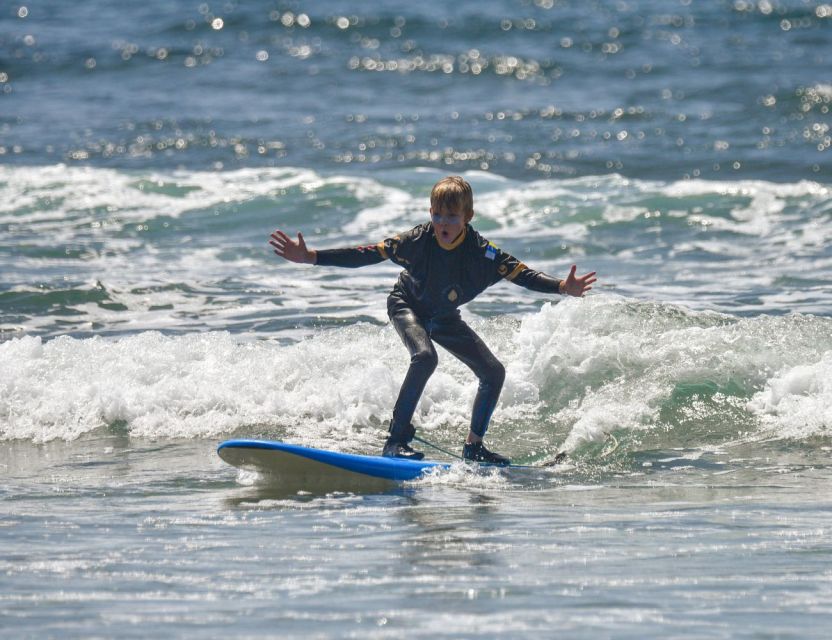
For a shared introductory class, $93 would feel high. For a private two-hour session with equipment and accident insurance included, the price is easier to defend. The real question is not simply how much surfing your child gets, but how much personal attention your family values.
If your child is nervous, easily distracted, or keen to learn proper basics, the private format may offer better value than a cheaper group lesson. The instructor can focus on that one child, which may lead to more useful practice and less waiting.
For two or more children, check how the private-group arrangement applies before booking. The supplied details identify the activity as a private group but list the price per person, so do not assume that one booking automatically covers every child in your family at a single flat rate.
The lack of photos keeps the package simple but means you should not compare it with a lesson that includes a photo service without adjusting the price. I would book this for instruction and safety, not for a professionally documented beach moment.
Should you book the Playa de Las Americas surf lesson?
Book it if your child can swim, wants a first taste of surfing, and will benefit from calm, individual coaching. The combination of a private two-hour lesson, included gear, accident insurance, English or Spanish instruction, and a child-friendly approach makes it a strong introduction.
I would be especially comfortable choosing it for a child who has never surfed or for a 14-year-old who wants to learn the basics without being lost in a big group. Raffa’s warm approach with children is another encouraging detail.
Think twice if your schedule is tight, your child cannot swim, or you expect guaranteed waves and professional photos. The ocean controls the timetable, and the outcome depends on conditions and the child’s confidence.
For the right family, this is a focused and memorable way to try surfing in Tenerife. Keep your plans flexible, arrive with swimwear and flip-flops, follow the meeting directions carefully, and judge success by what your child learns, not only by whether they stand on the first wave.
FAQ
How long is the kids surfing lesson?
The lesson lasts two hours. Starting times depend on availability and sea conditions.
Where does the lesson take place?
The lesson takes place at Playa de Las Americas in Tenerife, in the Canary Islands, Spain.
Where is the meeting point?
Take the big stairs next to the BBVA bank, go straight, then turn right. The local is at the end of the corridor.
What equipment is included?
The activity includes reef boots, a wetsuit, and a softboard. Accident insurance is also included.
What should my child bring?
Bring swimwear and flip-flops.
Does my child need to know how to swim?
Yes. Every student must know how to swim, and the activity is not suitable for non-swimmers.
What languages does the instructor speak?
Instruction is available in Spanish and English.
Can the lesson time change or be canceled?
Yes. The time depends on weather and sea conditions. The lesson can be postponed or canceled when conditions are unsuitable. You can cancel up to 24 hours in advance for a full refund.
Latest surf sessions around Tenerife
- small group surf lesson in Playa de las Américas,Tenerife★ 5.0 · 31 reviews
- Tenerife Paddle Surf and Snorkeling Experience★ 5.0 · 4 reviews
- Surfing lessons in Las Americas★ 5.0 · 32 reviews
- Surf Class Experience in Playa de la Américas★ 5.0 · 10 reviews
- Surf Lessons at El Médano Beach★ 4.5 · 7 reviews
- Kids Holidays Surf Camp★ 5.0 · 2 reviews
- Private couple Surf Lesson★ 5.0 · 34 reviews
- Ultimate Private Surf Lesson – Gear & Insurance Included★ 5.0 · 3 reviews
Tenerife Surf Lessons, compared.
Tenerife: Surfing Lesson for All Levels, Photos included
Read our review →
Group Surfing Lesson at Playa de las Américas, Tenerife
Read our review →
Playa de las Américas: Private or Small-Group Surf Lesson
Read our review →
Surf in Tenerife – Photos Included & Stand Up From Day One
Read our review →
Private Surfing Lesson at Playa de las Américas
Read our review →
Group Surf Class in Playa de Las Américas with Photographs
Read our review →Browse the lists this tour appears in