
Review · GRAN CANARIA
San Agustín Surf lessons
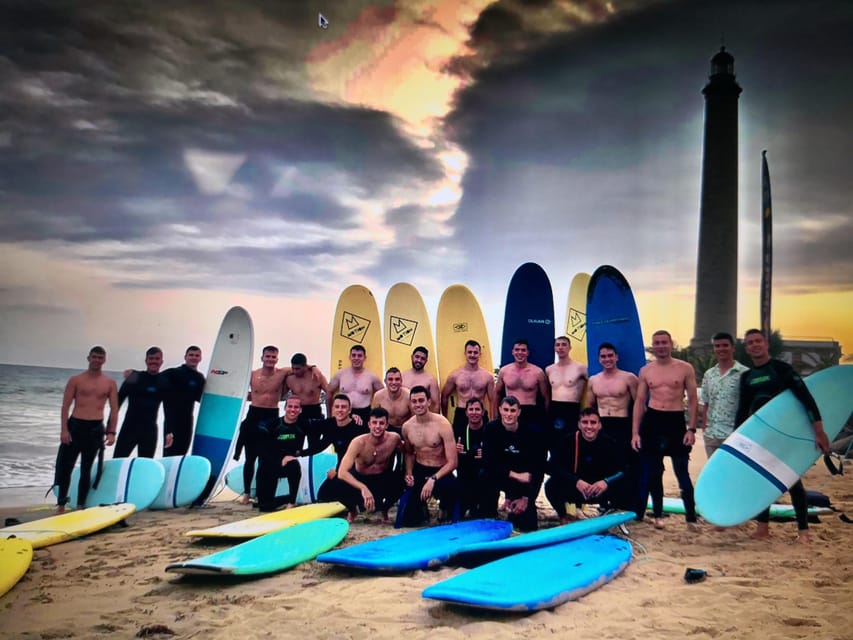
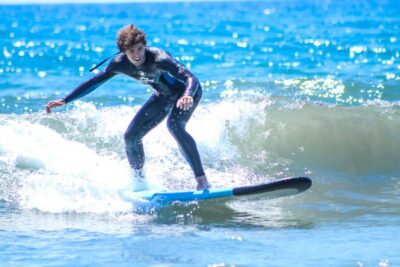
Southern Gran Canaria gives you a friendly introduction to surfing without asking you to commit to a full day. This three-hour lesson uses beaches around Maspalomas and Playa del Inglés, with the exact spot chosen according to sea conditions. You meet at Faro de Maspalomas, collect your board, and head to the water with an instructor.
I like the small-group format, which means you should get more useful correction than in a crowded beach class. I also like the flexible teaching approach: when waves were too small on one occasion, instructor Tony moved the class to another beach with better surf. The main thing to check is transport. Hotel pickup is included only for stays in the south, and one booking had no pickup at the stated address despite it being shown as included.
Key points to know before booking
- Three hours in the water: Enough time for an introduction, practice, and repeated attempts without taking up your whole day.
- Beach choice depends on the sea: Lessons usually run at Playa del Inglés or Maspalomas, but the school can change location when conditions call for it.
- Instruction for all levels: Beginners can learn board handling and basic technique, while stronger surfers can receive more targeted help.
- Small classes: The lesson is described as limited to 10 people, with group sizes of up to 8 also stated in the activity details.
- Tony and a friendly teaching style: Tony is specifically noted for moving a class to better waves and keeping the mood upbeat.
- Equipment and insurance included: You receive a surfboard and instruction, with insurance included in the price.
Meeting at Faro de Maspalomas
The practical starting point is Faro de Maspalomas, the lighthouse at the southern end of Gran Canaria’s best-known resort area. If you arrange your own way there, you can meet the group at the surf school by the lighthouse. If you stay in the south of the island, hotel transport is included with the reservation.
That gives you two useful choices. Independent visitors can make their own way to the meeting point, while people staying in the southern resort area can use the included transfer instead of arranging a taxi or bus. The transfer detail deserves a quick check before you book. The activity says pickup and return are included for hotels in the south, but pickup is not offered for every address, and one person had trouble receiving it despite the booking information.
The provider is Canary Wave Surf School. At the meeting point, the instructor supplies your surfboard and gets the group ready for the beach. The available instruction languages are Spanish and English, so you should select the option that lets you follow the safety and technique explanations comfortably.
The meeting point near the lighthouse is also useful if you are combining the lesson with other plans. You are not committing to a remote trip across the island. Still, allow enough time to find the school and be ready when the provider confirms the start time.
More Surf Lessons around Gran Canaria:
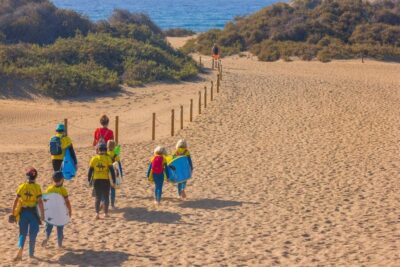
- Playa del Inglés Maspalomas: High Quality Surf Classes
★ 4.9 · 363 reviews - Puerto Rico, Gran Canaria: boat trip, drinks, food, paddle surfing, snorkeling
★ 4.6 · 310 reviews - Gran Canaria Maspalomas: Surf lessons all levels
★ 5.0 · 197 reviews
Why the start time can change
The lesson usually begins in the morning, but there is no single fixed start time stated for every date. The sea decides much of the schedule, and the provider contacts you to confirm when the lesson will begin.
That may sound less tidy than a fixed departure. For surfing, it makes sense. Wind, swell, and beach conditions can change the quality of a beginner lesson. A morning with manageable waves is far more useful than a rigid class held at the wrong time.
You will want to keep the first part of your day reasonably open. Do not schedule a tight morning appointment right after this activity until the provider has confirmed the start time. The flexibility is especially important if you have booked other beach plans or transport.
The provider may also change the beach. Playa del Inglés and Maspalomas are the usual locations, but the lesson can move when conditions are better elsewhere. Tony did this during one class when the first beach had small waves. That is a practical sign that the school is focused on giving you surfable conditions rather than simply using the closest patch of sand.
Getting fitted with a board
Once the group is together, you receive the surf equipment before going to the beach. The supplied information does not name the board models or list extra equipment in detail, so you should expect the standard surf setup provided by the school rather than plan around a particular board type.
The first part of a good surf class is not about looking graceful. It is about learning how to handle the board, position yourself, and move safely. The course description specifically points to board handling and body movement, which are the right basics for a first lesson.
Your instructor should also help you choose the right approach for your level. A complete beginner needs simple instructions and repeated practice. Someone who has surfed before may need help with timing, stance, or technique instead. The activity is advertised for all levels, so the value depends on the instructor adapting the lesson rather than giving every person the same speech.
The included insurance is another practical plus. It does not remove the need to follow instructions or respect the sea, but it means insurance is part of the package rather than a separate item you must arrange.
Three hours of practice on the beach
The three-hour duration is long enough to make the lesson feel like a real activity, not a quick photo opportunity. You have time to hear the basics, try them, receive corrections, and try again.
The first attempts are likely to involve learning how to move from lying on the board to standing. The exact lesson plan is not specified, so I would not expect a guaranteed number of successful rides. Surfing depends on the waves, your balance, and how quickly your body understands the movement.
What you can expect is direct help from the instructor throughout the class. That matters more than a long technical briefing. A few clear corrections at the right moment can help you avoid repeating the same mistake for an hour.
The instructors are described as friendly and helpful, and the strongest praise goes to the teaching itself. One class was led by Tony, who was noted for clear help and for finding a better beach when conditions were weak. Another participant highlighted the friendly, helpful teaching. That points to the main strength of this activity: patient guidance rather than a rushed group lesson.
The school also promises plenty of fun, which is not a small detail for a first-time surfer. You may spend part of the session falling off, paddling back out, or trying to remember several instructions at once. A relaxed atmosphere makes that learning curve easier.
Same water, another way to ride it:
- Small-Group Surf Lessons in Gran Canaria
★ 5.0 · 138 reviews - Playa del Inglés surf lessons
★ 4.8 · 121 reviews - Gran Canaria: Maspalomas Surf Lessons
★ 4.6 · 113 reviews - Premium Surf Course in Gran Canaria
★ 5.0 · 89 reviews
Choosing between Maspalomas and Playa del Inglés
Maspalomas and Playa del Inglés are the usual surf areas for this class. The school does not promise one fixed beach, so you should treat the location as part of the day’s practical decision-making.
The Maspalomas option is especially convenient if you are already near Faro de Maspalomas. The lighthouse provides a clear meeting point, and the lesson starts close to one of the best-known parts of southern Gran Canaria.
Playa del Inglés is another regular choice. If the sea is more suitable there, moving the lesson makes sense. You may lose a little time to the transfer between beaches, but better waves are worth more than staying at a convenient yet unproductive spot.
The important point is that the beach is not chosen only for scenery. It is chosen for surf conditions. Small waves may be comfortable for some beginners, but they can also make it harder to catch a ride. The change made during Tony’s class shows why a flexible location can improve the practical value of the lesson.
You should also avoid assuming that a specific beach is guaranteed. If you need to meet someone at one exact location afterward, allow extra time and wait for the provider’s confirmation.
Small groups and personal attention
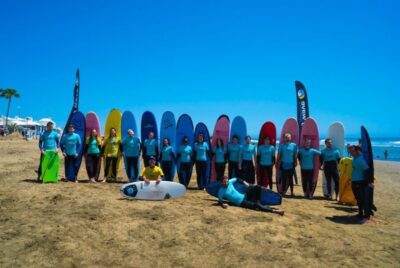
The lesson is sold as a small-group activity. One description says groups can contain up to 8 people, while the booking information gives a limit of 10 participants. I would plan for a small class, but ask the provider if the exact group size matters to you.
Even a group of 8 to 10 is much easier to manage than a large beach crowd. The instructor can watch your attempts, offer corrections, and help you when you need to reset. That is particularly useful for beginners, who often need someone to explain the same movement in a different way.
Group size still affects the experience. If the class reaches the stated maximum, you will share the instructor’s attention with several other people. You should not expect a private lesson at this price. The benefit is a balance between personal instruction and a lower cost.
For mixed-level groups, the teacher’s ability to adapt is important. Beginners may need the instructor to stay close during their first attempts, while more experienced participants may need less basic explanation. The all-level promise is appealing, but your experience will depend on how many people in the group need the same kind of help.
What the $58 price really covers
At $58 per person, the price includes three hours of instruction, surf equipment, insurance, and hotel transfer for eligible stays in southern Gran Canaria. That is a solid package if you need a board and want an instructor rather than simply renting equipment.
The value is strongest for first-timers. Buying or renting a board alone would not give you the safety explanation, technique coaching, or help with choosing a suitable beach. You are paying for a structured introduction and the convenience of having the key equipment supplied.
The price is less compelling if you already surf confidently and only want free time with a board. The activity is built around teaching, so experienced surfers who need no instruction may prefer a rental arrangement, if available separately.
Transport can also affect the value. For a southern hotel, included pickup and return save you the trouble of arranging a ride. For accommodation outside the southern area, transport is not included, so you must reach the meeting point on your own. Confirm that your exact address qualifies before treating the transfer as part of the price.
The reserve-now-and-pay-later option is useful if your plans are not final. You can hold a place without paying immediately, and cancellation is free up to 24 hours before the activity for a full refund. Those terms give you some room to adjust plans around the weather and the provider’s confirmed start time.
Who will get the most from this lesson
This class is a good match for a first-time surfer who wants a guided introduction without giving up a full day. Three hours is enough to learn the basic movements and see how your body responds to the board.
It also suits couples, friends, and families with mixed levels, provided everyone is comfortable with a small-group lesson. The all-level format means you do not need to be an expert before booking, and the instructor can offer help when you need it.
You may also like it if your holiday schedule is centered in southern Gran Canaria. The meeting point near the lighthouse, possible hotel transport, and nearby beaches keep the day simple.
I would be more cautious if you need a guaranteed beach, a guaranteed start time, or a private instructor. The class location can change with sea conditions, morning timing is confirmed later, and the group is shared with other participants.
You should also be ready for a physical activity in the water. The available information does not give age, swimming, or fitness requirements, so ask the provider directly if any of those points affect your booking.
What to bring and how to plan the day
The school supplies the surfboard and instruction, and insurance is included. The information does not specify a full packing list, so you should confirm any clothing or personal equipment requirements with Canary Wave Surf School.
Keep your schedule flexible in the morning. The provider confirms the start time according to sea conditions, and the beach may change between Maspalomas and Playa del Inglés.
If you use hotel pickup, confirm the exact pickup address rather than relying only on the general promise of southern-island transport. This is the one practical point that could turn a smooth morning into a frustrating one.
Plan on the lesson taking the full three hours. Even if you finish the water work before that, allow time for meeting the instructor, receiving equipment, and returning from the beach.
Should you book San Agustín Surf Lessons?
Book this if you want a fairly priced, guided introduction to surfing in southern Gran Canaria, especially if you are staying near Maspalomas or Playa del Inglés. The strongest reasons are the three-hour format, included equipment and insurance, small groups, and an instructor who can move the lesson when the waves are poor.
I would book with two checks first: confirm your pickup address and wait for the provider’s final start time. If you want a fixed beach or private coaching, this is not the right fit. For most beginners who want a practical, friendly surf lesson without spending the whole day, the $58 package offers good value.
FAQ
Where does the surf lesson take place?
The activity usually takes place at Playa del Inglés or Maspalomas beach near the Maspalomas Lighthouse. The provider may change the beach according to sea conditions.
How long does the activity last?
The surf course lasts three hours.
Is hotel pickup included?
Hotel pickup and return are included for people staying in the south of Gran Canaria. Pickup is not offered for every address, so confirm your exact location with the provider.
What time does the lesson start?
The lesson usually takes place in the morning, but the exact starting time depends on sea conditions. The provider contacts you to confirm the time.
Is surf equipment included?
Yes. Surf equipment and an instructor are included in the activity price.
What languages are available?
Instruction is available in Spanish and English.
How large is the group?
The activity is described as a small-group lesson. One set of details gives a maximum of 10 participants, while another states that lessons are held in groups of up to 8 people.
Can I cancel the booking?
Yes. You can cancel up to 24 hours in advance for a full refund. You can also reserve now and pay later.
Latest surf sessions around Gran Canaria
- Paddle Surf SUP at Anfi Beach★ 4.0 · 12 reviews
- Pack 2 People Surf Course in Playa del Inglés and Maspalomas★ 5.0 · 2 reviews
- Surf lessons in Las Canteras Beach★ 4.8 · 19 reviews
- Las Palmas de Gran Canaria: Group surf lessons on La Laja beach★ 4.9 · 27 reviews
- Las Palmas: Learn to Surf with a Special Price for Two Group★ 4.8 · 30 reviews
- Gran Canaria: Meloneras Beach Surf Lesson★ 5.0 · 5 reviews
- Gran Canaria Playa del Ingles: Surf lessons all levels★ 4.7 · 11 reviews
- Gran Canaria Surf Lessons: Playa del Inglés & Maspalomas★ 4.8 · 76 reviews
Gran Canaria Surf Lessons, compared.
Playa del Inglés Maspalomas: High Quality Surf Classes
Read our review →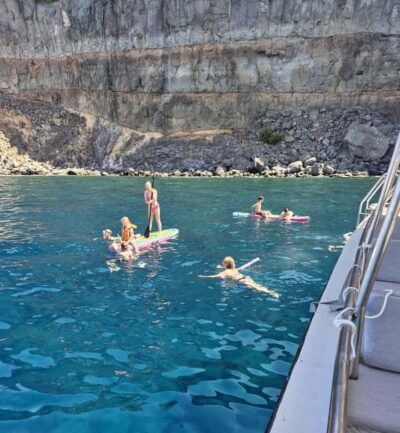
Puerto Rico, Gran Canaria: boat trip, drinks, food, paddle surfing, snorkeling
Read our review →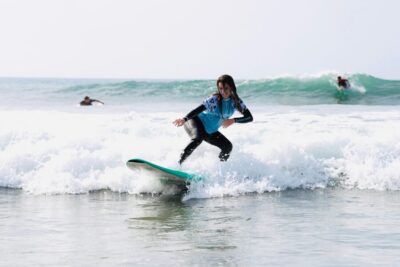
Gran Canaria Maspalomas: Surf lessons all levels
Read our review →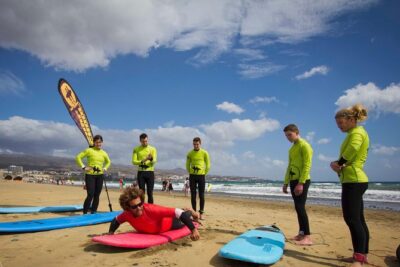
Gran Canaria Surf Lessons: Playa del Inglés & Maspalomas
Read our review →Browse the lists this tour appears in