
Review · PORTIMAO
Praia da Rocha Surf Lesson
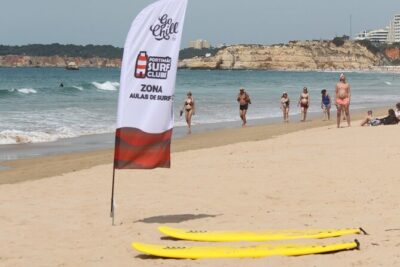
Praia da Rocha is a fine place to make your first attempt at surfing because the lesson builds from dry-land practice to the water in a sensible order. You warm up, learn basic safety, rehearse the key movements on the sand, then head into the sea for coached practice. The full 90 minutes gives you enough time to get past the first awkward attempts.
I like the one-instructor-for-five-students ratio, which keeps the lesson personal without making it a private class. I also like the way instructors such as Filipa and Dinis adjust the session to your level, from first-time children to adults who already know the basics. The main drawback is simple: if six or seven students are taking turns on one part of the lesson, you may spend some time waiting before your next attempt.
Key points at a glance
- Sand practice comes first: Rehearse how to get up on the board before facing the waves.
- Small teaching groups: The maximum group size is 10, with up to five students per instructor.
- Good for first-timers: Safety instructions and coaching are adapted to your previous experience.
- Children from age 6: Families can join, and instructors can give extra help to younger pupils.
- Equipment is provided: Your wetsuit and surfboard are included, so you need only bring personal items.
- Flexible booking: You can cancel up to 24 hours before the lesson for a full refund, or reserve now and pay later.
Starting at Praia da Rocha with the right expectations
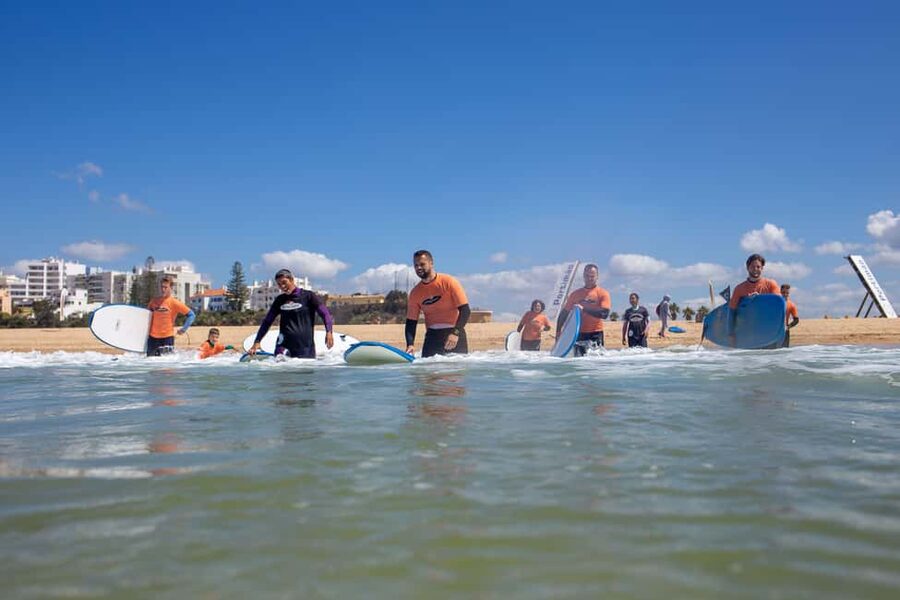
This is a beginner-friendly surf lesson, not a free-for-all rental period. You are there to learn how to handle the board, read the immediate conditions, stay safe, and make progress under instruction.
The session lasts 90 minutes. That is long enough for a useful introduction, though you should not expect to surf continuously from start to finish. Surfing lessons include preparation, explanations, sand drills, board handling, water safety, and waiting your turn.
Praia da Rocha is presented as a good setting for learning and improving. The important point for you is that the lesson is built around practical progress. Your instructor gives you a goal, watches your attempts, and offers corrections rather than simply sending you into the water with a board.
You might stand up quickly, or you might spend the first lesson learning how to position yourself and catch small waves safely. Both outcomes are normal. The quality of the lesson matters more than whether you leave looking like a seasoned surfer.
More Surf Lessons around Portugal:
- Matosinhos: Surfing Lesson with Equipment
★ 4.8 · 926 reviews - Lisbon Surf Experience
★ 4.9 · 876 reviews - Albufeira: Surf Lesson
★ 4.7 · 699 reviews
The first minutes: warm-up and safety
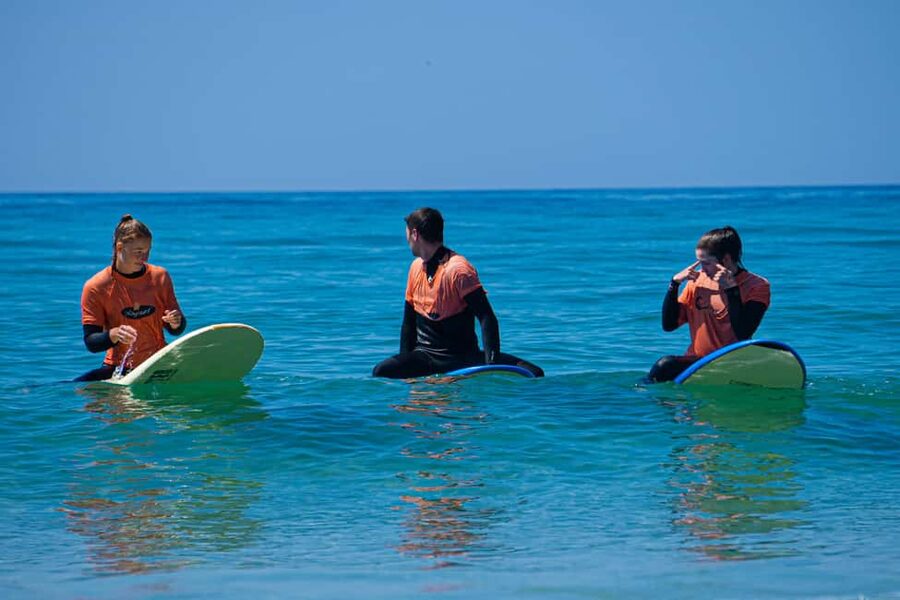
The lesson starts with a warm-up to prepare your body for surfing. This is useful rather than decorative. Surfing asks you to push up, shift your weight, balance on a moving board, and move quickly from lying down to standing.
You also receive safety instructions suited to your previous experience. A complete beginner needs different guidance from someone who has already surfed. You can expect the instructor to explain the basic dynamics of the board and the sea before asking you to attempt a wave.
The safety focus is one of the strongest reasons to choose a lesson rather than simply rent equipment. You learn how to approach the water, how to use the board, and what to do during practice. The instructors are certified and experienced, and Portuguese and English are available.
If you are nervous, say so at the start. The teaching team has been praised for patience and clear explanations, and several instructors are named for exactly those qualities. Filipa is particularly good at step-by-step coaching, while Dinis is known for careful support and encouragement. The exact instructor depends on the session.
Sand drills that make the water time count
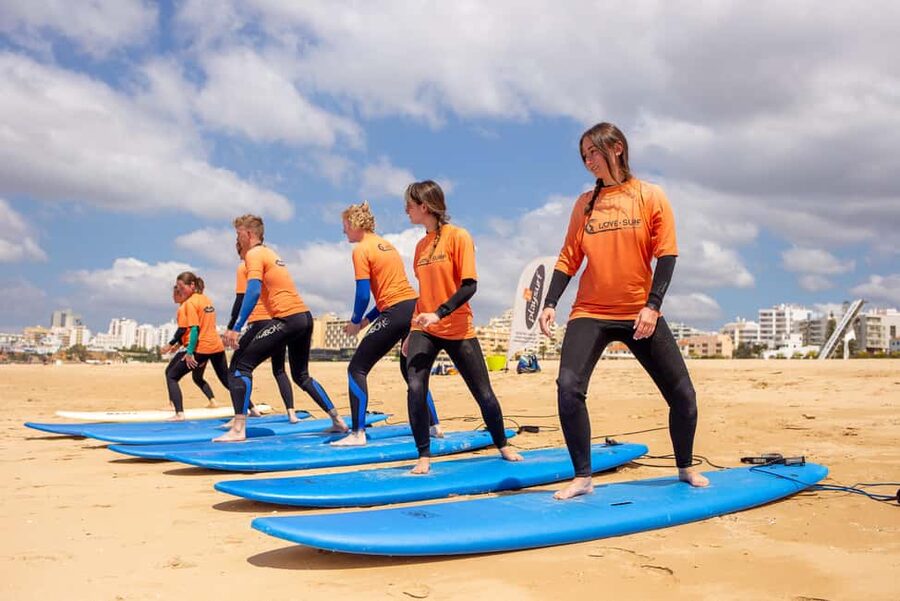
Before you head into the sea, you practise on the sand. This is where the central movement of surfing becomes less mysterious: start lying on the board, place your hands and feet correctly, and rise into a stable position.
It can feel repetitive, but this part has a clear purpose. In the water, you have only a short moment to react when a wave begins to carry you. If you have already rehearsed the movement, you can focus more on balance and timing.
The sand session also gives the instructor a chance to spot common problems. You may be standing too far forward, placing your feet too close together, or trying to rise before the board has enough speed. Small corrections here can make the water practice safer and less frustrating.
One fair criticism is that the sand practice may feel too short for some beginners. One participant wanted more time rehearsing how to get up on the board, while others valued the amount of time they eventually spent in the sea. If you know you learn through repetition, pay close attention during this stage and ask for another explanation if needed.
Heading into the water for coached attempts
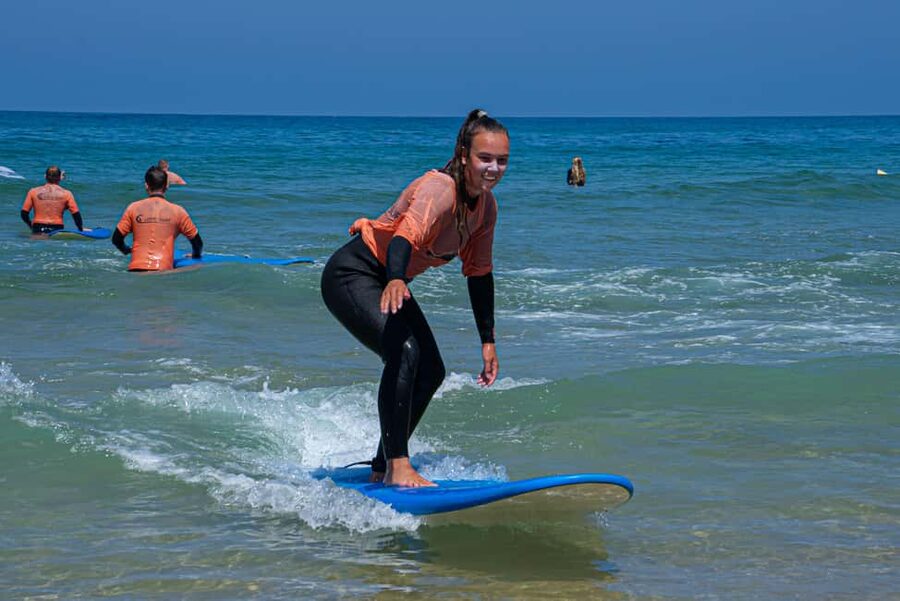
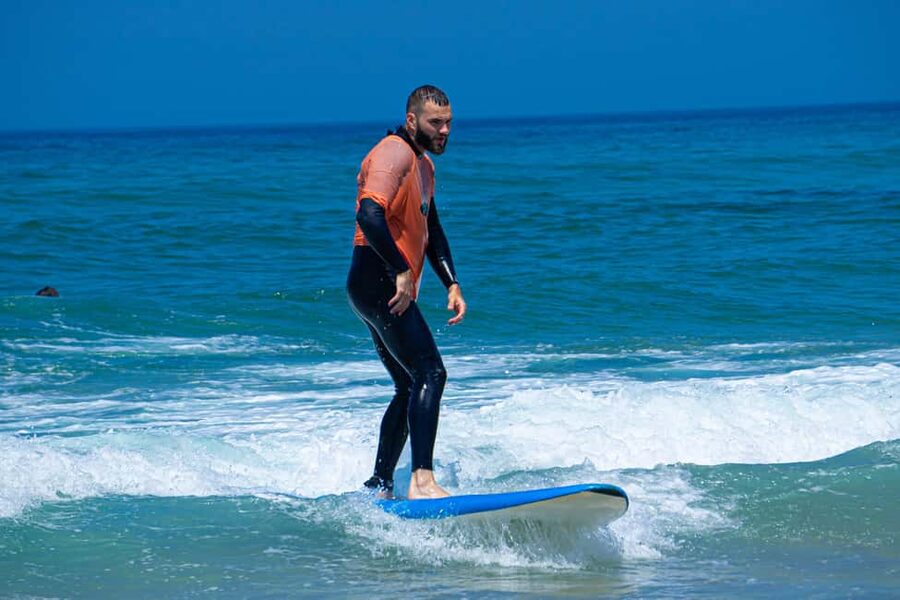
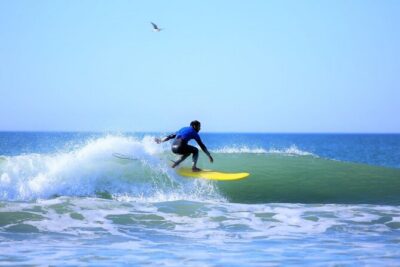
The water session is the part most people are waiting for, but it works best when you treat it as practice rather than a test. Your instructor sets goals, gives tips, and corrects your technique as you try to catch waves.
The coaching is adapted to the group. Students with some previous experience may spend more time working on their surfing, while complete beginners receive a fuller introduction before going out. This split can make the lesson feel more useful for mixed groups.
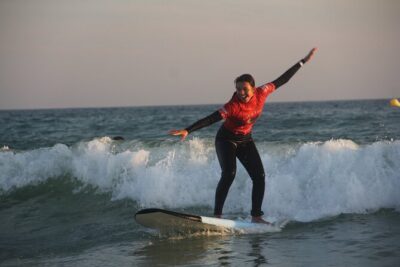
For a first lesson, the likely target is not elegant surfing. It is learning when to move, how to keep the board straight, and how to rise with control. You might manage a short ride early on, as several family groups and first-time adults did, but success depends on the conditions, your balance, and how quickly the movement makes sense to you.
The group limit matters here. Ten people is the maximum total, and the stated teaching ratio is one instructor for every five students. That is a reasonable structure for a shared lesson, though you will not have constant one-to-one attention.
If six or seven people are taking turns, you may wait between attempts. Use that time well. Watch the student ahead of you, listen to the instructor’s correction, and decide what you will change next time. That turns waiting into part of the lesson instead of dead time.
Same water, another way to ride it:
- Porto: Small Group Surf Lesson with Transportation
★ 4.9 · 594 reviews - Albufeira: 2-Hour Falesia Beach Surf Lesson
★ 4.8 · 464 reviews - Albufeira: Learn to Surf in Chill Beach Vibes & Good Times
★ 4.7 · 439 reviews - Surf Experience in Cascais
★ 5.0 · 423 reviews
Why the instructors make such a difference
The strongest part of this activity is the human element. A surf lesson can quickly become uncomfortable if the instructor is rushed or vague. Here, the teaching style is repeatedly described as patient, friendly, professional, and encouraging.
Filipa has worked with both adults and children, and her careful explanations suit people who have never handled a surfboard. Dinis has also received strong praise for supporting beginners step by step. Paolo and Francisco are other instructors associated with positive sessions, with Paolo especially appreciated by one group for making the class enjoyable.
Do not read those names as a promise that you will receive a particular instructor. They simply show the range of teaching styles available through Playsurf. The practical lesson for you is to speak up if a movement is unclear. Good instruction depends on a two-way exchange.
Families should pay attention to the age policy. Children from age 6 can take part, and one family with children aged 6 and 11 found that the younger child received close attention while also sharing the board with an instructor. That kind of support can make a big difference to a parent who is unsure how a small child will cope.
Is 90 minutes long enough?
For a first taste, yes, with a qualification. Ninety minutes is enough for a warm-up, safety briefing, sand training, and a meaningful water session. It is not enough to master surfing, and you should not book it expecting a full morning of uninterrupted wave riding.
The lesson feels most worthwhile when you arrive rested and ready to listen. Surfing uses more energy than it may appear to from the beach. Bring water and a light snack, and get a good night’s sleep before the class if you can.
The stated preparation list also includes a swimsuit or spare underwear to wear under the wetsuit, plus sunscreen. These are small details, but they prevent the usual beach-day scramble. You receive the surfboard and wetsuit, so you do not need to arrange the main equipment yourself.
Your clothing under the wetsuit should be suitable for getting wet and moving freely. Keep your personal packing simple. Water, sunscreen, a snack, and a change of underwear are the useful basics named for this activity.
What the $58 price buys you
At $58 per person, the value depends on what you want from the lesson. You are paying for 90 minutes of instruction, a wetsuit, a surfboard, safety teaching, and certified instructors. For a first lesson, that is more useful than paying only for equipment and trying to work out the basics alone.
The small-group format also adds value. A private class would offer more direct attention, but the maximum group size of 10 and the one-to-five instructor ratio keep this from becoming a large beach crowd with little coaching.
The trade-off is time. You are not buying a long surf camp or a full day on the water. If you already surf confidently, this class may feel too basic. If you are starting from zero, the price covers the parts that are hardest to arrange yourself: equipment, safety, technique, and immediate correction.
I would consider it good value for a beginner, a family wanting a shared activity, or someone who wants a structured introduction before deciding to take more lessons. It is less compelling for an experienced surfer who simply wants unrestricted time with a board.
Best suited to families and complete beginners
The age minimum is 6, so this can work for a family holiday with children and adults in the same activity. The instruction is adjusted to the student’s experience, which helps when one person in your group is confident and another has never stood on a board.
You should still judge your own child’s comfort with the sea and with following instructions. The activity is suitable from age 6 according to the stated rules, but a young child may need more direct support than an adult. Tell the instructor about any concerns at the start.
The lesson also suits solo visitors and couples. If bookings are light, you may find yourself in a very small group or even receiving a near-private session. One couple had only two students in their class, and some sessions had just one or two people booked. This is not guaranteed, but it can improve the amount of individual coaching.
Mixed-ability groups can work well, too. More experienced students may receive a different goal, while beginners get the full introduction they need. The instructor’s ability to separate or adjust the teaching is more important than everyone having identical skill levels.
Small drawbacks worth knowing before you book
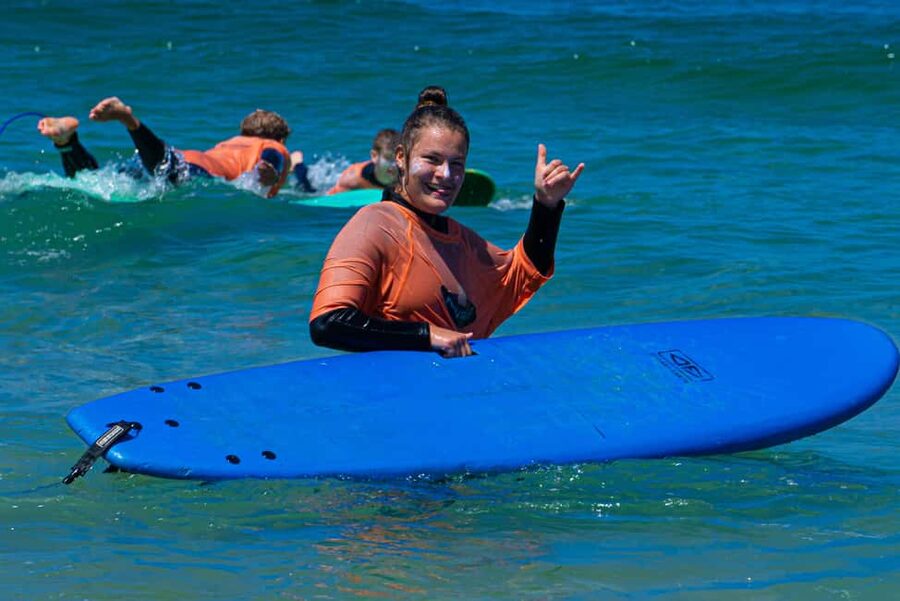
The biggest limitation is the turn-taking. Surfing instruction requires the teacher to watch each student, so you will not always be moving. A group lesson can feel slow if you want constant attempts.
The second point is that the lesson is introductory. You will learn useful fundamentals, but one session cannot replace continued practice. Surfing depends on timing and balance, and those skills improve through repetition.
The conditions also matter. Praia da Rocha offers suitable conditions for learning and improving, but the sea is not a machine. Your session may feel easier or harder depending on the waves and your own energy. The instructor’s job is to match the teaching to the conditions and your ability.
Finally, the exact start time is not fixed in the information provided. You need to check availability for the available session times. Portuguese and English are offered, so confirm that one of those languages works for you when booking.
Booking flexibility and practical details
You can cancel up to 24 hours before the lesson for a full refund. You can also reserve now and pay later, which helps if your Algarve plans are still shifting.
The activity is run by Playsurf. The group is limited to 10 participants, though the teaching ratio is described as a maximum of one instructor for five students. The duration is 90 minutes, and all necessary surf equipment is included.
Bring water, a light snack, sunscreen, a swimsuit or extra underwear, and a good night’s rest. Children under 6 cannot take part.
Should you book the Praia da Rocha surf lesson?
I would book this if you want a well-organized first step into surfing, especially if you are travelling with children, joining as a couple, or prefer guidance over figuring out the basics alone. The patient teaching style, small-group limit, included equipment, and clear progression from sand to sea make the $58 price reasonable for a beginner.
I would hesitate only if you already surf well or dislike waiting your turn in a group. For everyone else, arrive rested, listen closely during the sand practice, and judge success by learning one useful movement at a time. If you catch a small wave along the way, that is a fine bonus.
FAQ
How long is the Praia da Rocha surf lesson?
The lesson lasts 90 minutes.
How much does the surf lesson cost?
The price is $58 per person.
What ages can take part?
The activity is suitable for ages 6 and up. Children under 6 cannot participate.
Is the lesson suitable for complete beginners?
Yes. The lesson is designed for all levels, and safety instructions are adapted to your previous experience.
How many people are in the group?
The group is limited to 10 participants. The teaching ratio is a maximum of one instructor for five students.
What equipment is included?
A surfboard, wetsuit, and all necessary surfing equipment are included.
Which languages do the instructors speak?
Instruction is available in Portuguese and English.
What should I bring?
Bring water, a light snack, a swimsuit or extra underwear for under the wetsuit, sunscreen, and a good night’s rest.
Can I cancel for a refund?
Yes. You can cancel up to 24 hours in advance for a full refund.
Can I reserve now and pay later?
Yes. You can reserve your place and pay later, which keeps your travel plans flexible.
Latest surf sessions around Portugal
- Tricana Surf Experience★ 5.0 · 3 reviews
- Exclusive Surf Lessons in S Miguel Azores★ 5.0 · 21 reviews
- Guided surf tours from Porto city to the beach★ 4.5 · 10 reviews
- Surf Lesson | Surf Lessons★ 5.0 · 39 reviews
- Self-guided tour Bike + Surf★ 5.0 · 6 reviews
- Surf Lessons in Porto with transfer at Porto Surf School★ 5.0 · 42 reviews
- Surfing Lesson | Porto: Small Group Surf Lesson with Transportation★ 5.0 · 34 reviews
- Private Surf Experience – Transfer to Matosinhos – All Levels★ 5.0 · 7 reviews
Portimao Surf Lessons, compared.

Browse the lists this tour appears in