
Review · PHUKET
Phuket: Surf Lesson for Beginner in Kata Beach
Kata Beach gives first-time surfers a friendly way into the sport: you learn on a soft-top board in waist-deep water, with an instructor close by rather than being sent straight into large surf. I like the 15-minute beach lesson, which gives you a clear rehearsal before the board gets wet. I also like that the price includes the board, rash guard, freshwater rinse, and towel.
The main catch is timing. Phuket’s best beginner surf usually arrives from May through October, while other months can bring gentler waves and less action. At $38 per person, this is fair value for a guided first lesson, but you should not book it expecting a full surf-school course or guaranteed big waves.
Key points to know before booking
- Waist-deep water for first-timers: You do not need to be a strong swimmer, and the lesson is designed for shallow, manageable waves.
- 15 minutes of beach practice: You learn paddling, standing up, balance, and basic safety before entering the sea.
- Soft-top board and rash guard included: You can arrive without renting the main equipment separately.
- Individual coaching within a small group: The school aims to give each learner personal attention, and a group of four can receive one instructor per person.
- Best surf from May through October: The lesson runs year-round, but conditions outside peak season may feel calmer.
- Photography costs extra: In-water photos are available for 400 THB per person, but they are not part of the $38 booking price.
A gentle first step into surfing at Kata Beach
Surf lessons often sound harder than they are. The first hurdle is usually not standing on the board. It is knowing what to do when the wave comes, where to place your hands, and how to keep your body steady. This lesson deals with those points in a short, focused format.
The 90-minute session is built for beginners, not for people who already know how to read waves. Whale Surf School supplies a soft-top surfboard and rash guard, then works through the basics in English. The soft board matters because it is more forgiving than a hard board when you are still learning balance and board control.
The lesson also keeps beginners in shallow water. The stated aim is waist-deep surf, so you are not expected to swim out into deeper water or paddle through powerful waves. That makes this a useful choice for nervous first-timers and non-swimmers, though you still need to follow the coach’s instructions and feel comfortable entering the sea.
I would treat the shallow water as a confidence aid, not as a promise that every part of the lesson will feel effortless. Ocean conditions change, and even small waves can knock you off balance. The benefit is that your instructor can stay close and help you reset quickly.
More Beginner Surf Lessons in the world:
- Legian Beach, Bali: Beginner or Intermediate Surf Lessons
★ 4.9 · 1,019 reviews - Maui: Two Hour Beginner Group Surf Lesson in Kihei
★ 5.0 · 950 reviews - Uluwatu: Beginner & Intermediate Surf Lesson with Equipment
★ 4.9 · 832 reviews
The 15-minute beach lesson comes first
Your session starts with hands-on instruction on the beach. This first 15 minutes is short, but it does important work. You learn how to lie on the board, paddle, place your hands, push up, and find your balance before attempting a real wave.
The beach is also where you hear the practical safety guidance. A good beginner lesson needs to explain more than how to stand. You need to understand how to position yourself, how to respond when you lose balance, and how to avoid turning a small fall into a bigger problem.
I like this structure because it saves water time. You are not trying to remember every movement while a wave is already carrying you toward shore. Practicing first also helps families with children from age six, who may need a few dry runs before feeling ready for the ocean.
You should expect the coach to keep the lesson simple. The goal is not a long technical lecture. It is to give you a few movements that you can repeat under pressure. Paddling, popping up, and balancing are the core skills, and the session gives you a chance to try all three.
From dry practice to waist-deep waves
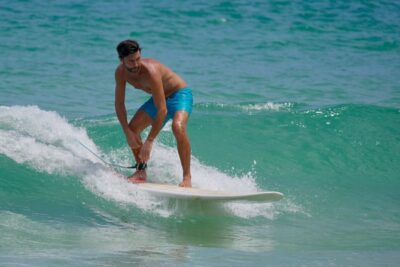
After the beach training, you take the board into the water. The lesson uses shallow areas with manageable waves, allowing the instructor to guide you through the first attempts. You may begin by practicing how to position the board and paddle, then move toward catching small waves toward the beach.
This is where the personal attention matters most. A coach can tell you when to paddle, help you place your hands correctly, and remind you to keep your balance as the wave picks up the board. The supplied information describes one-on-one coaching, while the experience also operates in small groups. In practical terms, the level of attention may depend on the group size and the setup that day.
One useful detail comes from a group booking of four people, where each person received an instructor. That suggests the school can provide a notably personal session for some bookings, rather than placing a large crowd in the water with one coach. Still, you should confirm the exact arrangement if individual instruction is important to you.
The water work is meant to help you stand on the board, often during your first attempt. That does not mean every person will ride a long wave. It does mean the lesson is organized around an achievable first success: getting up, balancing briefly, and feeling the board move under you.
What makes the soft board useful
A soft-top beginner board is a practical choice for this kind of lesson. It gives you a more forgiving surface while you learn to lie down, push up, and stand. It also suits a first session where falling off is part of the process.
The board is included in the price, as is a rash guard. That saves you the trouble of arranging equipment before the lesson and makes the $38 fee easier to assess. You are paying for instruction and access to the basic gear, not just for a brief board rental.
You still need to bring your own swimwear, sunscreen, sunglasses, a change of clothes, cash, and a waterproof bag. Sunglasses should be secure in the water, and a waterproof bag is useful for keeping small items dry. The school provides a freshwater rinse and towel service after the lesson, so you can clean off salt water without needing to pack a full beach setup.
Meals and drinks are not included. Plan those separately, particularly if you are booking the lesson around a busy beach day.
More Surf Lessons around the world:
- Tenerife: Surfing Lesson for All Levels, Photos included
★ 4.9 · 1,314 reviews - Group Surfing Lesson at Playa de las Américas, Tenerife
★ 5.0 · 1,072 reviews - Canggu: 2-Hour Surf Course
★ 4.8 · 1,053 reviews - Playa de las Américas: Private or Small-Group Surf Lesson
★ 4.8 · 980 reviews
How the location and meeting point work
The main meeting point is the Whale Surf School office at Tall Tree Kata Phuket. You should arrive 15 to 20 minutes before the activity begins. From there, the team takes you to the beach.
If you are staying in the Kata or Karon area, you can also meet the team directly at the beach. This option may save time, but check the meeting instructions when you book so you know which location applies to your reservation.
The transfer arrangement is simple, but the early arrival matters. You need time to check in, collect or prepare the equipment, and reach the beach without cutting into the 90-minute lesson. Arriving late could reduce the amount of instruction you receive.
Kata is a sensible setting for a first surf class because the experience is built around beginner-friendly water rather than a remote surf break. The attraction here is not a dramatic expedition. It is the chance to add a real ocean activity to a Phuket stay without committing an entire day.
The best season for your first wave
Phuket’s peak surf season runs from May through October. These months are described as the best period for suitable waves and conditions, so they are the strongest choice if surfing is a main reason for booking.
The lesson remains possible throughout the year. Outside the May to October period, you should expect gentler waves and milder conditions. That can be good for a cautious beginner, but it may also mean fewer chances to catch a wave with enough push to stand.
This is an important value point. The lesson teaches real surfing skills, but the ocean controls the raw material. No coach can guarantee a certain number of rides or a particular wave size. If you are booking in the quieter season, think of the activity as an introduction to board handling and ocean confidence, not a guaranteed highlight-reel ride.
If your schedule is flexible, choose a date within the peak period. If your dates are fixed, keep your expectations practical and listen to the coach’s advice about the day’s water conditions.
Is $38 good value for 90 minutes?
At $38 per person, the lesson sits in a reasonable range for a first-time activity that includes instruction and equipment. You receive 90 minutes with an English-speaking instructor, a soft-top board, a rash guard, freshwater rinse, and towel service.
The price is strongest for someone who would otherwise need to rent a board and arrange a lesson separately. It is also useful for families and couples who want a short activity rather than a full-day surf program.
The value is less clear if you already surf. An experienced surfer may find the shallow-water format and beginner instruction too basic. This is a starter session, and the short length is part of its appeal and its limit.
Photography is an optional extra at 400 THB per person. If you want proof of your first ride, budget for it separately. If you are happy to leave your phone on dry land, you can skip that cost and keep the booking focused on the lesson itself.
Who should book this lesson?
I would recommend it to adults who have always wanted to try surfing but do not know where to begin. It also suits families with children aged six and older, provided the child is comfortable following instructions and entering shallow ocean water.
Non-swimmers are specifically accommodated because the lesson stays in waist-deep water. That said, you should not confuse shallow water with no risk. The sea can still move the board and your body, so tell the instructor about any concerns before you start.
The session works well for a small group of friends, especially if you value personal attention. A group of four may receive an instructor per person, based on the reported setup, but arrangements can vary.
I would not choose it if you want advanced technique, long rides, or a full day on the water. It is also not suitable for children under six or pregnant women. Anyone looking for a quiet beach activity with no physical effort should pick something else.
Practical preparation for a smoother lesson
Wear swimwear that stays comfortable under a rash guard. Apply sunscreen before the lesson, and bring a change of clothes for afterward. The towel and freshwater rinse help, but you will still want dry clothing for the rest of your day.
Bring cash if you may want the in-water photography service or need it for other personal expenses. Keep valuables in a waterproof bag, and avoid bringing anything you would worry about losing in the sea.
Smoking, alcohol, and drugs are not allowed during the experience. You also must not touch marine life. Those rules protect you, the instructors, and the coastal environment.
Arrive early at Tall Tree Kata Phuket, especially if you are using the office meeting point. The beach option is convenient for people staying in Kata or Karon, but you should not assume it applies to every booking.
Free cancellation is available up to 24 hours before the activity for a full refund. You can also reserve now and pay later, which helps if your Phuket plans are still shifting.
Should you book the Kata Beach surf lesson?
Book it if you want a short, structured first taste of surfing with equipment supplied and an instructor nearby. The shallow water, beach practice, soft-top boards, and small-group format remove several common barriers for beginners.
The best match is a first-timer visiting during May through October, when Phuket usually offers the most suitable surf. Outside those months, the activity can still work, but calmer conditions may produce fewer satisfying rides.
At $38, the lesson offers good value for a beginner who wants a real try without giving up half a day. Skip it if you already surf confidently or need guaranteed strong waves. For everyone else, it is a practical way to find out if surfing belongs in your holiday plans.
FAQ
Where does the surf lesson meet?
The main meeting point is the Whale Surf School office at Tall Tree Kata Phuket. You should arrive 15 to 20 minutes before the start time, and the team will take you to the beach.
Can I meet the team directly at the beach?
Yes. If you stay in the Kata or Karon area, you can meet the team at the beach directly.
How long does the lesson last?
The lesson lasts 90 minutes, or 1.5 hours.
Is the lesson suitable for non-swimmers?
Yes. Beginners stay in shallow, manageable water, with waves taken from waist-deep areas. You do not need to swim out into deep water.
What equipment is included?
A soft-top beginner surfboard and rash guard are included. Freshwater rinse and towel service are also provided after the lesson.
What age is required to join?
The minimum age is six years old. Children under six cannot join this experience.
When is the best time of year to surf in Phuket?
Peak surf season runs from May through October. Surfing is possible year-round, but other months usually bring gentler waves and milder conditions.
Is photography included?
No. In-water photography is an optional extra costing 400 THB per person.
Can I cancel the booking for a refund?
Yes. You can cancel up to 24 hours in advance for a full refund. Reserve-now, pay-later booking is also available.
Latest surf sessions around the world
- Valencia: Excursión en Moto de Agua + Paddle Surf★ 4.9 · 9 reviews
- Waikiki: Family, Private, and Group Surfing Lessons★ 5.0 · 4 reviews
- Waikiki: Surf Lessons Easy 60 min classes no crowds!★ 4.9 · 21 reviews
- Tricana Surf Experience★ 5.0 · 3 reviews
- Uluwatu: Surf Lessons Beginner★ 5.0 · 3 reviews
- Astonishing Scavenger Hunt: Surf, Sand and Sculptures!★ 3.0 · 2 reviews
- Two- Hour Group Surfing Lesson in Cocoa Wrightsville Beach, NC★ 5.0 · 13 reviews
- Electric Bike Rentals in Topsail Island and Surf City★ 5.0 · 2 reviews
Phuket Surf Lessons, compared.
Phuket: Private Surfing Lessons at Beautiful Kata Beach
Read our review →
Private Surf Lesson: 1-Hour Wave-Riding on Kata Beach
Read our review →
2 Day / 2 nights Learn To Surf Holiday Package With Accommodation
Read our review →Browse the lists this tour appears in