
Review · MALTA, MALTA
Malta Surf School, Beginner Surf Lessons
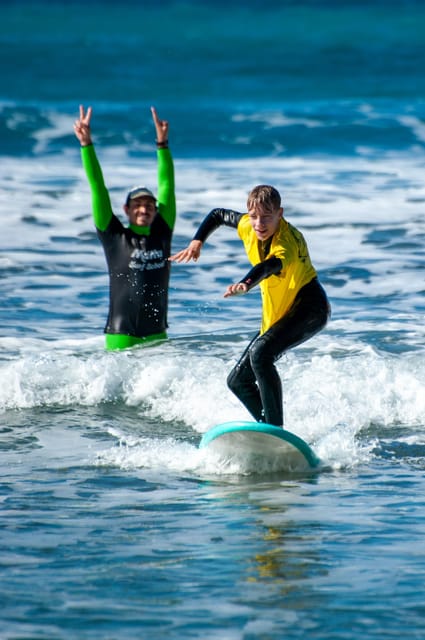
Malta Surf School gets you from beach briefing to chest-high water in one hour, with the real goal in sight: catching your first wave. You’ll practice the take-off on sand, then work with an instructor as you paddle, time a wave, and try to stand. It is a simple plan, but a good one for a first lesson.
I like the six-person limit, which gives the instructor room to help rather than shout over a crowd. I also like that the board and wetsuit are included, and that coaches such as Valerio give clear, step-by-step help. The main catch is weather: if the sea is flat, your surf lesson may become paddleboarding, wakeboarding, or a boat tour instead.
Key points before you book
- One hour from sand practice to waves: You learn the basic take-off before entering the water.
- Groups capped at six: Expect more personal help than at a large beach class.
- Equipment is included: The €60 listed price, about $71, covers the surfboard and wetsuit.
- Meet by the Singita kiosk: Look for the school’s blue flag at the end of the beach steps.
- Weather controls the day: No suitable waves can mean an alternative activity or cancellation.
- Best for swimmers aged 16 and up: The lesson is not suitable for non-swimmers, pregnant women, people with mobility impairments, or children under 16.
Your first Malta wave starts on the beach
Surf lessons often look easy from shore. A board glides in, someone stands, and the sea does the rest. Your first attempt usually tells a different story. The board shifts, the timing feels quick, and your feet may land in places they did not receive permission to visit.
That is why this Malta lesson begins on dry sand. Before you worry about waves, you learn where to place your hands, how to push your chest up, and how to bring your feet underneath you in one clean motion. The instructors focus on the take-off, the move that turns paddling into standing.
This short practice matters. You get to repeat the motion without the distraction of moving water. You also learn basic board and surf-spot safety before entering the sea, which makes the water portion feel more orderly and less like a scramble.
The class is aimed squarely at first-timers. You do not need to arrive knowing surf terms or wave technique. You do need to be comfortable in the water and able to swim, since the lesson moves into chest-high water.
More Beginner Surf Lessons in the world:
- Legian Beach, Bali: Beginner or Intermediate Surf Lessons
★ 4.9 · 1,019 reviews - Maui: Two Hour Beginner Group Surf Lesson in Kihei
★ 5.0 · 950 reviews - Uluwatu: Beginner & Intermediate Surf Lesson with Equipment
★ 4.9 · 832 reviews
A small group makes the coaching count
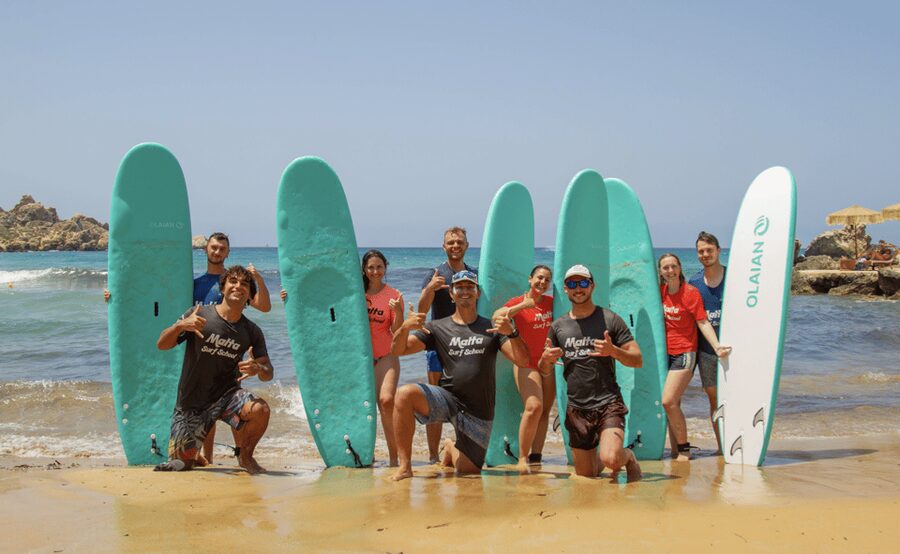
The maximum group size is six people. That is a useful middle ground. You still get the fun of learning beside other beginners, but the instructor has a reasonable chance to watch your stance and offer a correction.
I would pay close attention to the coaching here. The strongest comments about the class focus on instructors who are friendly, clear, and willing to stay involved. One student specifically praised Valerio for teaching each part step by step, and another noted that helpers were on hand with advice and assistance.
That is exactly what you want in a first surf lesson. You do not need a dramatic speech or a long technical lecture. You need someone to tell you when to paddle, remind you where to place your feet, and help you understand why the board did or did not catch the wave.
The available instruction is in English, Italian, and Spanish. If you are booking with a companion, a small group also means you can share the first successes and the inevitable falls without being lost in a large class.
The 60-minute lesson, step by step
Arrive 15 minutes early
The advertised lesson lasts one hour, but you should allow extra time before it begins. Arrive 15 minutes early for the briefing and changing. You will need swimwear, a towel, water, sunscreen, and a change of clothes.
In winter, wear a bikini or board shorts under the wetsuit. In summer, the school says you can wear its branded T-shirt. The equipment is supplied, including the surfboard and wetsuit, so you do not need to pack your own gear.
Find the school at the end of the steps on the beach, next to the Singita kiosk. The blue flag is the useful landmark. This is more practical than relying on a street address, especially if you are approaching from the beach.
More Surf Lessons around the world:
- Tenerife: Surfing Lesson for All Levels, Photos included
★ 4.9 · 1,314 reviews - Group Surfing Lesson at Playa de las Américas, Tenerife
★ 5.0 · 1,072 reviews - Canggu: 2-Hour Surf Course
★ 4.8 · 1,053 reviews - Playa de las Américas: Private or Small-Group Surf Lesson
★ 4.8 · 980 reviews
Start with the board and the surf spot
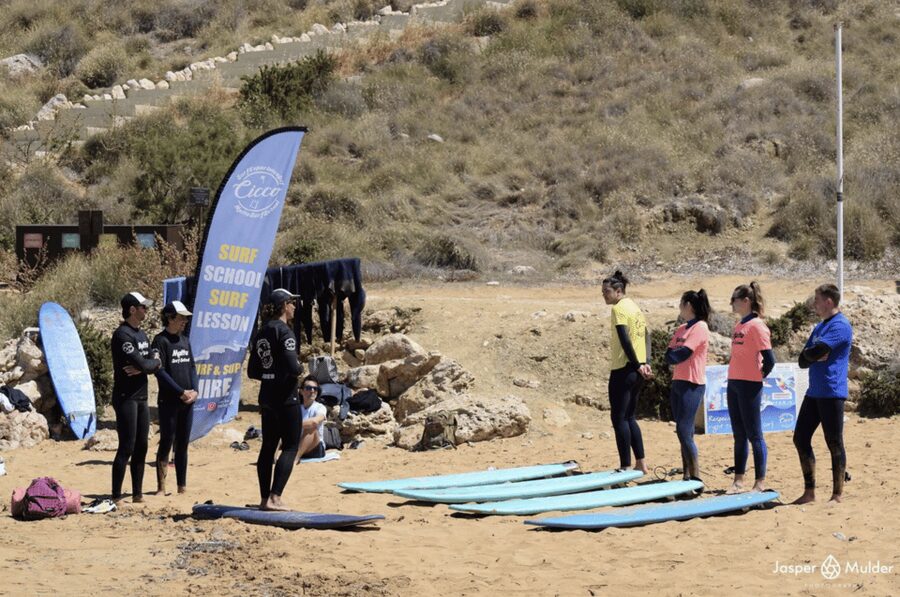
The opening briefing covers the surfboard, safety, and conditions at the spot. This is not wasted time. The sea may look calm from the sand, but you still need to understand how to handle the board and where to position yourself.
The instructor will also explain the basic flow of the lesson. You learn on land first, then move into the water once the take-off makes sense. For a nervous beginner, that order is reassuring because there is no pressure to perform immediately.
Practice the take-off on sand
Next comes the most important dry-land drill. You practice standing on the board and making the correct take-off movement. The goal is not to look graceful yet. The goal is to make the sequence familiar enough that you can repeat it when the board is moving.
This is where the small group helps. The instructor can watch how you place your hands and feet, then offer a quick fix. A little correction before entering the water can save several frustrating attempts later.
Enter chest-high water
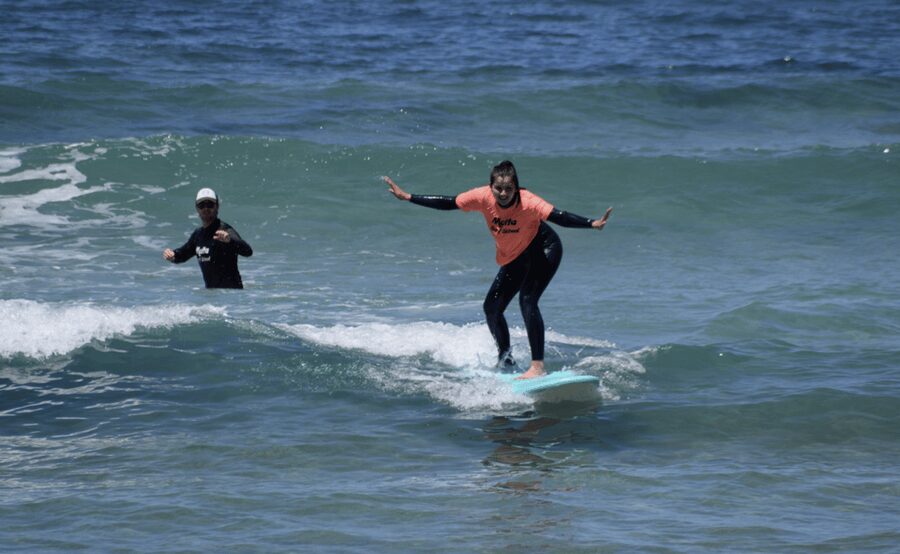
The water section takes place in chest-high water, with the instructors close by. You learn to paddle, catch a wave, and stand with guidance. The team remains with the group, offering tips on timing and safety as you try.
You should expect falls. They are part of the lesson, not a sign that you have failed. The point is to get enough attempts to understand the rhythm: paddle, feel the board move, push up, place your feet, and enjoy the brief ride when it works.
The one-hour format is short, so this is an introduction rather than a full surf course. Still, it gives you a taste of the sport and a clear sense of whether you want another lesson.
What makes the coaching useful for first-timers
The most praised part of this experience is the human help. The instructors are described as friendly and clear, while the assistants are available for advice and practical support. That combination matters more than flashy equipment for a beginner.
One account describes the first lesson as enough for a couple to ride several waves. You should not treat that as a promise, since wave conditions and individual ability vary. It does show what the lesson is designed to do: give you a real chance to catch a wave, not simply rehearse on the sand.
The tone also appears to be encouraging rather than intimidating. Surf culture can sometimes feel serious, especially when experienced surfers are nearby. A supportive beginner group lets you laugh at the awkward moments and keep trying.
I would still keep your expectations sensible. You may stand up several times, once, or not at all. A successful first lesson is also learning how to handle the board, read the basic conditions, and make a safer attempt next time.
Malta’s clear water is part of the appeal
The setting adds to the experience. You are learning along Malta’s coastline, in clear water, rather than spending your entire first lesson in a pool or on a practice machine. The water itself becomes part of the memory, even during the attempts that end with a splash.
The school describes the beach as a well-equipped bay. The meeting point near Singita kiosk gives you a clear arrival marker, and the blue flag should make the team easy to spot.
Do not confuse attractive water with guaranteed surf. Malta’s conditions change, and this activity depends on suitable weather and waves. The sea may look inviting but still lack the wave shape needed for a useful beginner class.
That weather factor is the main uncertainty in booking. One booking had to be cancelled because the conditions did not allow the lesson to go ahead, and the customer received a full refund. The issue in that case was not the refund itself, but a lack of an update about whether the lesson would take place.
For a smooth day, keep your phone available and allow flexibility in your schedule. If surfing is the main reason you are booking, avoid placing the lesson immediately before an important departure or fixed evening plan.
What happens if there are no waves
The school offers alternatives when surfing is not possible. These include stand-up paddleboarding, wakeboarding, and boat tours. That gives you some protection against a flat day, though it also means the backup may not match your original plan.
If you mainly want time on the water, an alternative can still be worthwhile. If your only goal is to stand on a surfboard and catch a wave, you may prefer to reschedule or use the free cancellation option instead.
The weather policy is not a minor footnote. It should shape your booking decision. Check the conditions as your date approaches, and do not assume that clear skies guarantee surfable waves.
The cancellation terms allow a full refund when you cancel at least 24 hours in advance. You can also reserve now and pay later, which helps if your Malta plans are still shifting.
Getting there from Malta’s main bases
The school provides bus routes from several popular areas:
- From Sliema or St. Julian’s, take bus 225.
- From Valletta, take bus 44.
- From Bugibba or St. Paul’s Bay, take bus 223.
The bus ride is not included in the activity price. Plan enough time to reach the beach, find the Singita kiosk, change, and attend the briefing before the lesson begins.
The meeting point is described by its beach location rather than by a formal building entrance. Once you reach the steps at the beach, walk to the end and look for the blue flag beside Singita kiosk.
Is €60, or about $71, good value?
The listed cost is €60 per person, shown in the booking summary as about $71. For that price, you receive a one-hour group lesson, an instructor, a board, and a wetsuit.
The value depends on what you want. For a first-time introduction, including equipment removes two common costs and hassles. You do not have to rent a board separately or work out which wetsuit is right for the conditions.
The lesson is also small enough to offer personal attention. That makes the price more reasonable than a basic beach rental, where you may receive equipment but little help with timing or technique.
The short duration is the limitation. You are paying for a focused introduction, not a long session with hours of free practice. If you are already comfortable surfing, this class will probably feel too basic. If you are starting from zero, one hour can be enough to test the sport without making a large commitment.
The price is also fairer when the sea cooperates. If the class changes to another activity, the value depends on whether that alternative appeals to you. Ask yourself if you want a water experience in general, or this specific surf lesson.
Who should book this lesson
I would recommend it to a first-time surfer who can swim, is at least 16, and wants a guided introduction rather than a solo rental. It suits couples and friends who enjoy learning together and do not mind a few falls in front of a small group.
It is also a good fit if you value instruction. The strongest part of the experience is not simply getting a board into the water. It is having someone explain the take-off, watch your attempts, and offer help when the board gets away from you.
You should skip it if you cannot swim, have mobility limitations that make the activity unsuitable, are pregnant, or are under 16. Alcohol and drugs are not allowed.
This is not the right choice for a packed itinerary that cannot tolerate a weather change. Surfing needs suitable conditions, and the school cannot control the sea.
What to bring and how to prepare
Keep your packing simple:
- Swimwear
- Towel
- Water
- Sunscreen
- Change of clothes
Wear your swimwear under the wetsuit in winter. In summer, use the school’s branded T-shirt as directed. Arrive already prepared to change, and remember that the 15-minute early arrival is part of making the short lesson useful.
Drink water before and after the class. Even a one-hour session can be tiring when you are paddling and repeatedly standing up. Sunscreen is important too, since time on the water increases your exposure.
Bring a patient attitude. The first lesson may produce a proud ride, a series of near misses, or a memorable splash. All three outcomes are normal for a beginner.
Should you book Malta Surf School?
Book it if you want a friendly, tightly organized first step into surfing, especially if the small group and included equipment appeal to you. The clear dry-land instruction, chest-high water practice, and patient coaching from instructors such as Valerio make the format easy to understand.
Before paying, accept the weather risk and check whether you would enjoy one of the backup activities. If you need a guaranteed surf session, this is not it. If you want a low-commitment chance to learn the basics in Malta’s clear coastal water, with the option of a refund when plans change, it is a sensible pick.
FAQ
How long is the Malta Surf School beginner lesson?
The lesson lasts one hour. You should arrive 15 minutes early for the briefing and to get changed.
How many people are in each group?
The group is limited to six participants, allowing for more direct help from the instructor.
Is surf equipment included?
Yes. The €60 per person lesson includes the surfboard and wetsuit.
Where do I meet the instructors?
Meet at the beach at the end of the steps, next to the Singita kiosk. Look for the school’s blue flag.
What happens if there are no waves?
The school may offer stand-up paddleboarding, wakeboarding, or a boat tour instead. Activities depend on weather and sea conditions.
Who is not suitable for this activity?
The lesson is not suitable for non-swimmers, people with mobility impairments, pregnant women, or children under 16.
Latest surf sessions around the world
- Waikiki: Surf Lessons Easy 60 min classes no crowds!★ 4.9 · 21 reviews
- Valencia: Excursión en Moto de Agua + Paddle Surf★ 4.9 · 9 reviews
- Waikiki: Family, Private, and Group Surfing Lessons★ 5.0 · 4 reviews
- Tricana Surf Experience★ 5.0 · 3 reviews
- Uluwatu: Surf Lessons Beginner★ 5.0 · 3 reviews
- Astonishing Scavenger Hunt: Surf, Sand and Sculptures!★ 3.0 · 2 reviews
- Two- Hour Group Surfing Lesson in Cocoa Wrightsville Beach, NC★ 5.0 · 13 reviews
- Electric Bike Rentals in Topsail Island and Surf City★ 5.0 · 2 reviews
Beginner Surf Lessons, compared.
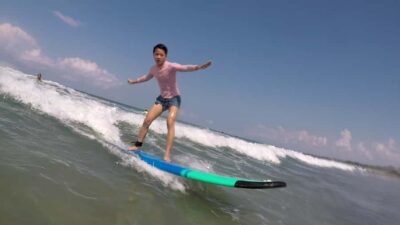
Legian Beach, Bali: Beginner or Intermediate Surf Lessons
Read our review →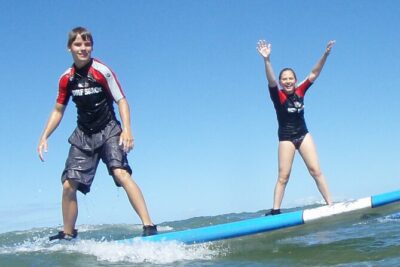
Maui: Two Hour Beginner Group Surf Lesson in Kihei
Read our review →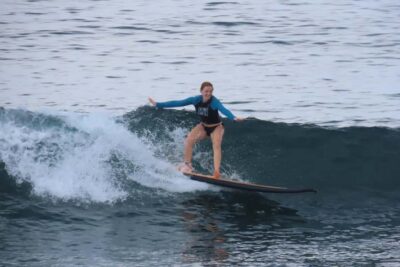
Uluwatu: Beginner & Intermediate Surf Lesson with Equipment
Read our review →
Kuta/Bali: Private Beginner & Intermediate Surf Lessons
Read our review →
Albufeira: Learn to Surf in Chill Beach Vibes & Good Times
Read our review →
Oahu: Beginner-Friendly Waikiki Beach Surfing Lesson
Read our review →
Beginner Surf Lesson at the Beautiful Algarvian West Coast
Read our review →
Lezioni di Surf per Beginner e Intermedi (6 persone a istruttore)
Read our review →Browse the lists this tour appears in