
Review · ALGARVE
Albufeira: Surf Lesson
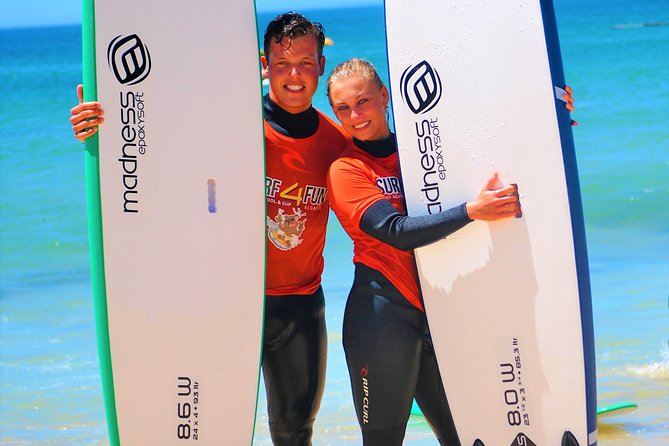
Praia da Galé is where this Albufeira lesson earns its keep. You get off the sand and into the water quickly, with instructors beside you helping you catch small waves and adjust your technique. I like the clear land practice before the lesson and the hands-on coaching in the water, especially for first-timers.
I also like that the lesson includes the board, wetsuit, insurance, and a place for your belongings. The main catch is the sea itself: surf conditions change, and summer can bring very little swell or a crowded beach. Lesson times also shift with the tides, so this is not an activity to squeeze into a rigid schedule.
Key points to know before you book
- Praia da Galé is the base: Meet at the SUPA wooden kiosk by the car park, then walk to the beach.
- The lesson runs for two hours: Expect a warm-up, safety talk, land drills, and water practice.
- You start with the basics: Learn how to reach the waves, lie on the board, and stand safely before trying to ride.
- Coaches work in the water: Instructors give direct help and may push your board into a suitable wave.
- Conditions control the experience: Low tide is needed, and summer waves may be gentle or absent.
- The price covers the essentials: At $36 per person, you receive the lesson, board, wetsuit, insurance, and storage.
Why Praia da Galé works for a first surf lesson
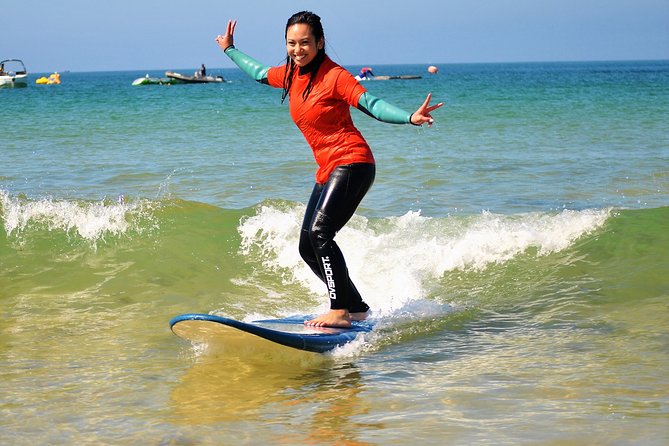
For a beginner, the best surf beach is not always the biggest or most dramatic. You need manageable waves, room to practise, and instructors who can keep an eye on you. Praia da Galé is used for this lesson because the conditions can suit basic training, particularly for people trying to stand on a board for the first time.
The beach also gives you a proper Algarve setting rather than a poolside introduction. You are working with moving water, sand, tide, and real surf traffic. That makes the first successful ride feel earned, even if it lasts only a few seconds.
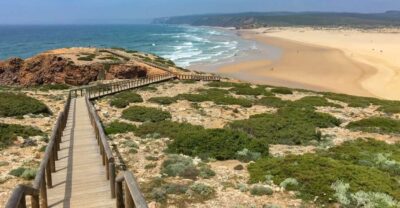
The walk from the kiosk to the water can be tiring, especially while carrying or wearing equipment. One person described it as a bit of a workout, so wear your swimwear under your clothes and keep your extra items light. The exact route and effort may vary with where the group sets up.
More Surf Lessons around Portugal:
- Matosinhos: Surfing Lesson with Equipment
★ 4.8 · 926 reviews - Lisbon Surf Experience
★ 4.9 · 876 reviews - Porto: Small Group Surf Lesson with Transportation
★ 4.9 · 594 reviews
Meeting SUPA at the wooden kiosk
Your starting point is SUPA’s wooden kiosk near the car park at Galé Beach. Look for the kiosk with the company logo on the front. This detail matters because the wider beach area can be busy, particularly in summer, and you do not want to waste your booked time searching along the shore.
At the kiosk, you receive your surfboard and wetsuit. There is also a place to store belongings, which is useful if you have a phone, wallet, or small bag with you. Bring swimwear, but leave sunglasses and jewelry behind. Both can be lost or damaged in the surf, and they are not allowed during the activity.
Parking is another small but practical concern. The area has a large car park, yet nearby streets fill quickly during the summer season. I would arrive early enough to park without rushing, especially if your lesson falls at a popular time.
Transportation is not included. You need to reach Galé Beach yourself unless you arrange transport for an additional fee. Food and drinks are also not part of the package, though the beach area has places to eat afterward.
The first 20 minutes: warm-up, safety, and board basics
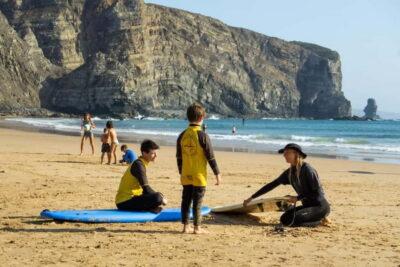
The lesson begins with a short warm-up and safety briefing on the beach. This is not filler. Surfing asks more of your shoulders, legs, and core than a casual swim, and the warm-up helps you prepare for repeated attempts.
The safety talk gives you the basic rules before you enter the water. You learn how to handle the board, how to move toward the waves, and what to do as the water pushes back. For someone new to surfing, this first explanation can make the sea feel less confusing.
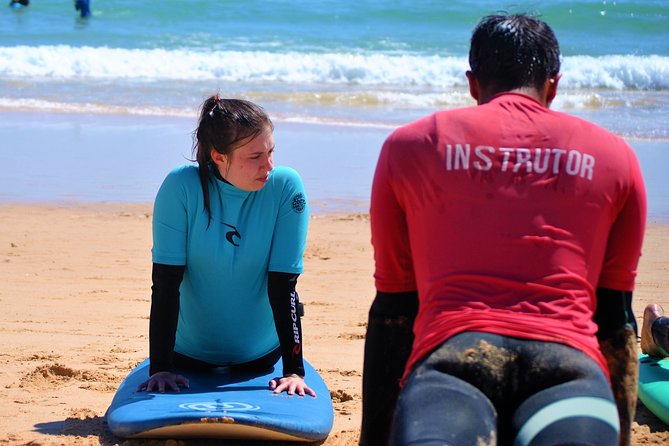
The group then practises on dry land. Instructors demonstrate the movement from lying on the board to standing up. You repeat it several times before trying it in the water, which helps you focus on body position rather than panic when the first wave arrives.
This dry practice is one of the strongest parts of the class. A good first lesson is not simply a matter of being pushed toward shore. You need to understand where your hands go, how to bring your feet underneath you, and how to keep your balance. The repeated land drills give you a simple pattern to remember.
Reaching the waves is part of the lesson
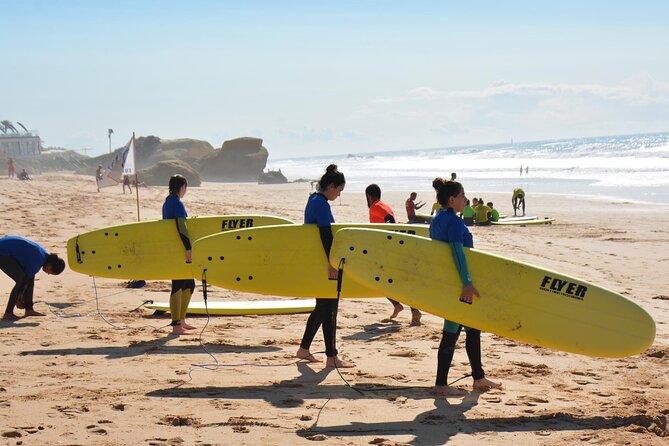
The first water exercise is learning how to get out to the waves. That can sound easy until you are holding a board in moving water. You learn how to make progress without fighting every wave head-on and how to keep control of the board.
This stage may feel less exciting than standing up, but it is important. If you cannot reach the right part of the surf safely, you will spend the whole lesson stuck near the shore or turning around too soon. SUPA builds this into the session rather than treating it as a problem you must solve alone.
You then practise timing and positioning. The aim is to catch a suitable wave with enough push to carry you forward, but not so much force that you lose control. The instructors remain nearby and help you judge when to try.
Group size can affect how much individual attention you receive. One larger group had three instructors for about 20 people, while other sessions were much smaller. The coaching appears to stay active, but you should expect a group lesson to involve waiting between attempts.
Same water, another way to ride it:
- Albufeira: 2-Hour Falesia Beach Surf Lesson
★ 4.8 · 464 reviews - Albufeira: Learn to Surf in Chill Beach Vibes & Good Times
★ 4.7 · 439 reviews - Surf Experience in Cascais
★ 5.0 · 423 reviews - The Surf Instructor in Costa da Caparica
★ 5.0 · 403 reviews
Standing up and catching your first wave
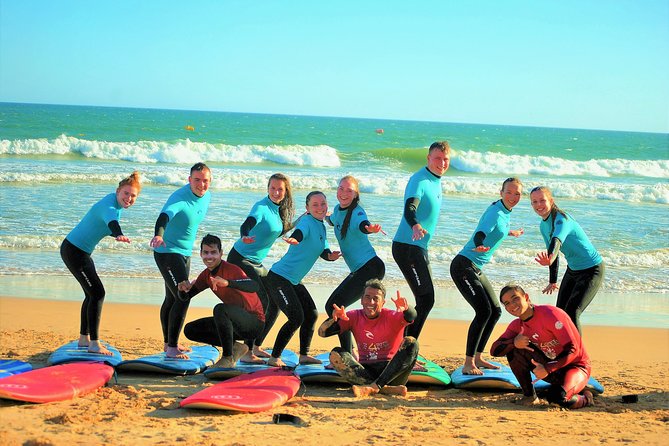
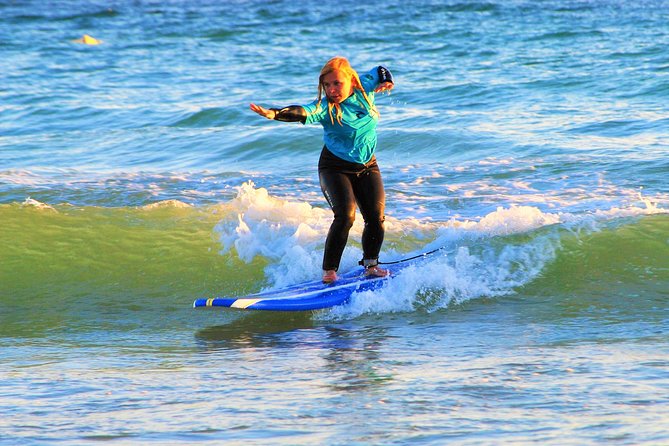
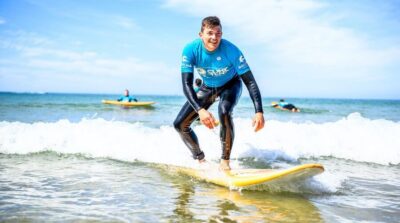
Once you have worked on reaching the waves, the focus shifts to standing. You lie on the board, wait for the instructor’s signal, and try to rise in one controlled movement. At first, most people wobble, hesitate, or stand too late. That is normal.
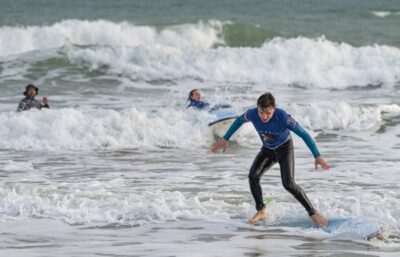
The instructors help from the water. They may give short instructions, correct your stance, or help send your board into a wave. Several people were able to stand and ride more than once during their first two-hour session, but your result will depend on your balance, confidence, fitness, and the day’s conditions.
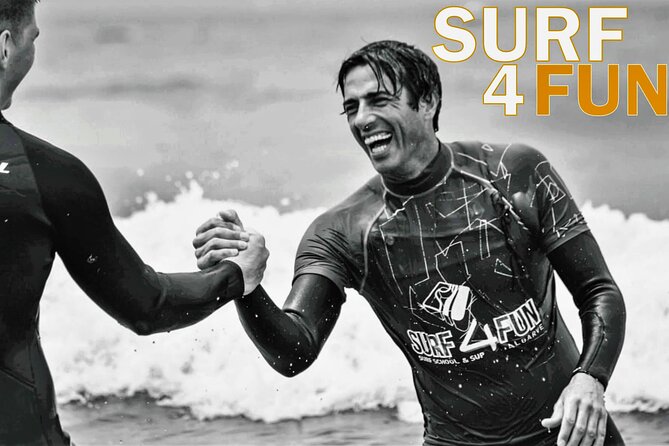
I like the direct nature of this coaching. You are not left to repeat the same mistake for half an hour. Instructors such as Mariana, Luna, Jorge, Antonio, Matheus, and Mateusz have been singled out for patience, encouragement, and clear explanations. The staff lineup can change, but the teaching style is built around active support.
You should also expect some failed attempts. Surfing has a steep first step, and even a strong class cannot manufacture waves. One session had very little surf, while another took place on a crowded beach with many beginners. The instructors can improve your form and timing, but they cannot control the Atlantic.
What the two-hour schedule really gives you
Two hours sounds short, but it is a useful length for a first lesson. You spend part of that time changing, warming up, learning safety points, practising on land, walking to the water, and repeating attempts. The actual riding time is broken into short bursts, which is easier on your arms and legs than continuous paddling.
The session is tiring in a productive way. You will use your upper body to move the board and your legs to stand and balance. If you are not used to surf practice, expect to finish ready for a shower and a meal.
A two-hour format also gives you enough attempts to improve. Your first wave may be mostly luck. By the later tries, you begin to recognise the right moment to paddle, keep your weight centered, and rise with less hesitation. That small change is the real lesson.
The class is aimed at beginners but can also suit intermediate surfers who are starting to ride green waves. It is not presented as advanced coaching. If you already surf confidently in larger or faster conditions, you may want a more specialised session.
Equipment, comfort, and beach logistics
The $36 price includes the surfboard and wetsuit, so you do not need to rent the main equipment separately. It also includes safety insurance and storage for your belongings. That makes the price fair for a first try, particularly if you are travelling without surf gear.
The equipment is described as being in good condition, though the exact board you receive can depend on your size, ability, and what is available that day. Beginner boards are generally designed for stability, which is more useful here than a sleek, fast board.
Bring swimwear and arrive ready to change. Do not bring jewelry or sunglasses into the lesson. Food and drinks are separate, and transport is not included.
Showers may require an extra payment. One person noted showers at a nearby restaurant for €1, followed by lunch on the beach. That is a useful way to finish the outing, but treat it as a nearby option rather than part of the SUPA package.
Some sessions include photographs or videos after the water portion. This has happened for several classes, but it should not be treated as guaranteed. If photos matter to you, ask the team directly on the day.
The tide decides your starting time
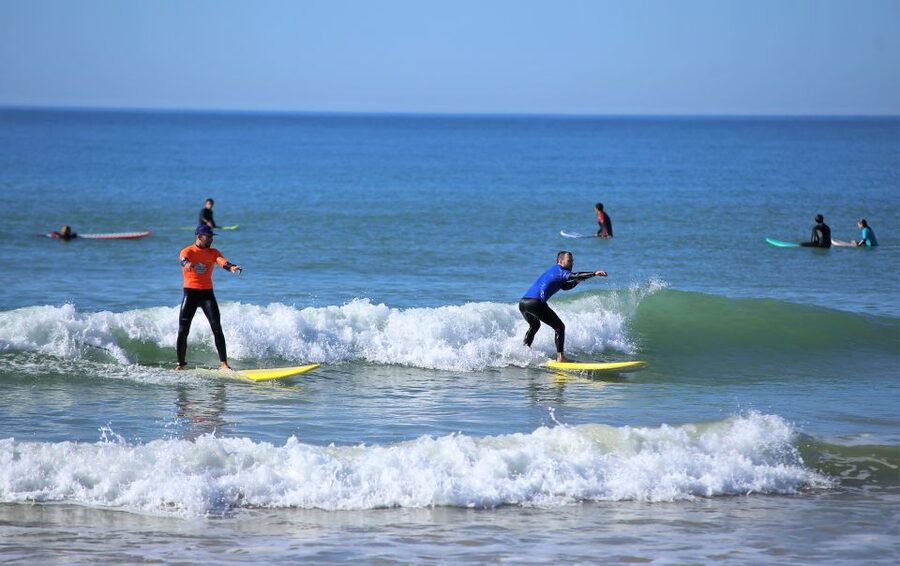
This is the most important planning detail. Lesson times change from day to day because SUPA needs a suitable low tide. At the wrong tide, the waves may not break in a useful way for teaching.
You should check availability rather than assuming a morning or afternoon slot. Keep some flexibility in your Algarve plans. A fixed dinner booking immediately after the lesson may be risky if the start time changes or if the group takes longer to finish.
Tide-dependent scheduling is a small inconvenience, but it serves a clear purpose. The company is trying to place you in surfable conditions rather than run every lesson at the same clock time. The tradeoff is that you need to build your day around the sea.
Summer conditions can also be gentle. The southern Algarve coast may have very little wave activity in the warmer months, and a calm sea can limit how much surfing you actually do. Spring, autumn, and winter can bring different conditions, but the supplied information does not promise better waves in any particular season.
Who will get the most from this experience
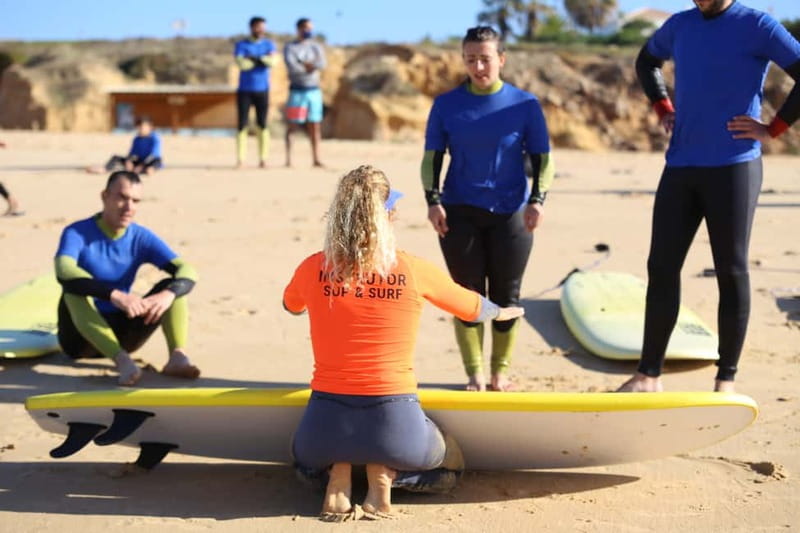
I would choose this lesson if you want an active break from cafés and beach lounging. It suits solo visitors, couples, families with older children who can swim, and friends looking for a shared challenge.
You do not need previous surf experience. The lesson starts at the beginning, explains the basics on land, and gives you help in the water. It can also work for someone who has tried surfing before but still wants guidance on small green waves.
You do need to be comfortable in the water. Non-swimmers cannot take part, and the activity is not suitable during pregnancy. If you feel nervous in the sea, tell the instructor early. Jorge was praised for helping a participant who was afraid of the water feel more at ease, and the teaching approach allows for patient, step-by-step support.
A private class may suit you better if you want more personal attention or feel uneasy in a group. The experience is offered in group and private formats, though the exact private-class price is not provided here.
Value at $36 per person
At $36, you are paying for more than a board rental. The package includes two hours of instruction, a wetsuit, a surfboard, insurance, and storage. The lesson also gives you access to instructors in the water, which is the part that makes a first session useful rather than simply frustrating.
The value drops if you expect guaranteed waves or a long run of successful rides. Surf schools cannot control the swell, tide, beach crowd, or your balance. On a calm day, you may learn sound fundamentals without catching many waves.
For most first-timers, I think the cost is reasonable. You get a structured introduction without buying equipment or committing to a multi-day course. If you catch even a few waves and leave with a better sense of how surfing works, the session has done its job.
Free cancellation up to 24 hours before the activity and reserve-now, pay-later booking add some flexibility. Still, check the final meeting time carefully because tide conditions can change the schedule.
Should you book the Praia da Galé surf lesson?
Book it if you want a friendly, practical first step into surfing and can keep your schedule flexible. The strongest reasons are the land-based preparation, the instructors’ close help in the water, and the reasonable price with equipment included.
Think twice if you need guaranteed waves, dislike group activities, or cannot swim. Also allow extra time for parking, the walk to the beach, changing, and a possible post-surf meal.
I would choose this SUPA lesson for a first attempt in Albufeira, especially if you want to stand up at least once rather than merely rent a board. Just remember that the ocean gets the final vote.
FAQ
Where does the surf lesson take place?
The lesson takes place at Praia da Galé, described as the best surf spot in Albufeira for this activity.
Where do I meet the instructors?
Meet at SUPA’s wooden kiosk near the car park at Galé Beach. The kiosk has the SUPA Surf Albufeira logo on its front.
How long does the activity last?
The surf lesson lasts two hours.
What languages do the instructors speak?
Instruction is available in Portuguese and English.
Is the lesson suitable for complete beginners?
Yes. The class is designed for beginners and starts with a warm-up, safety briefing, land practice, and basic water instruction.
Can intermediate surfers join?
Yes. The activity is also suitable for intermediate surfers who are beginning to surf green waves.
What does the price include?
The $36 price includes the two-hour lesson, a surfboard, a wetsuit, safety insurance, and a place to store belongings.
What should I bring?
Bring swimwear. Sunglasses and jewelry are not allowed during the activity.
Are lesson times the same every day?
No. Start times change because the lessons depend on low tide and suitable waves. Check availability for the time offered on your chosen date.
Latest surf sessions around Portugal
- Tricana Surf Experience★ 5.0 · 3 reviews
- Exclusive Surf Lessons in S Miguel Azores★ 5.0 · 21 reviews
- Guided surf tours from Porto city to the beach★ 4.5 · 10 reviews
- Surf Lesson | Surf Lessons★ 5.0 · 39 reviews
- Self-guided tour Bike + Surf★ 5.0 · 6 reviews
- Surf Lessons in Porto with transfer at Porto Surf School★ 5.0 · 42 reviews
- Private Surf Experience – Transfer to Matosinhos – All Levels★ 5.0 · 7 reviews
- Small Group Surf Coaching in Porto with photos★ 5.0 · 28 reviews
Algarve Surf Lessons, compared.
Albufeira: Learn to Surf in Chill Beach Vibes & Good Times
Read our review →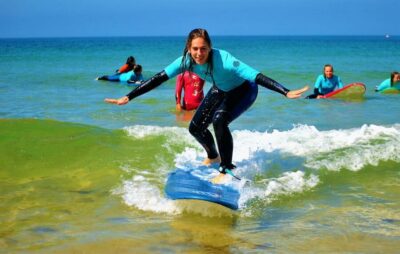
Armação de Pêra: 1:30-hour Surf experience Lesson/clinic
Read our review →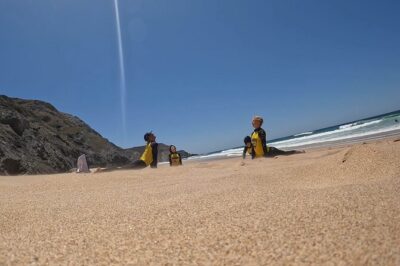
Browse the lists this tour appears in