
Review · USA
La Jolla: 1.5-Hour Surfing Lesson
La Jolla Shores gives you a gentle place to try surfing without committing to a full day on the water. In 90 minutes, an English-speaking instructor covers ocean safety and surf basics on land, then helps you practice in the water. Beginners can start from scratch, while returning surfers can work on wave reading, etiquette, and catching larger waves.
I like the calm setting and the fact that all equipment is included. I also like the teaching style: instructors such as Hannah, Jake, Carlo, Joey, and Jayden have helped students who were nervous, completely new, or ready to move beyond the basics. The main consideration is time. Ninety minutes goes quickly once you allow for preparation, so this is a first lesson rather than a full surf course.
Key points to know before booking
- La Jolla Shores is chosen for beginner-friendly conditions, making it a sensible place to learn the basic movements and water safety.
- You get a complete 90-minute lesson, with land instruction followed by time in the water.
- All equipment is included, so you do not need to arrange a board or other lesson gear separately.
- Public and private options are available, letting you choose between a shared lesson and more personal attention.
- The instructors adapt to different ability levels, from first-time surfers to people who already know the basics.
- Arrive early, since you must reach 2261 Avenida De La Playa 30 minutes before your scheduled time.
Starting at La Jolla Shores
The setting does much of the early work for you. La Jolla Shores is described as one of San Diego’s best places for beginner and intermediate surfers, with calmer water that gives you a more manageable introduction to the sport.
That does not mean the ocean becomes predictable or effortless. Surfing still asks you to balance, read the timing of a wave, and stay calm when the board moves under you. But a calmer beach can make the first lesson less intimidating, especially if you are unsure about the water or have never stood on a board.
You meet at 2261 Avenida De La Playa in La Jolla. Plan to arrive 30 minutes before your departure time. The stated schedule says the tour departs 15 minutes before the start time, so arriving late is a poor gamble. If you miss the lesson, no refund is given.
The meeting point is especially important for families and anyone working around a tight San Diego schedule. Give yourself enough time to find the location, get ready, and listen to the initial instructions without feeling rushed.
More Surf Lessons around the USA:
- Maui: Two Hour Beginner Group Surf Lesson in Kihei
★ 5.0 · 950 reviews - UTV Dune Cruise and Surf at Coral Pink Sand Dunes
★ 5.0 · 785 reviews - Open Group Surfing Lesson in Waikiki, Hawaii
★ 4.5 · 582 reviews
What happens before you enter the water
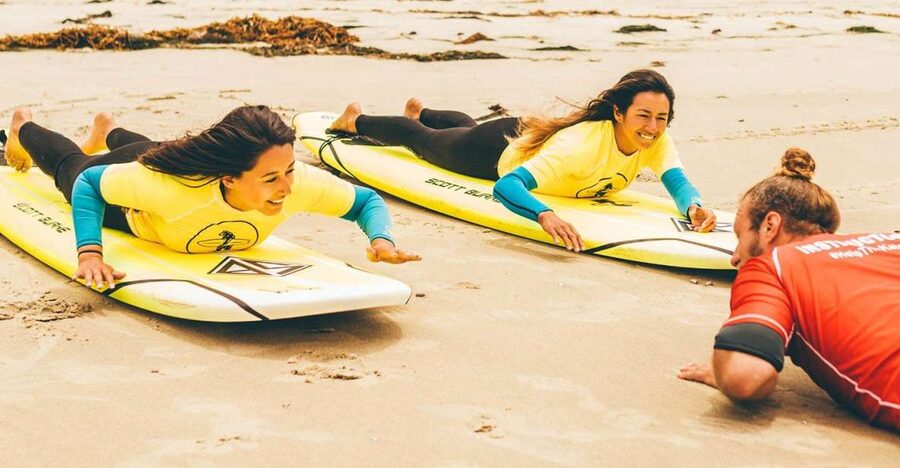
The lesson begins on land with the fundamentals of surfing and ocean safety. This is not filler. For a first-time surfer, knowing how to handle the board and respond in the water matters as much as learning where to place your feet.
Your instructor explains the basic movements before you head toward the waves. You can expect the focus to be on understanding how to get onto the board, how to position yourself, and how to approach the first wave. The exact pace depends on your experience and comfort in the water.
The instructors are also expected to respect your chosen level of participation. That matters if you feel nervous or simply want to observe part of the process before trying it yourself. You are encouraged to have fun, but the lesson is not presented as a test of bravery.
Students who have never surfed can use the beach briefing to settle their nerves. If you already have some experience, the land portion gives you a chance to explain what you want to improve before heading out.
Your first waves in the water
After the safety and technique briefing, you go into the water with your group or private instructor. The point is not to cover a long distance or master every part of surfing in one session. It is to give you enough practice to understand how the board and waves work together.
For many beginners, the first small success is simply staying on the board. One student’s daughter was standing within the first few minutes in the water, while another beginner was helped to ride several waves after initially feeling nervous about the ocean. Those details show what good instruction can do, but they should not set an exact expectation for your own lesson. Progress depends on balance, confidence, timing, and the conditions that day.
You may stand up quickly, or you may spend most of the session learning how to position yourself and paddle. Both are useful outcomes. A first lesson should give you a clear sense of the sport and leave you with skills to practice, not make you feel as if you have failed because you did not ride every wave.
The calm waters at La Jolla Shores are a useful match for this format. You have a better chance to concentrate on the instructor’s directions instead of managing a more demanding surf break. Still, the water is active, and you should expect some trial and error.
Instruction for complete beginners and returning surfers
This experience is not limited to people who have never touched a surfboard. The instructors work with beginners and intermediate surfers, and that difference can shape your lesson.
If you are new to surfing, you will likely spend your time on fundamentals: board control, standing up, basic safety, and catching smaller waves. Instructors such as Carlo and Joey have been praised for supportive coaching, including helping beginners feel more at ease in the water.
If you already have a few lessons behind you, tell the instructor what you want to work on. Jayden, for example, helped one surfer with surf etiquette, reading waves, and attempting larger waves. That is useful because intermediate surfers often need more than another explanation of how to stand. They need help making better choices about waves and understanding how to share the water.
Do not assume that having previous experience means you should book a private lesson. A public lesson may still suit you if you want a lower-cost way to practice. A private option makes more sense if you want the instructor’s attention directed closely toward your own technique.
Same water, another way to ride it:
- Outrageous Surf ScHool Lesson on Lahaina Side
★ 4.5 · 547 reviews - Los Angeles: Surfing Lesson in Venice Beach
★ 4.8 · 442 reviews - Oahu: Beginner-Friendly Waikiki Beach Surfing Lesson
★ 4.9 · 425 reviews - Po’ipu Surf Lesson
★ 5.0 · 361 reviews
Public or private: choosing the right format
The public lesson is the straightforward choice for most people comparing price and value. You receive the same basic structure, including equipment, safety instruction, and time in the water, while sharing the lesson with others.
A shared lesson can be a good fit if you are traveling with friends or family and want a relaxed introduction to surfing. It may also feel less intense than having an instructor watch every attempt. The tradeoff is that individual attention is divided among the participants.
The private lesson is the stronger choice if you are nervous, have a very specific goal, or want coaching that follows your own pace. It may also suit an intermediate surfer who wants help with wave selection or surf etiquette rather than a general beginner lesson.
The supplied information does not give a group size or a separate private-lesson price, so check the exact option before paying. At $139 per person, the value depends partly on the format you select. The price includes a 90-minute lesson, equipment, and an experienced instructor. For a visitor who would otherwise need to rent equipment and arrange a lesson separately, that bundled setup is convenient.
Still, $139 is not a casual beach activity price. If you only want to try standing on a board once, the public option is likely the sensible choice. If you want close coaching or are serious about building a new skill, the private format may justify the extra cost if the available price fits your budget.
The instructors make the difference
Surf lessons can look similar on paper, but the instructor shapes the actual experience. This one has received strong praise for patience, encouragement, and clear help in the water.
Hannah has been described as prompt, curious, patient, and highly experienced in teaching. Jake helped a young surfer stand quickly and kept the mood friendly. Josh was praised for making the lesson fun, while Nate left a strong impression on another student.
Carlo and Joey helped a first-time surfer who had never been to San Diego, and Carlo also supported a nervous beginner through multiple waves. Jesse and Chris were singled out for making the lesson enjoyable. Robby and Jesse worked well together on the water.
These names are useful for one reason: they show that instruction is not limited to a single teaching style. You may get a coach who focuses on confidence, one who works on technique, or one who spends more time on etiquette and wave reading. The common thread is a patient approach that allows different students to take part at their own comfort level.
You should still speak up about your goals. Tell the instructor if you are worried about the water, want more practice standing, or already know the basics. The more clearly you explain your needs, the more useful the 90 minutes can be.
What the 90-minute schedule really means
Ninety minutes sounds generous when you book, but it includes the entire lesson rather than 90 minutes of nonstop wave riding. You have a land-based introduction, safety guidance, equipment preparation, and water practice within that window.
That timing is well suited to a first encounter. Surfing uses muscles and concentration in ways many people do not expect, so a shorter lesson can keep the experience manageable. It also fits neatly into a day spent exploring La Jolla or San Diego.
The drawback is that you may want more time once you begin making progress. A student who catches a few waves may feel ready for another hour just as the lesson ends. Think of this as a carefully timed introduction, not a complete path to independence.
If you are booking for a child or a mixed group, remember that children under five are not suitable for this activity. The information does not provide a broader age range, so check the booking details if you are planning for younger children above that minimum.
Equipment and comfort in the water
All equipment is provided. That is a real benefit for visitors, since you do not need to transport a board or work out which gear is appropriate before the lesson.
The equipment also supports the public and private options. You can focus on listening to the instructor rather than arriving with your own setup. One student specifically noted that the shop staff helped with the correct gear and a locker, which suggests that the pre-lesson process can include practical assistance with equipment and storage.
The available information does not specify every item supplied, so do not assume that personal clothing, towels, or other beach essentials are included. The clear promise is all equipment for the surfing lesson. Plan your own beach needs separately.
Comfort matters here. The instructors allow you to choose your level of participation, which is reassuring if you are unsure about the waves. You can aim to stand and ride, or take a more measured approach while you learn how the water feels.
Best for first-timers, cautious swimmers, and improving surfers
I would recommend this lesson most strongly to a first-time surfer who wants instruction rather than a casual board rental. You receive safety guidance, basic technique, equipment, and direct help in the water in one booking.
It also suits people who feel nervous. Several teaching examples point to instructors helping students become more comfortable and supporting them through the first attempts. That does not remove the need for personal judgment, but it gives you a better structure than trying to teach yourself.
Intermediate surfers can benefit too, especially in a private lesson. Ask for help with wave reading, surf etiquette, or larger waves. The lesson may feel too basic if you already surf confidently, but it is still useful for someone with only a few previous classes.
Families should check the age requirement and choose the format carefully. A public lesson may work well for a group with similar ability levels. A private lesson can be a better fit if one person is nervous while another already has some experience.
Price, cancellation, and practical planning
The listed price is $139 per person. That includes the 90-minute lesson, equipment, and an experienced English-speaking instructor. Compared with arranging a board, finding a coach, and learning ocean safety on your own, the package offers convenience and a safer starting point.
The value is strongest when you want a guided first experience. It is less compelling if you only want access to equipment or already know how to surf. In that case, compare the public and private choices carefully before booking.
You can cancel up to 24 hours in advance for a full refund, and the reserve-now, pay-later option keeps you from paying at the time of booking. The strict rule is missed tours: no refund is given, so your arrival time matters.
Check starting times before selecting a date. The lesson lasts 90 minutes, but your day should include extra time before the start for arrival and preparation.
Should you book this La Jolla surf lesson?
Book it if you want a supportive introduction to surfing in a beach setting chosen for beginners and intermediate surfers. The combination of calm La Jolla Shores water, included equipment, safety instruction, and patient coaching gives you a sensible first step into the sport.
I would choose the public lesson for the best balance of price and experience, especially if you are a first-timer or are traveling with friends. I would consider private coaching if you are nervous, have a specific technique goal, or already know the basics and want help with wave reading and etiquette.
Skip it if your schedule cannot handle arriving early, if you want several hours of surfing, or if you are already an advanced surfer looking for a demanding break. For most beginners, though, this is a practical way to turn a long-held surfing idea into a real attempt without having to organize the equipment and instruction yourself.
FAQ
How long is the surfing lesson?
The lesson lasts 90 minutes.
Where does the lesson meet?
The meeting point is 2261 Avenida De La Playa, La Jolla, California 92037.
How early should I arrive?
You should arrive 30 minutes before your scheduled departure time.
Is equipment included?
Yes. All equipment for the surfing lesson is included.
Is the lesson suitable for beginners?
Yes. La Jolla Shores is presented as a good place for beginner and intermediate surfers, and no previous experience is required.
Can I choose a private lesson?
Yes. Public and private lesson options are available, depending on the option you select.
What happens if I miss the lesson?
Missed tours are not refundable. You can cancel up to 24 hours in advance for a full refund.
Latest surf sessions around the USA
- Waikiki: Family, Private, and Group Surfing Lessons★ 5.0 · 4 reviews
- Waikiki: Surf Lessons Easy 60 min classes no crowds!★ 4.9 · 21 reviews
- Astonishing Scavenger Hunt: Surf, Sand and Sculptures!★ 3.0 · 2 reviews
- Two- Hour Group Surfing Lesson in Cocoa Wrightsville Beach, NC★ 5.0 · 13 reviews
- Electric Bike Rentals in Topsail Island and Surf City★ 5.0 · 2 reviews
- Surf Lesson in Santa Barbara★ 3.0 · 2 reviews
- 1-on-1 Private Surf Lesson in Santa Barbara★ 5.0 · 4 reviews
- Surf lesson with KTO Yoga Surf★ 4.0 · 5 reviews
USA Surf Lessons, compared.
Maui: Two Hour Beginner Group Surf Lesson in Kihei
Read our review →
UTV Dune Cruise and Surf at Coral Pink Sand Dunes
Read our review →


Oahu: Beginner-Friendly Waikiki Beach Surfing Lesson
Read our review →

Private Hanalei Sandy Bottom Surf Lesson on Kauai
Read our review →Browse the lists this tour appears in