
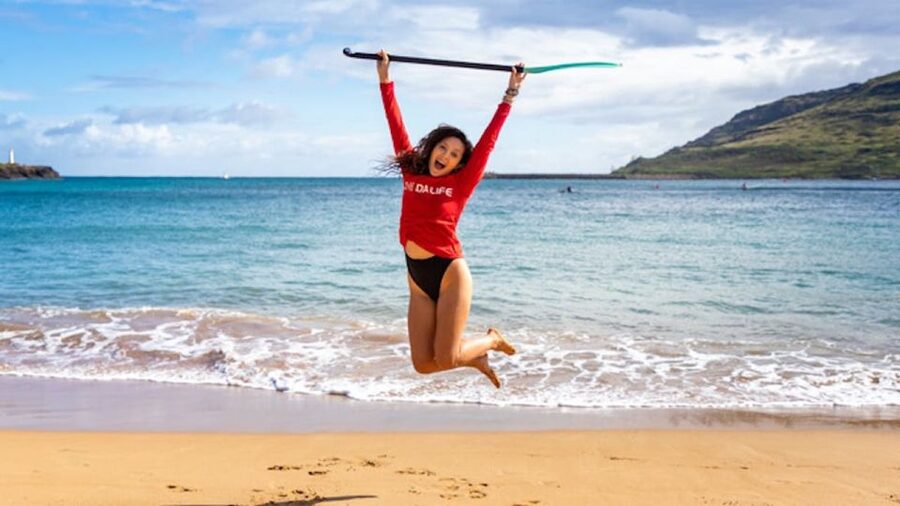
Review · USA
Kauai: Outrigger Canoe Surfing
The fun begins when a traditional Hawaiian canoe meets the surf. At Kalapaki Bay, you’ll paddle along the coast with an expert waterman, then work together to catch roughly three to four waves in the outrigger canoe. You are not standing on a board or learning a complex surfing technique. The guide does much of the positioning while you paddle, balance, and enjoy the ride.
I like the mix of Hawaiian culture and easygoing action, and I like that the 45-minute format fits neatly into a busy Kauai day. The small group limit of four also means the guide can give direct help. The main consideration is simple: you must know how to swim, and wave conditions may limit how many rides you get.
Key points
- Ride waves from an outrigger canoe: Catch approximately three to four surf rides with the boat guided into position.
- Stay close to Kalapaki Bay: Paddle beside Kauai’s coastal scenery and watch for marine life in the water.
- Less demanding than a surf lesson: You do not need to stand on a surfboard or master a full surfing routine.
- Small groups of four or fewer: The guide can work closely with each person in the canoe.
- Good for mixed ages: The activity can suit children, older adults, families, and groups of friends who can swim.
- Plan for a 45-minute outing: It is a compact water activity, not a full-day excursion.
Catching waves from a Hawaiian canoe
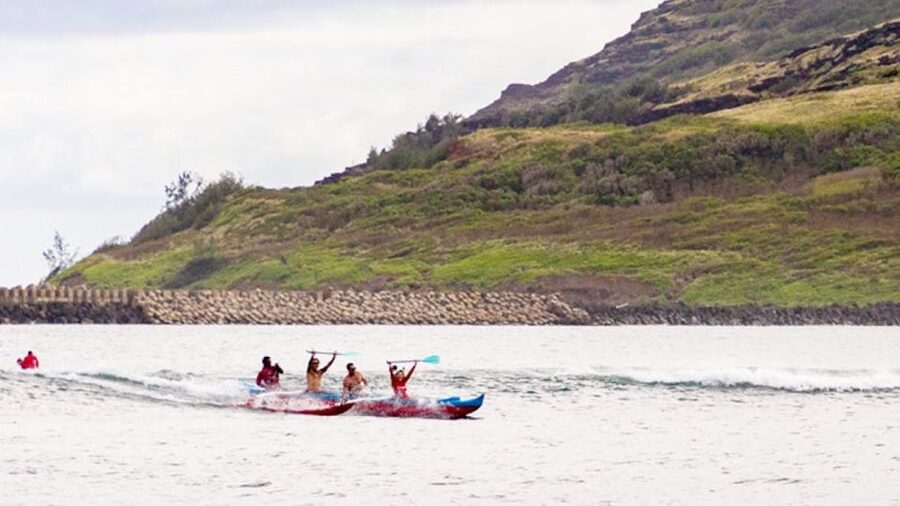
Outrigger canoe surfing gives you a different way to experience the water. Instead of paddling out alone on a board, you sit with other participants in a canoe fitted with a side float for stability. The canoe carries the group together, and the guide helps handle the timing and direction as waves approach.
That shared setup is the heart of the experience. You will paddle along Kalapaki Bay, listen for instructions, and then help the canoe move with the swell. When the timing works, the boat rides forward on the wave. The sensation is lively and quick, but the activity does not ask you to balance upright on a narrow board.
You should expect about three to four wave rides rather than nonstop surfing. That number can change with the day’s conditions. One booking went out when the surf was limited but still managed several rides, which is a useful reminder that this is an ocean activity, not a guaranteed wave machine.
The guide will handle the key decisions. Your job is to follow instructions, paddle when asked, stay aware of the people beside you, and enjoy the moment when the canoe picks up speed. Clear directions matter here, and the experience has earned strong praise for guides who explain what to do in a simple, calm way.
More Outrigger Canoe Surfing in the USA:
- Outrigger Canoe Surfing
★ 4.5 · 122 reviews - Outrigger Canoe Surfing at Kalapaki Beach
★ 5.0 · 54 reviews - Private Outrigger Canoe Surfing Experience
★ 5.0 · 13 reviews
Why Kalapaki Bay makes a good setting
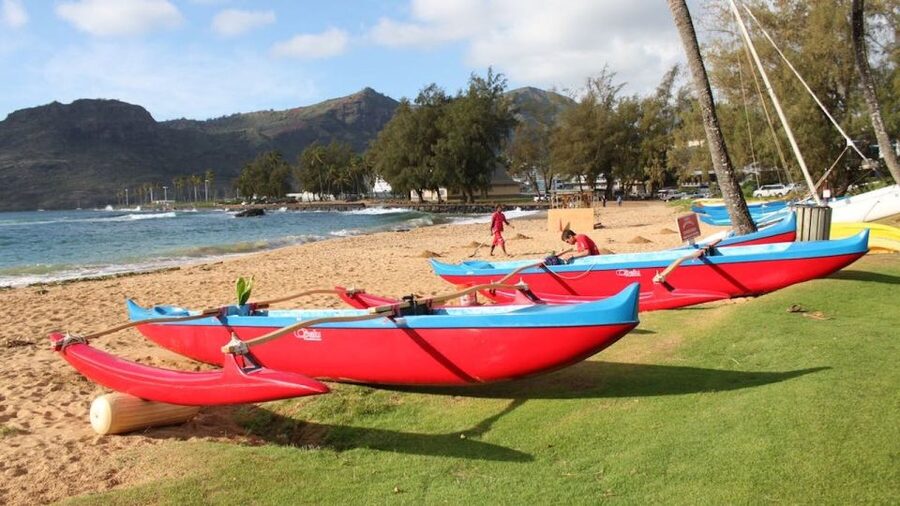
Kalapaki Bay gives the outing two distinct parts. First, you get a calmer coastal paddle with views of Kauai’s thick greenery and shoreline. Then the canoe heads toward the surf zone, where the focus shifts from sightseeing to teamwork and timing.
The bay also helps make the activity approachable. You are not signing up for a long open-ocean paddle or a demanding lesson. The route stays focused on the coast, and the short duration keeps the physical effort manageable for many swimmers.
You may also see marine life in the water as you move along the bay. The exact sightings are not guaranteed, so I would treat that as a pleasant possibility rather than the main reason to book. The canoe ride itself is the reliable attraction.
For me, the setting matters because the activity does not separate you from the scenery. You are not sitting in a classroom hearing about Hawaiian canoe traditions before moving on to something unrelated. The canoe is the activity, the transportation, and the cultural link all at once.
The short safety briefing sets the tone
The outing begins with a safety briefing. This is the point where you learn how to sit in the canoe, how to paddle, and how to respond as the guide prepares the group for a wave.
Do not treat this as filler. A canoe carrying several people needs coordinated movement, especially when it begins to slide down a wave. Pay attention to the guide’s instructions before you reach the surf. Once the boat is moving, there is less time for long explanations.
The swim requirement is important. You must know how to swim to participate, and non-swimmers should not book this activity. Even though the canoe provides support, you are still taking part in a water activity where the guide cannot remove every risk.
I would also tell you to listen closely if you are bringing children or older family members. The experience is less physical than a surf lesson, but less physical does not mean dry, passive, or suitable for someone who cannot swim.
Paddling the coastline before the surf
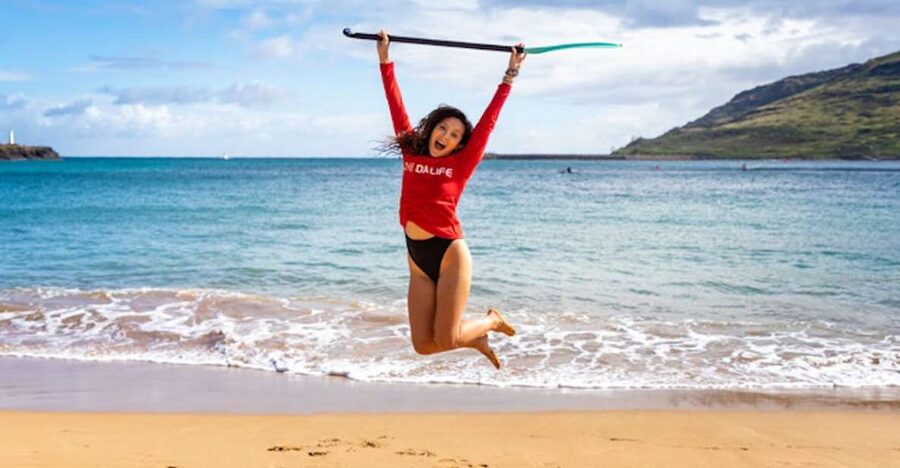
After the briefing, you get into the outrigger canoe and paddle along the coast. This first section gives you time to get comfortable with the boat and the group.
You will likely notice that the canoe ride depends on cooperation. Each person contributes to the movement, but the guide directs the rhythm and handles the surf strategy. That makes this a good option for a group with mixed confidence levels. You do not need everyone to arrive with the same paddling skills.
The coastal portion also helps the experience feel more complete than a quick ride straight into the waves. You have a chance to look around, see the bay from the water, and understand how the canoe moves before the pace changes.
The 45-minute duration is useful here. It leaves enough time for the paddle and several attempts at riding waves without turning the activity into a major physical commitment. If you are planning several activities in one day, this can fit more easily than a longer lesson or boat trip.
Still, keep your expectations in proportion. A 45-minute session goes by fast, particularly when the group is learning the basics. If you want hours on the water, repeated wave practice, or detailed surf coaching, this is probably too short.
More Surf Lessons around the USA:
- Maui: Two Hour Beginner Group Surf Lesson in Kihei
★ 5.0 · 950 reviews - UTV Dune Cruise and Surf at Coral Pink Sand Dunes
★ 5.0 · 785 reviews - Open Group Surfing Lesson in Waikiki, Hawaii
★ 4.5 · 582 reviews - Outrageous Surf ScHool Lesson on Lahaina Side
★ 4.5 · 547 reviews
How the canoe rides a wave
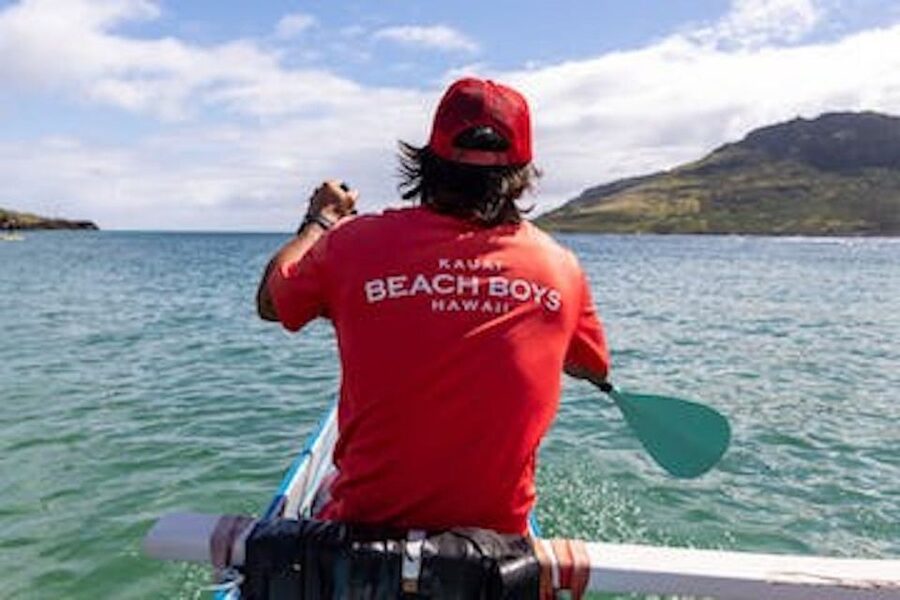
The main event is catching waves in the outrigger canoe. Your guide watches the water, gives instructions, and helps the canoe line up with an incoming wave. The group then paddles as directed and lets the canoe move forward with the swell.
This is where the activity differs from a regular surf lesson. You are not expected to paddle out alone, pop up onto a board, and repeat the process by yourself. The canoe provides a shared platform, and the guide manages much of the technical work.
That makes it a smart choice for people who want to feel the power of a wave without committing to a full surfing course. It can also work well for families and friends who want to do the same activity together instead of splitting into separate lessons.
You should not expect every wave to be perfect. Ocean conditions control the experience, and the number of rides can vary. One outing had only modest surf but still caught several waves. That is a fair result for a short ocean excursion, but it also shows why you should not judge the activity only by how many rides you hope to get.
The best approach is to enjoy the process. The paddle, the shouted instructions, the canoe’s sudden speed, and the shared reaction when the boat catches a wave are all part of the outing.
The guide matters more than the equipment
The canoe is important, but the guide shapes the quality of the experience. You need someone who can explain the basics quickly, read the water, keep the group together, and make adjustments for different ages and comfort levels.
Guides named Krishan and Christian have been associated with especially clear, friendly instruction. You may not have either guide on your date, so I would focus less on a specific name and more on the role the guide plays. This outing works best when the leader gives direct instructions without making the activity feel tense.
The small group size helps. With no more than four participants, the guide has a reasonable chance to see how each person is handling the canoe and to correct mistakes before they matter. A larger group could make the experience feel less personal, especially during the surf portion.
I also like that the guide is described as an experienced waterman rather than simply a person operating a boat. That wording points to someone comfortable in the surf and familiar with the traditional canoe format. You are paying for that judgment as much as for the ride itself.
Who will enjoy this more than a surf lesson
This activity suits you if you want ocean action but do not want to learn to stand on a surfboard. It can be a good fit for a family group with different ages, provided everyone who participates can swim.
Older adults may appreciate the lower physical demand. The canoe lets you take part in the excitement without the repeated falls, board handling, and standing practice that come with a standard surf lesson.
Children may also enjoy it because the group rides the wave together. The guide provides structure, and the activity does not require each child to perform alone. Still, parents should use their own judgment about swimming ability and comfort in moving water.
Friends can book it for the shared experience. The canoe creates a natural group activity, and the short session leaves room for other plans around Kalapaki Bay.
This is less suitable for a non-swimmer, someone seeking a long athletic workout, or a person determined to learn independent surfing technique. You will get a taste of wave riding, not a full course in surfing.
Is $72 a fair price?
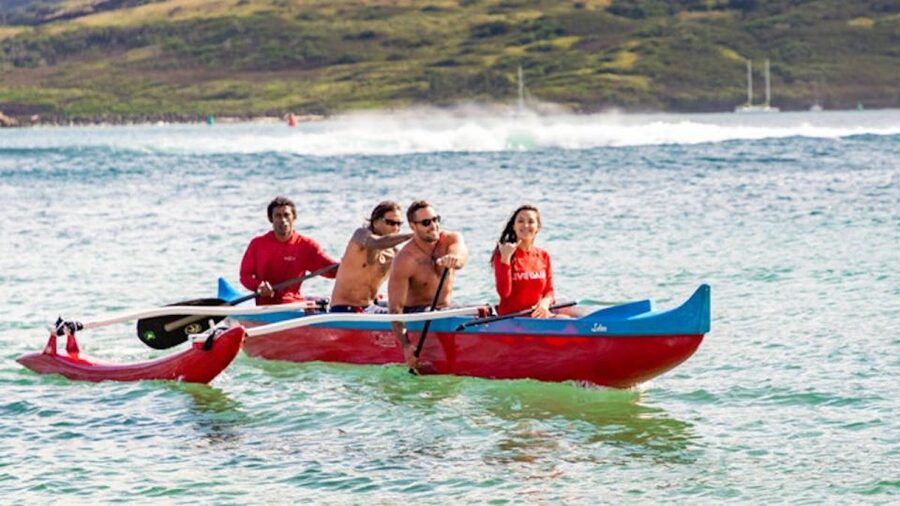
At $72 per person, the value depends on what you want from a water activity. You are paying for a 45-minute session, an expert waterman, a small group of no more than four, and the chance to ride several waves in a traditional outrigger canoe.
That is not the cheapest way to spend time near the water. The session is short, and the number of rides depends on the surf. If conditions are weak, you may feel the price more sharply because there is no guarantee of a long series of wave rides.
On the other hand, the price includes more than simple canoe transport. The guide supplies the instruction, surf positioning, and coordination that make the activity possible. You are also getting an experience that differs from a common board lesson or a standard sightseeing cruise.
I see the strongest value for families and small groups who want a shared Hawaiian activity without committing to a longer program. If you are already planning several paid excursions, compare the 45-minute length carefully. If you specifically want to ride waves in a traditional canoe, the focused format may justify the cost.
Practical planning for your 45 minutes
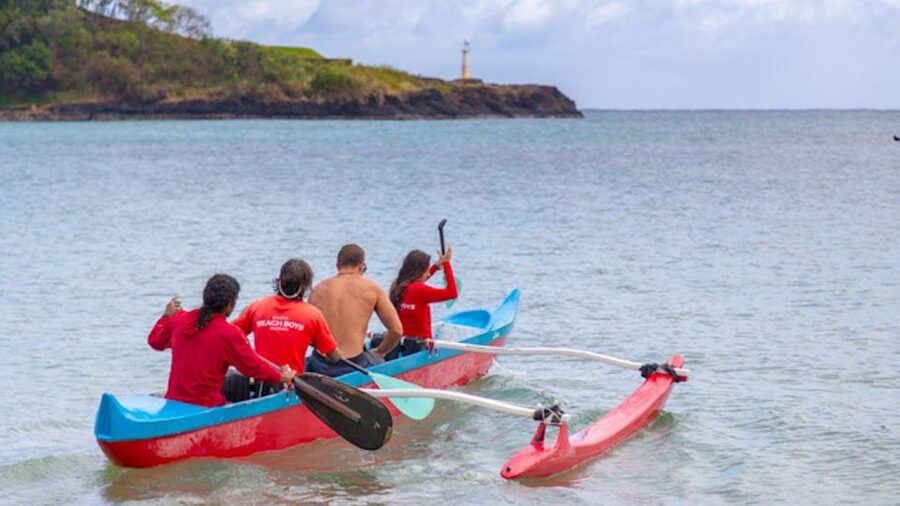
You should allow enough time to arrive ready for the briefing and listen carefully before entering the canoe. The activity is conducted in English, so you need to be comfortable understanding instructions in that language.
The booking has a minimum of two participants. Solo visitors cannot take part alone, so plan to go with at least one other person.
The group is limited to four participants. That small size is one of the better reasons to reserve ahead, particularly if you are traveling with a family or a small group of friends and want to stay together.
You can reserve now and pay later, which may help if you are arranging several Kauai activities at once. You can also cancel up to 24 hours in advance for a full refund. Those terms reduce the risk of booking early, but you still need to check the available starting time before making plans around the session.
The activity provider is True Blue Inc. dba Da Life Outdoors. The experience is offered in English.
What the strong and weak points tell you
The strongest pattern is the guide’s role. Good instruction makes the canoe ride approachable, especially for first-timers. Clear directions also help the group catch waves without turning the experience into a stressful exercise.
The next strong point is the fun factor. The ride has enough action to feel memorable, yet it does not demand the same effort as a surf lesson. That balance explains why it can appeal to both younger participants and older adults.
The main weak point is not a service problem. It is the nature of the ocean. Surf conditions may be limited, and a 45-minute session does not leave much time to wait for ideal waves. You should book this because you like the idea of a canoe ride with a chance to surf waves, not because you require a fixed number of perfect rides.
One unrelated booking error also offers a practical lesson: check the island carefully before paying. Kauai and Oahu are different islands, and a reservation on the wrong island will not help you once you are there. Confirm the destination, date, and meeting details before you finalize the booking.
Should you book the Kalapaki Bay canoe ride?
Book it if you can swim and want a short, social water activity with real wave action. It is especially appealing for families, small friend groups, older adults, and anyone who wants to try surfing without taking a conventional surf lesson.
Think twice if you want a long outing, a hard workout, or guaranteed surf conditions. The price is easiest to justify when you value the traditional canoe, the small group, and the guide’s help as much as the number of waves.
For the right person, this is a lively way to experience Kalapaki Bay from the water. You paddle together, learn a simple piece of Hawaiian water culture, and let an experienced guide help you catch the ride.
FAQ
How long is the outrigger canoe surfing experience?
The activity lasts 45 minutes.
How many waves will I catch?
The experience is designed for approximately three to four wave rides, though the number can vary with surf conditions.
Do I need to know how to swim?
Yes. Swimming ability is required, and non-swimmers cannot participate.
How many people can join the group?
The group is limited to four participants, and at least two people are required for the canoe ride.
Is this a surf lesson?
No. It is an outrigger canoe ride that lets you catch waves with a guide. It is less physical than a traditional surf lesson and does not focus on standing and surfing independently on a board.
What language is the activity offered in?
The live guide speaks English.
Can I cancel the booking?
Yes. You can cancel up to 24 hours in advance for a full refund. You can also reserve your spot and pay later.
Latest surf sessions around the USA
- Waikiki: Family, Private, and Group Surfing Lessons★ 5.0 · 4 reviews
- Waikiki: Surf Lessons Easy 60 min classes no crowds!★ 4.9 · 21 reviews
- Astonishing Scavenger Hunt: Surf, Sand and Sculptures!★ 3.0 · 2 reviews
- Two- Hour Group Surfing Lesson in Cocoa Wrightsville Beach, NC★ 5.0 · 13 reviews
- Electric Bike Rentals in Topsail Island and Surf City★ 5.0 · 2 reviews
- 1-on-1 Private Surf Lesson in Santa Barbara★ 5.0 · 4 reviews
- Surf Lesson in Santa Barbara★ 3.0 · 2 reviews
- Surf lesson with KTO Yoga Surf★ 4.0 · 5 reviews
USA Surf Lessons, compared.
Maui: Two Hour Beginner Group Surf Lesson in Kihei
Read our review →
UTV Dune Cruise and Surf at Coral Pink Sand Dunes
Read our review →
Oahu: Beginner-Friendly Waikiki Beach Surfing Lesson
Read our review →

Private Hanalei Sandy Bottom Surf Lesson on Kauai
Read our review →Browse the lists this tour appears in