
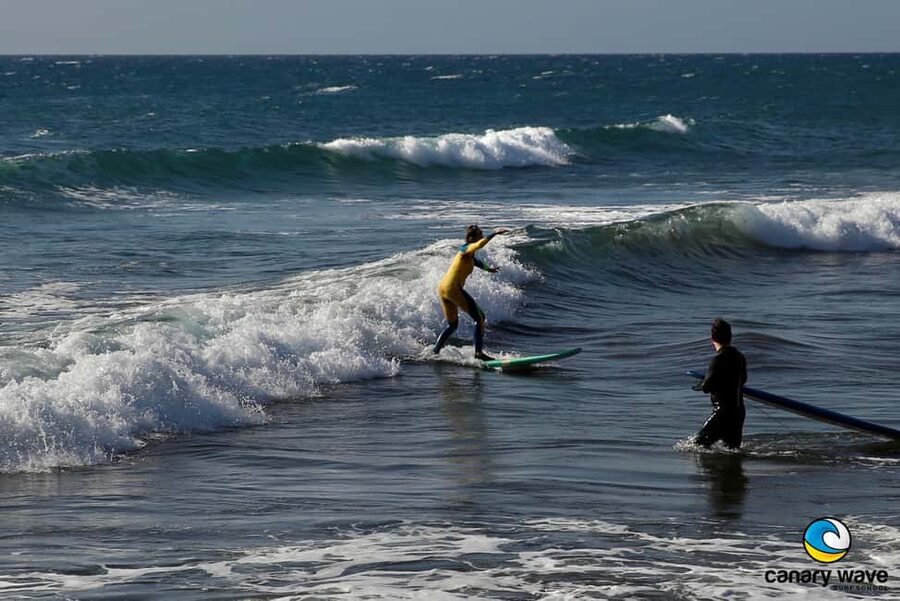
Review · GRAN CANARIA
Gran Canaria: Meloneras Beach Surf Lesson
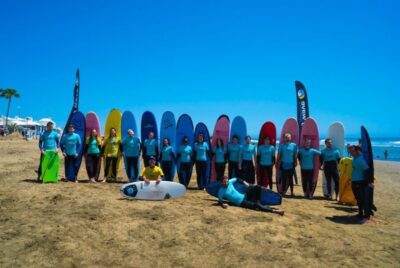
Meloneras Beach gives you a friendly first taste of surfing without turning the lesson into a boot camp. You begin with safety and stand-up practice on the sand, then spend time in the water with an instructor who adjusts the class to your ability and the day’s waves. The coaching is practical, and the group may move to another beach if Meloneras is not delivering.
I like the complete equipment package, since the board and wetsuit are included and you do not need to arrange rentals separately. I also like the useful rhythm of the two-hour session: theory, sand practice, water time, a short rest, then another go at catching waves. The main consideration is that surfing depends on sea conditions, so the exact beach and quality of the waves cannot be promised.
Key points for choosing this surf lesson
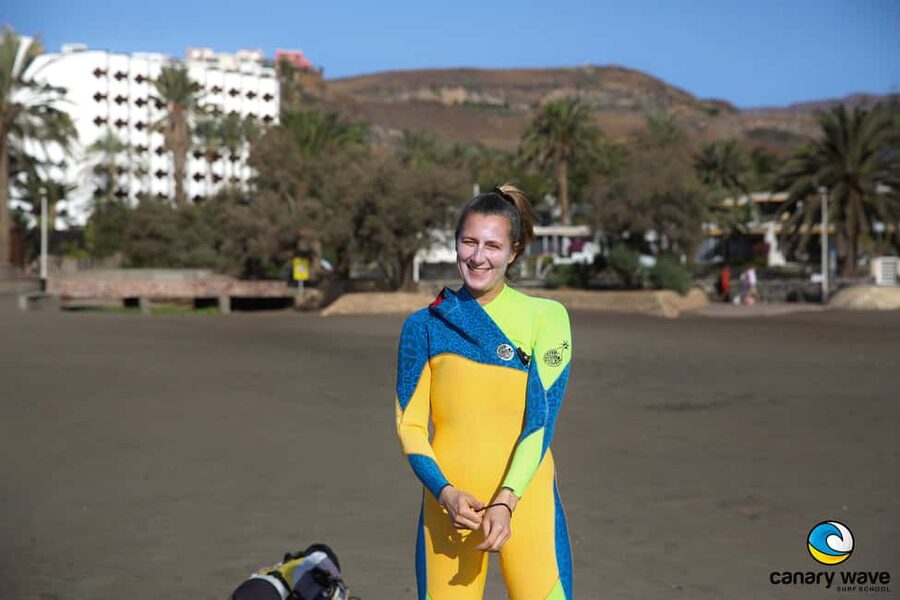
- Two hours with water time built in: You practice on the sand, spend about an hour in the water, rest briefly, then return for more surfing.
- Coaching for different abilities: The class is adjusted to your skill level, age, and experience, from first-timer basics to technique work.
- A flexible beach location: If the usual spot has poor waves, the instructor looks for a better location nearby.
- Everything needed to surf: Your booking includes a surfboard, wetsuit, safety briefing, and instruction.
- Four languages available: Instruction is offered in Italian, English, Spanish, and German.
- A central meeting point: You meet directly in front of the Maspalomas lighthouse, near the Meloneras and Maspalomas beach area.
Starting in front of the Maspalomas lighthouse
The meeting point is just in front of the Maspalomas lighthouse. That is a useful landmark in a busy beach area, but you should still allow enough time to find the exact meeting spot and arrive ready for a two-hour activity.
You will meet the instructor first, then get fitted for your wetsuit and surfboard. Bring beachwear and a towel. Water, a snack, sunscreen, and a hat are not included, so pack those yourself, especially if you are making a longer beach day of it.
The provider, Canary Wave Surf School, offers instruction in Italian, English, Spanish, and German. That language choice matters during a lesson where safety instructions and small changes to your body position need to be clear. You should select the language you are most comfortable using when booking.
The minimum age is eight. The class is not designed for children under that age, and the lesson is adjusted to the age and ability of the group. That should help keep the pace sensible, although the exact size of the class is not provided.
More Surf Lessons around Gran Canaria:
- Playa del Inglés Maspalomas: High Quality Surf Classes
★ 4.9 · 363 reviews - Puerto Rico, Gran Canaria: boat trip, drinks, food, paddle surfing, snorkeling
★ 4.6 · 310 reviews - Gran Canaria Maspalomas: Surf lessons all levels
★ 5.0 · 197 reviews
Sand practice before the first wave
The lesson begins away from the breaking waves with a theory session and safety briefing. This is not wasted time. For a first surf lesson, knowing how to handle the board, where to position yourself, and what to do in the water can make the difference between a fun session and a tiring one.
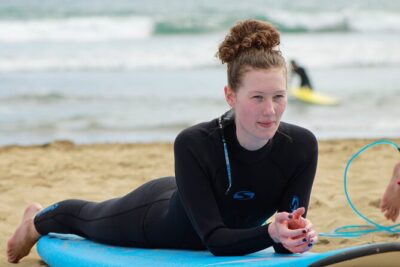
You then practice standing up on the sand. The goal is to learn the movement before the board is sliding beneath you. You can work out where your feet go, how to push up, and how to keep your balance without also dealing with moving water.
I like this order because the first attempt in the sea can feel busy enough. The sand gives you a chance to repeat the basic movement and listen to corrections before you add waves, spray, and other people.
The instruction is intended to be practical rather than a long classroom talk. One German booking described a first surf experience in which the participant felt they had learned a lot after two hours, with the instructors taking time to give individual feedback. That is the kind of detail that matters more than a promise of simply having fun.
One hour in the water at Meloneras
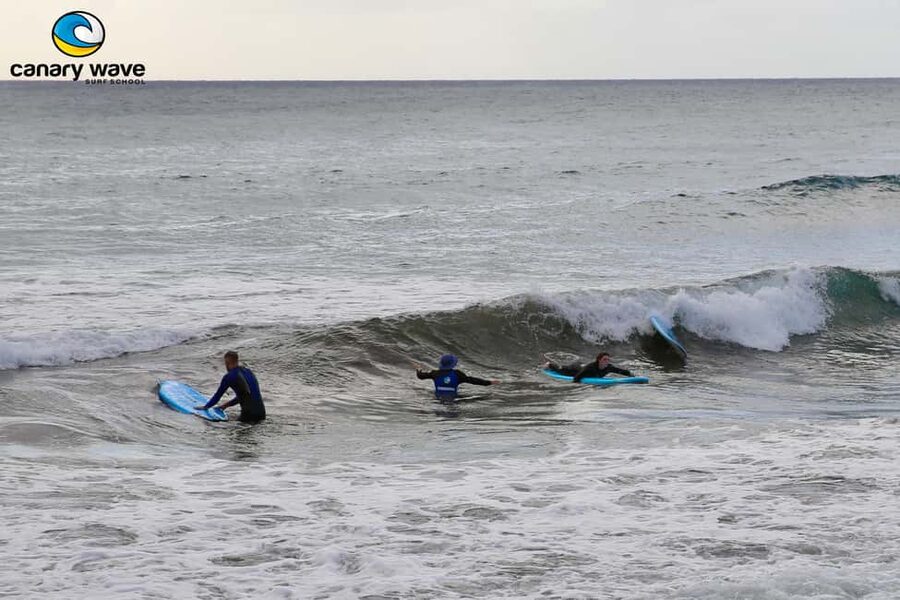
After the briefing and sand practice, you head into the sea. The supplied schedule gives about an hour of water practice before a short break, followed by another session in the water.
That layout gives you two useful chances to try. During the first water period, you can concentrate on getting comfortable with the board and timing your attempts. After the break, you can return with a better sense of what needs work.
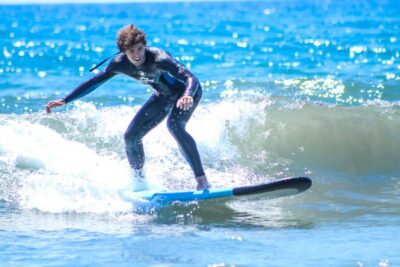
Do not expect to spend every minute standing on a wave. A beginner lesson includes paddling, positioning, falling safely, getting back on the board, and trying again. The first successful ride may be brief, but it can still teach you a lot about balance and timing.
The instructor’s role is especially important here. The lesson is tailored to the group, and the supplied information says the instructor gives guidance according to skill level and experience. If you already surf, you should not be treated exactly like someone who has never stood on a board. If you are new, the focus should stay on the basics rather than advanced tricks.
The two Finnish bookings were especially positive about the choice of beach. The instructors looked along the coast for waves suitable for beginners and selected the best available spot, which happened to be next to Meloneras on that occasion. This is a good sign for anyone concerned that the named beach may not have the right conditions on the day.
Why the move to another beach can help
Surfing is tied to the sea, not just the address printed on a booking. If there are no useful waves at the usual beach, the class can move to another location in search of better conditions.
That flexibility is one of the strongest features of the experience. A fixed lesson at a poor beach could leave you standing in the water with little to practice. A move gives the instructor a better chance of finding waves that match the group’s ability.
There is one practical trade-off: the final setting may not be exactly Meloneras Beach. If taking photos at a particular beach is your main reason for booking, this matters. If your priority is learning to surf, the change is likely to work in your favor.
The information provided for the activity says the instructor will take the group to another location when needed. A Finnish participant also described the instructors selecting a nearby beach with better beginner waves. You should therefore treat Meloneras as the normal meeting and lesson area, not as an absolute promise about every minute of the session.
Same water, another way to ride it:
- Small-Group Surf Lessons in Gran Canaria
★ 5.0 · 138 reviews - Playa del Inglés surf lessons
★ 4.8 · 121 reviews - Gran Canaria: Maspalomas Surf Lessons
★ 4.6 · 113 reviews - Premium Surf Course in Gran Canaria
★ 5.0 · 89 reviews
Coaching that keeps the class personal
The most praised part of this activity is the teaching. The available feedback describes the instruction as relaxed, clear, professional, and practical. One Dutch participant simply noted having a good lesson with a pleasant teacher, while a German first-timer appreciated the individual feedback.
Those comments point to a useful balance. You do not want a tense instructor barking commands, but you also do not want a casual beach hangout where no one watches your technique. The lesson aims to keep things approachable while still giving you corrections that help.
For a beginner, good feedback might mean a reminder about foot position, balance, or the moment to stand. For someone with experience, it may mean working on a cleaner takeoff or improving technique. The exact drills are not specified, so you should not expect a fixed advanced curriculum, but the class is designed to adjust to the group.
The instruction is also available in four languages. Italian, English, Spanish, and German cover a useful range for visitors to Gran Canaria. Clear communication is part of safety, so this is worth checking when you reserve.
The price and what it covers
At $58 per person, the lesson is priced as a full introduction rather than a simple board rental. Your fee includes the surfboard, wetsuit, safety briefing, sand practice, and guided water time.
That makes the price easier to assess. You are paying for equipment and a two-hour teaching session, not just access to the beach. If you would otherwise need to rent a board and wetsuit and then arrange instruction separately, the bundled format is convenient.
The value depends on what you want from the day. For a first lesson, the included coaching and safety instruction are the main reason to book. For an experienced surfer who only needs equipment, a rental option could be more suitable, but no separate rental pricing is provided here.
You should also budget for the small items left out of the price. Bring your own water, snack, hat, sunscreen, and towel. Beachwear is required, and a towel is particularly useful after the second water session.
Who will enjoy this most
This class suits adults and children aged eight or older who want a guided introduction to surfing. It is a good fit if you prefer learning by trying rather than watching a long demonstration.
It also works for couples and mixed-ability groups because the lesson is adjusted to experience. One couple was able to reschedule at short notice after becoming ill, then found the instructor’s help made catching waves easier. That suggests a useful degree of flexibility, though you should confirm any change request directly through the booking terms.
You may like this experience if you want an active break from the resort area, a first go at surfing, or a structured lesson before deciding if you want more time on a board. It is less suitable if you need guaranteed calm water, a private lesson, or a particular beach regardless of conditions. None of those features is promised.
Children under eight cannot take part. Families with older children should also remember that the class follows the skill level and age of the group, so the pace may vary from one departure to another.
What to bring and what to leave behind
Bring beachwear and a towel. You should also carry drinking water, sunscreen, a hat, and perhaps a small snack because those are not supplied.
Alcohol and drugs are not allowed. That is a basic rule, but it is especially important for a water activity where you need to follow safety directions and manage your balance.
You do not need to bring a surfboard or wetsuit. Both are included, which keeps your packing list short and removes the guesswork over what equipment is suitable for a beginner.
Since the class includes a break and a second water session, dry clothing can also be useful, although it is not specifically required. I would keep valuables to a minimum and plan your beach items around a wet, active morning or afternoon.
Timing, flexibility, and cancellation
The activity lasts two hours, but the available start times depend on the date. Check the schedule before you build the rest of your day around it.
The lesson includes a short rest between water sessions. That break is welcome because paddling and repeated attempts can be tiring, especially if this is your first time surfing. Do not schedule an important appointment immediately afterward if you need time to change, dry off, and recover.
You can cancel up to 24 hours before the activity for a full refund. The reserve-now-and-pay-later option also lets you hold a place without paying at the time of booking, which is useful when your Gran Canaria plans are still shifting.
The activity can change location if the waves are poor. I would check your messages before leaving for the beach in case the instructor provides an update about the meeting or surf location.
The small details that affect the experience
The five available ratings are all positive, with praise focused on the instructors’ friendly manner, clear explanations, and ability to help people catch waves. That is a strong signal for a short introductory lesson, where teaching quality matters more than flashy extras.
At the same time, the sample is small, so I would not treat it as a guarantee that every class will feel identical. Sea conditions, group ability, and the chosen beach can all change the pace.
The best detail is the instructor’s willingness to search for suitable beginner waves. That shows an understanding of what new surfers need. Big waves may look exciting, but smaller, manageable waves are usually more useful when you are still learning the basic movement.
You should also keep your expectations realistic. Two hours can give you a solid first lesson and perhaps a few short rides, but it will not turn you into a confident surfer in one afternoon. The value is in getting a safe introduction, useful corrections, and a clear sense of whether you want to continue.
Should you book the Meloneras surf lesson?
I would book this if you want a well-structured first surf lesson with equipment included and a teacher who can adjust the pace to the group. The sand practice, two water periods, short break, and option to seek better waves make good use of the two-hour format.
The $58 price is reasonable for a lesson that includes the board, wetsuit, safety briefing, and instruction. It is especially convenient if you are staying near Maspalomas and want an active beach experience without arranging separate rentals.
I would think twice only if you require a private class, guaranteed waves at Meloneras, or a fully supplied beach package. You need to bring your own towel, water, sunscreen, hat, and snack.
For most first-timers aged eight and up, this is a sensible way to try surfing in Gran Canaria. Book it for the coaching and the chance to find workable waves, not simply for the promise of standing on the board every time.
FAQ
Where does the surf lesson meet?
The meeting point is directly in front of the Maspalomas lighthouse.
How long does the activity last?
The lesson lasts two hours.
Is the surfboard included?
Yes. Surfboard rental is included in the price.
Is a wetsuit provided?
Yes. Wetsuit rental is included.
What languages can the instructor speak?
Instruction is available in Italian, English, Spanish, and German.
Can beginners take part?
Yes. The class is tailored to the group’s skill level and experience, including beginners.
Can children join the lesson?
Children must be at least eight years old. The activity is not suitable for children under eight.
What happens if there are no waves at Meloneras Beach?
The instructor may move the class to another location in search of better waves.
What should I bring?
Bring beachwear and a towel. You should also bring your own water, snack, hat, and sunscreen because those items are not included.
Latest surf sessions around Gran Canaria
- Paddle Surf SUP at Anfi Beach★ 4.0 · 12 reviews
- Pack 2 People Surf Course in Playa del Inglés and Maspalomas★ 5.0 · 2 reviews
- Surf lessons in Las Canteras Beach★ 4.8 · 19 reviews
- San Agustín Surf lessons★ 4.5 · 10 reviews
- Las Palmas de Gran Canaria: Group surf lessons on La Laja beach★ 4.9 · 27 reviews
- Las Palmas: Learn to Surf with a Special Price for Two Group★ 4.8 · 30 reviews
- Gran Canaria Playa del Ingles: Surf lessons all levels★ 4.7 · 11 reviews
- Gran Canaria Surf Lessons: Playa del Inglés & Maspalomas★ 4.8 · 76 reviews
Gran Canaria Surf Lessons, compared.
Playa del Inglés Maspalomas: High Quality Surf Classes
Read our review →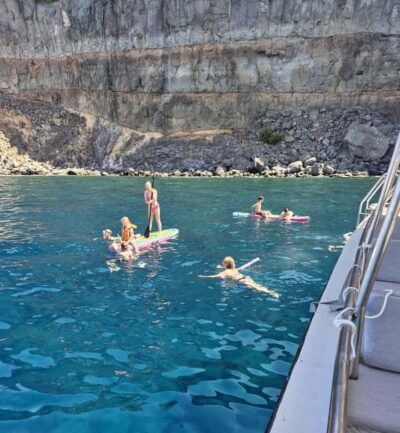
Puerto Rico, Gran Canaria: boat trip, drinks, food, paddle surfing, snorkeling
Read our review →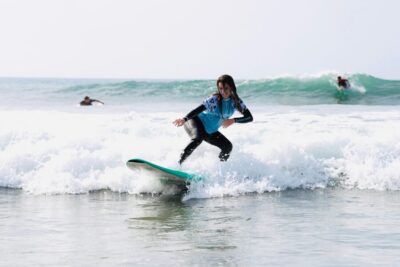
Gran Canaria Maspalomas: Surf lessons all levels
Read our review →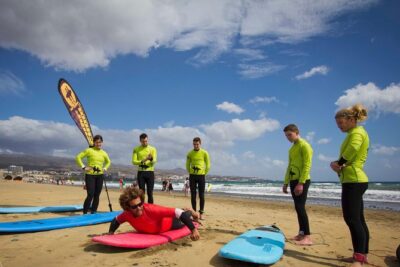
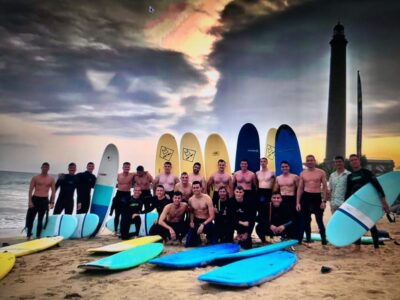
Gran Canaria Surf Lessons: Playa del Inglés & Maspalomas
Read our review →Browse the lists this tour appears in