
Review · FUERTEVENTURA
Fuerteventura: Surfing Lesson in the south of Fuerteventura
Fuerteventura’s southern beaches make a fine classroom: broad white sand, steady Atlantic energy, and enough room to learn without feeling packed in. You start with a safety briefing and dry practice, then head into the water with an instructor who can help you choose waves and push you into the right ones.
I like the small groups of four to eight students per instructor and the daily choice of beach. I also like that beginners get soft Ocean&Earth boards while advanced surfers can use epoxy boards. The main consideration is that the ocean decides the day. Wind, tide, and currents may make conditions choppy, and the exact beach and meeting time are confirmed only the day before.
Key points before you book
- Beach choice follows the conditions: The team drives to the southern beach that best matches the group’s ability on that day.
- Clear first-day teaching: You practice board position and the take-off on sand before entering the water.
- Safety is part of the lesson: Your instructor explains currents and holds a beach lifeguard licence.
- Small groups matter: Four to eight students per instructor gives you more useful correction than a crowded class.
- Pickup covers much of southern Fuerteventura: Hotel collection is available for an extra €8 from several resorts and towns.
- Bring the basics: You need swimwear, a towel, sunscreen, water, and beachwear.
Why southern Fuerteventura works for a first surf lesson
Surfing is often sold as effortless beach fun. The first hour usually proves otherwise. You must learn how to carry the board, read the water, lie in the right place, and stand quickly without losing balance. This course handles those first steps in a sensible order.
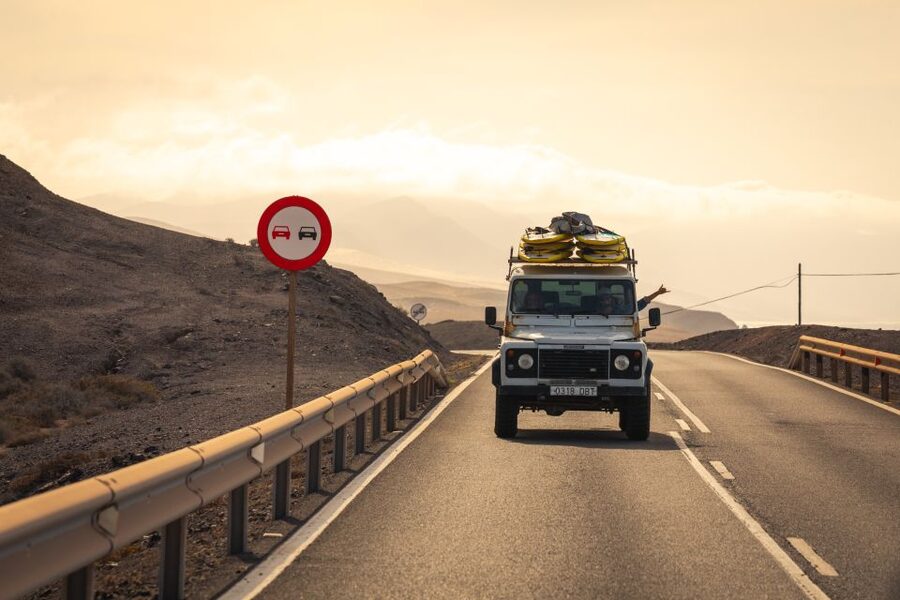
The setting helps. The activity takes place on the long white beaches of southern Fuerteventura, but the beach is not fixed in advance. The team checks wind, tide, and weather, then chooses the spot that suits the students’ level. That is more useful than visiting one famous beach regardless of conditions.
You may be a complete beginner, someone who has tried surfing once, or an advanced surfer looking to improve technique. The course is designed for all three levels, though the experience will naturally feel different for each person. Beginners get the basic movements and plenty of guidance. More experienced surfers benefit from an instructor who can help with wave choice and technique rather than simply handing over a board.
The only clear age restriction is that children under 13 cannot join. Everyone else should be prepared for a physical morning or afternoon. Even a successful beginner session can leave you tired. Paddling, getting back on the board, and walking through moving water use more energy than you may expect.
More Surf Lessons around Fuerteventura:
- Lezioni di Surf per Beginner e Intermedi (6 persone a istruttore)
★ 5.0 · 350 reviews - Fuerteventura: Surf Lesson for All Levels and Ages
★ 4.8 · 205 reviews - Surf Beginner Course
★ 5.0 · 196 reviews
From hotel pickup to the right beach
The advertised duration ranges from 3.5 to 13.5 hours, so do not treat it as a fixed-length lesson. The shorter end likely suits a direct meeting and course, while the longer times can reflect availability and transport arrangements. Check the selected date carefully before making plans for the rest of the day.
The beach can change because of wind, tide, and weather. You will receive a text or WhatsApp message at least one day before the course with the meeting point and start time. If you want pickup, send the accommodation name or address, your mobile number, height, and weight.
Pickup costs an additional €8 and is available from Morro Jable, Jandia, Esquinzo, Butihondo, Costa Calma, La Pared, and La Lajita. This is useful if you are staying along the south coast and do not want to sort out transport with a surfboard and wetsuit. It also removes one common source of confusion: arriving at the wrong beach.
The exact meeting point is intentionally flexible. A beach that is calm and friendly for first-timers one day may be too rough after a change in wind. The tradeoff is that you lose some advance certainty, but you gain a better chance of practicing in suitable water.
Your first lesson on the sand
Once you reach the beach, the instructor explains the surf equipment and the basic water conditions. Currents are covered before you enter the sea, and the beach lifeguard qualification adds useful safety experience to the teaching.
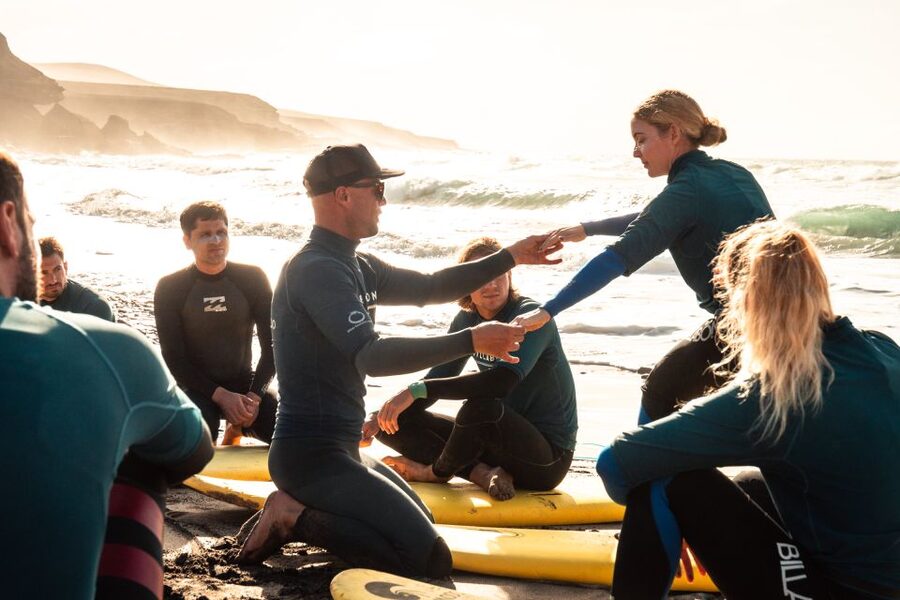
You then do a short warm-up. After that comes the dry practice, which is one of the most valuable parts for a beginner. You learn where to place your body on the board and how to move from lying down to standing. Surf instructors call this movement the take-off.
That name is easy to remember, but the movement itself takes practice. You need to bring your feet under you in one quick action, stay low, and face the correct direction. Repeating it on sand lets you think about the sequence without also handling a breaking wave.
This part of the lesson is not filler. A first-timer who understands the movement before reaching the water can spend more time trying to catch waves. The instruction is intended to be simple, which helps if you are nervous or unfamiliar with surf vocabulary.
The teaching team uses German, English, Spanish, French, and Dutch. That range is especially helpful in a physical lesson where a small misunderstanding can affect safety or balance. Kay has been praised for explaining clearly and helping each person, while Anja Swoboda has taught in both German and English. You may meet a different instructor, since the team includes several coaches.
What happens once you enter the water
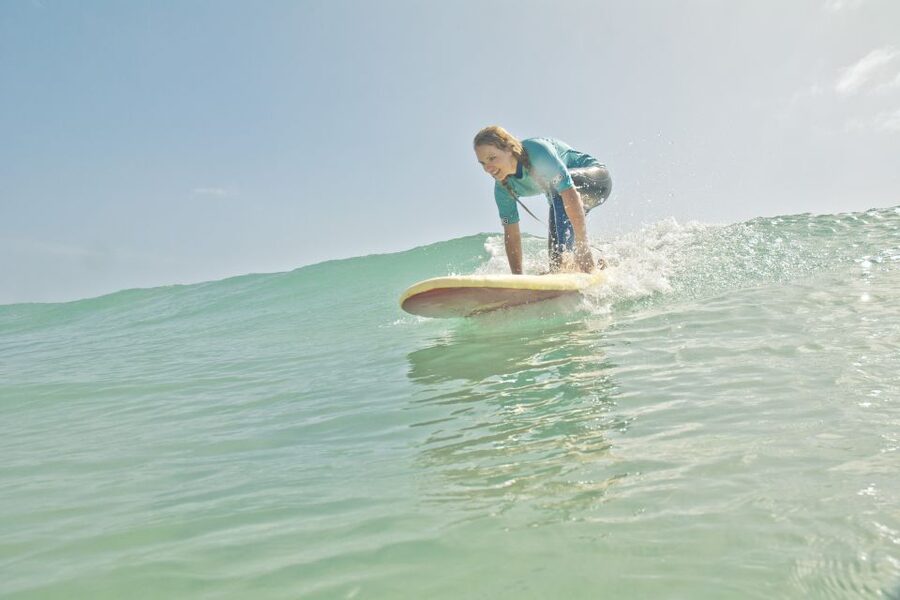
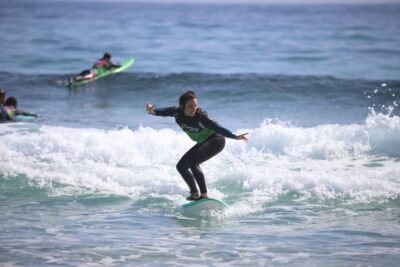
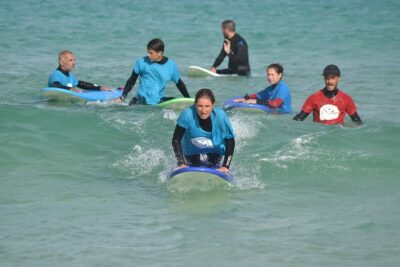
After the beach practice, everyone takes a board into the water. The instructor stays with the group, helps you select waves, and can push you into them when appropriate. You also receive tips on improving your technique rather than simply being left to try again and again.
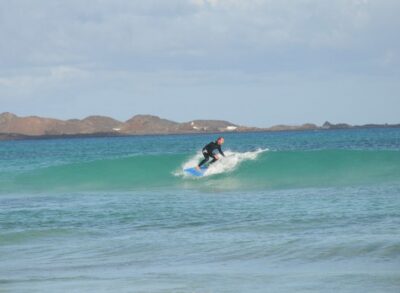
For new surfers, the first success may be modest. You might stand for a short moment, ride a small wave toward the beach, and then fall over. That is still progress. The course is built around repetition, so you can adjust your stance and try again.
A good instructor can make the difference between random effort and useful practice. The strongest praise for this course centers on friendly, patient coaching. Derek has been singled out for advice to both beginners and advanced surfers. Andy is known for bringing obvious enthusiasm to first-time lessons, while Gaspard has been praised for choosing a suitable beginner beach and giving clear instructions.
Conditions will not always feel easy. One session had choppy waves and a strong current, making it hard to move into position. That is an important warning for anyone expecting a calm swimming lesson. The team chooses the best available beach, but it cannot flatten the Atlantic.
The course has generally been described as safe and well explained, including on a windy day. Still, you should listen closely to the current briefing and follow the instructor’s directions. Surfing is fun partly because the ocean has force. That force deserves respect.
Same water, another way to ride it:
- Fuerteventura : Corralejo Surf Lesson
★ 4.7 · 186 reviews - Fuerteventura South: Learn to surf on stunning beaches!
★ 4.8 · 162 reviews - Surf Class at Corralejo
★ 4.5 · 122 reviews - 1 Day Surf Lesson Beginner
★ 4.5 · 87 reviews
Boards, wetsuits, and what the $60 covers
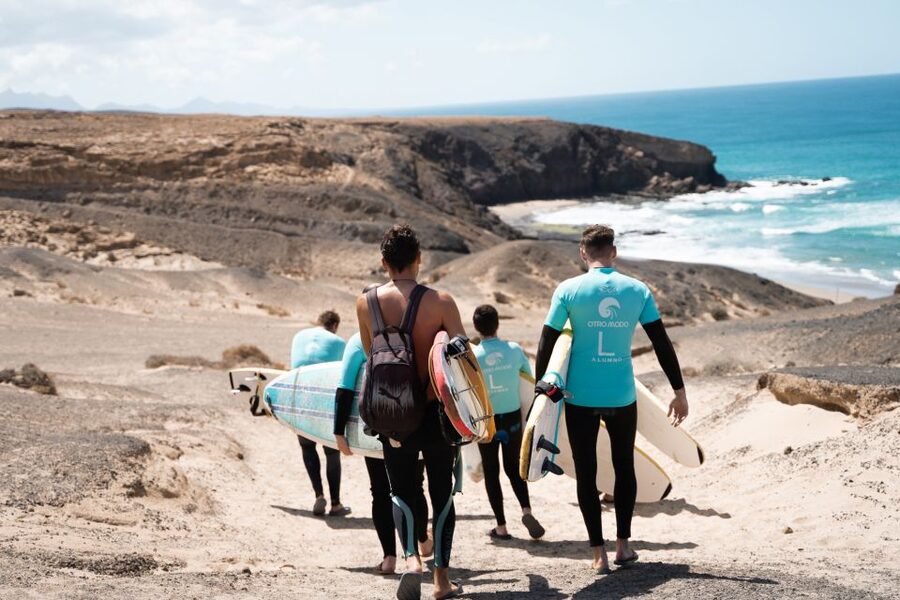
The $60 price includes the beach shuttle, surfboard, wetsuit, and instruction. Beginners use Ocean&Earth boards with a soft foam cover. These are designed to be more forgiving during the early stages, when falls and awkward contact with the board are normal.
Advanced surfers can use epoxy boards. This distinction matters because a board that helps a beginner stay stable may not provide the response an experienced surfer wants. The equipment is matched to the student’s ability rather than treated as one-size-fits-all.
Billabong wetsuits are included as well. You should still bring swimwear to wear underneath, plus a towel for afterward. Sunscreen, water, and beachwear are also on the required packing list. Food and drinks are not included, so bring water and plan for your own snacks if the timing runs long.
At $60 per person, the value is strongest if you need transport and equipment. Buying or renting a board and wetsuit separately would add work, and you would not get an instructor in the water with you. The optional €8 pickup is reasonable for a resort stay, though self-drive visitors may prefer to meet the group directly.
The price is less attractive if you already have suitable equipment and want a long, independent surf session. This is a coached lesson, not simply board rental. You are paying for beach selection, safety instruction, equipment, and help catching waves.
Small groups, but check the day’s numbers
The group limit is eight participants per instructor. That is small enough for an instructor to notice problems with your stance and offer corrections, but it is not private coaching.
The number matters most once you are in the water. Beginners need help choosing waves, getting into position, and understanding why a board turns or stalls. With four students, that attention should feel more frequent than with eight. With a full group, you may wait your turn at times.
One session raised the reasonable concern that a second guide would have helped with the number of participants and choppy conditions. That does not make the course unsuitable, but it is a useful expectation setter. If you want constant one-to-one feedback, ask about private instruction rather than booking a small-group class.
The team does make an effort to adapt to different aims. A mixed group can include first-timers and more experienced surfers, and the instructor can offer different advice. Beginners should not assume they will be pushed into advanced waves, and advanced surfers should not expect a dedicated performance clinic.
The people who shape the experience
The instructors are one of the strongest reasons to choose this course. The names connected with especially positive sessions include Derek, Derrick, Andy, Jeroen, Kay, Gaspard, Anja Swoboda, Felix, and Maria. Since several instructors work with the school, you should not book on the assumption that one particular person will teach your class unless the provider confirms it.
Derek and Derrick have been noted for experience, positive energy, and practical advice. Andy has made a strong impression on first-time surfers, while Jeroen has encouraged repeat bookings after a particularly good surf day. Kay’s clear explanations helped a student with limited English follow the lesson, which speaks well of the school’s use of demonstrations and simple instruction.
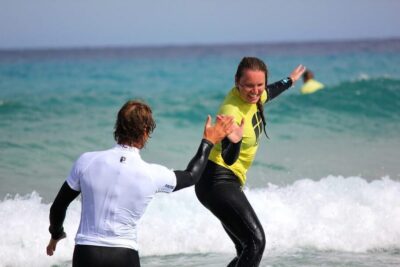
There is also a social side to the day. Music may play during the ride to the beach, and the small-group format gives the session a friendly feel without turning it into a large excursion. You will spend much of the time concentrating on your own board, but the shared first attempts can make the falls less embarrassing.
Who should book this lesson?
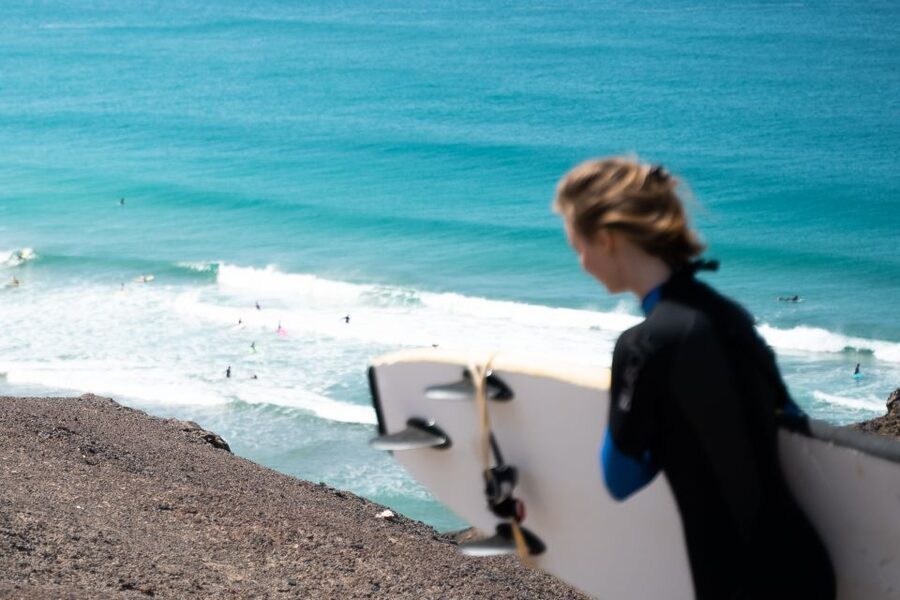
This is a strong choice for a first surf attempt in southern Fuerteventura. You get instruction before entering the sea, a soft beginner board, a wetsuit, and an instructor who stays in the water to help you catch waves.
It also suits families with teenagers, couples, and friends who want an active day rather than a passive beach outing. The minimum age is 13, so younger children cannot join. You should be comfortable with a physical activity and ready to spend time in the ocean.
Intermediate and advanced surfers can join, but expectations need to be realistic. The course adapts to ability and provides epoxy boards for advanced participants, yet the small-group format means the lesson is not designed solely around high-level technique.
You may want to reconsider if you need a guaranteed beach, fixed timetable, private coaching, or a completely calm sea. The flexible beach choice is a benefit, but it also means you will not know the exact meeting point until the message arrives. Strong wind or choppy waves can make the session harder even when the instructor chooses the best available spot.
Practical details to settle before booking
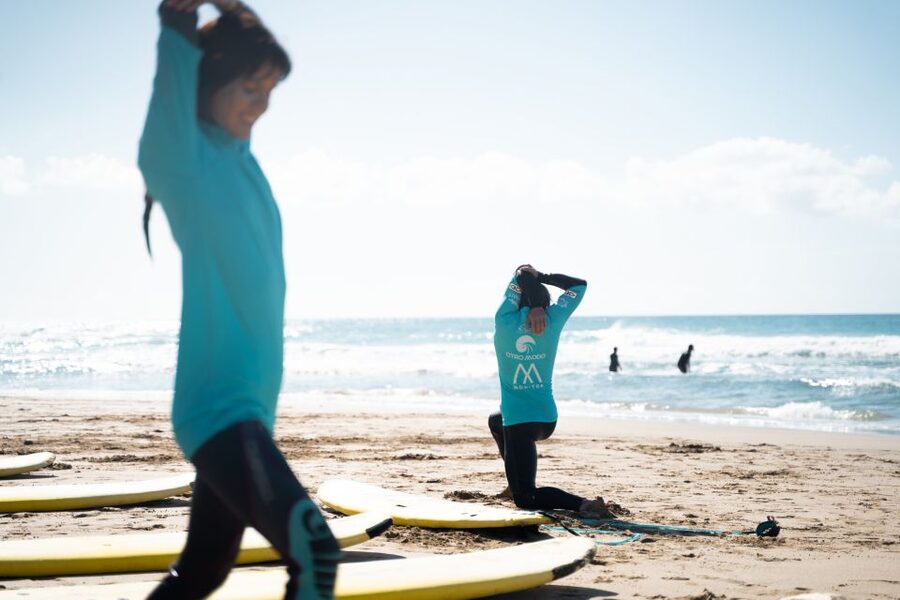
Send your mobile number after booking so the team can contact you. If you want pickup, also send the accommodation name or full address, and include your height and weight so the correct equipment can be prepared.
The team sends the meeting or pickup time at least one day before the lesson by text or WhatsApp. Keep that message handy, since changing conditions may affect the beach and meeting point.
Wear swimwear and bring a towel, sunscreen, water, and beachwear. Food and drinks are not provided. The available teaching languages are German, English, Spanish, French, and Dutch.
You can cancel up to 24 hours before the activity for a full refund, and the reserve-now-pay-later option lets you hold a place without paying at the time of booking. Those policies are useful when your holiday plans depend on weather and sea conditions.
Should you book it?
Book this lesson if you want a well-organized first taste of surfing, especially if you are staying in southern Fuerteventura and value equipment, transport, and safety guidance in one price. The best features are the changing beach choice, the instructor in the water, the soft beginner boards, and the small groups.
Go in expecting an active lesson, not a guaranteed string of perfect rides. Wind, current, and group size can affect the day. If you accept that the ocean sets the terms, the $60 fee offers solid value and a practical way to find out if surfing is for you.
FAQ
Where does the surfing lesson take place?
The lesson takes place at white-sand beaches in the south of Fuerteventura. The exact beach can change according to wind, tide, weather, and the surfing levels in the group.
How will I learn the take-off?
You first practice board position and the movement from lying down to standing on the beach. After the dry exercises and warm-up, you practice the movement in the water with instructor support.
Is equipment included?
Yes. The activity includes Ocean&Earth soft-top surfboards for beginners, epoxy boards for advanced surfers, and Billabong wetsuits.
How many people are in each group?
Groups are limited to four to eight students per instructor.
Is hotel pickup available?
Yes. Pickup costs an extra €8 from Morro Jable, Jandia, Esquinzo, Butihondo, Costa Calma, La Pared, and La Lajita.
What should I bring?
Bring swimwear, a towel, sunscreen, water, and beachwear. Food and drinks are not included.
What languages do the instructors speak?
Instruction is available in German, English, Spanish, French, and Dutch.
Can children join the lesson?
The activity is not suitable for children under 13 years old.
Latest surf sessions around Fuerteventura
- 4 Hours Surf Class in Corralejo, Fuerteventura★ 4.5 · 14 reviews
- Learn to surf the most beautiful sandy beaches of Fuerteventura★ 5.0 · 2 reviews
- Learn to surf on the endless beaches in southern Fuerteventura★ 5.0 · 31 reviews
- Kids and Family Guided Surf Course at Fuerteventura Beaches★ 5.0 · 7 reviews
- Come surf with me! Surf In Fuerteventura by Sealover★ 5.0 · 31 reviews
- Surf Lessons | Learn to surf in Fuerteventura★ 4.9 · 19 reviews
- Corralejo: Surf Lessons for Beginners with Hotel Pickup★ 4.8 · 5 reviews
- La Pared: Classic Surf Lesson in the South of Fuerteventura★ 5.0 · 7 reviews
Fuerteventura Surf Lessons, compared.
Lezioni di Surf per Beginner e Intermedi (6 persone a istruttore)
Read our review →
Fuerteventura: Surf Lesson for All Levels and Ages
Read our review →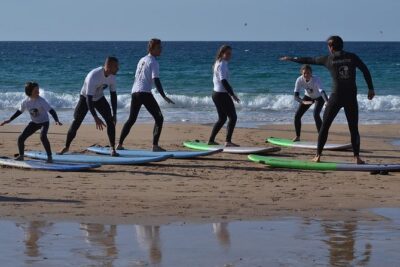
Fuerteventura South: Learn to surf on stunning beaches!
Read our review →
Browse the lists this tour appears in