
Review · CARCAVELOS
Carcavelos: Surfing Lesson
Carcavelos is one of the easiest places near Lisbon to try surfing: you get a two-hour lesson on a broad Atlantic beach, with a softtop board, warm wetsuit, and an instructor close by in the water. The small groups, capped at five people, make this feel more like coaching than a crowded beach class.
I especially like the safety-first briefing and the personal attention. You learn how waves work before paddling out, and the instructors adjust the lesson to your ability. I also like the friendly, local feel. Chico has helped students with tips on fishing, sightseeing, and places to eat, while Gonçalo has been praised for patience and clear instruction.
The main drawback is simple but useful to know: the school does not have its own changing rooms. You can use public beach showers, but you should arrive ready to change with a towel and spare clothes. Transportation, food, drinks, swimwear, and towels are also on you.
Key points to know before you book
- Small classes capped at five: You should get more direct help than in a large surf-school group.
- A full two-hour introduction: The lesson includes safety, wave dynamics, land-based technique, and time in the water.
- Equipment is supplied: A softtop board and warm wetsuit are included.
- Several languages are available: Instruction is offered in English, Portuguese, and Spanish.
- Carcavelos is convenient for a first lesson: You get an accessible coastal setting in Lisbon District without signing up for a full-day program.
- Bring your own beach basics: Swimwear, towel, water, snacks, sunscreen, and a change of clothes are not included.
Why Carcavelos works for a first surf lesson
Carcavelos gives you a straightforward introduction to the sport without committing a whole day to it. The activity lasts two hours, so it fits neatly into a Lisbon holiday. You can spend the morning or afternoon on the beach, then return to the city or continue along the coast.
The point is not to become an expert in one session. It is to learn the basic movements, understand how to behave safely in the water, and get enough practice to decide if surfing is for you. That makes this a good choice for a first attempt, a casual activity between sightseeing days, or a way to add some sea time to a Portugal trip.
The beach setting also gives the lesson a social side. You meet other beginners, share the awkward first attempts at standing up, and usually leave with a better sense of how local surf culture works. The activity is practical rather than polished. You are there to learn, fall, try again, and enjoy the coast.
You do need to be comfortable in the water. This is not a dry introduction where you watch from the sand. You will be expected to take part in the water practice, so anyone who feels uneasy in open water should think carefully before booking.
More Surf Lessons around Portugal:
- Matosinhos: Surfing Lesson with Equipment
★ 4.8 · 926 reviews - Lisbon Surf Experience
★ 4.9 · 876 reviews - Albufeira: Surf Lesson
★ 4.7 · 699 reviews
Meeting Slam Surf School at the beach
The meeting point is Slam Surf School, which is on the top floor and marked with the school logo. It is described as easy to find, but I would still arrive 10 minutes early. That gives you time to locate the school, meet the instructor, handle check-in, and get fitted with equipment without cutting into your lesson.
The activity begins and ends at the school. Transportation to and from the meeting point is not included, so plan your route in advance. The available information does not specify a pickup service, parking arrangement, or a detailed public transport route, so do not assume a vehicle will be waiting for you.
At check-in, you meet the instructor and receive your equipment. The staff members named in connection with the school include Chico and Gonçalo. Chico has been especially good at keeping in touch about weather and tides, while Gonçalo has been praised for patience and strong teaching skills. Your assigned instructor may differ, but these details give you a useful sense of the teaching style to expect.
The first lesson: safety before surfing
The opening part of the lesson covers water safety and wave dynamics. This may sound less exciting than grabbing a board, but it is the most important part for a beginner. You need to understand where to enter, how to watch the waves, and how to manage the board before trying to stand.
The instructor also explains how the waves behave. You learn to read the timing and shape of a wave instead of paddling at every swell that comes toward you. That basic understanding can save energy and make the first attempts less frustrating.
Safety is not treated as a quick disclaimer. It forms part of the actual lesson. The school places emphasis on keeping the experience safe and fun, and the small group makes it easier for the instructor to watch what each person is doing.
You should pay close attention here, even if you have surfed before. Conditions change, and a lesson near Lisbon may not feel like one you have taken elsewhere. The instructor can set the pace according to your comfort and ability.
Learning the pop-up, paddling, and balance
After the safety briefing, you work on the basic movements. These include paddling, pushing up, popping to your feet, and staying balanced on the board.
The pop-up is the key moment. You begin lying on the board, then move quickly into a standing position as the wave carries you. It sounds simple. It is not. Most first attempts involve a knee in the wrong place, feet too close together, or a quick slide back into the water.
That is where individual feedback matters. With no more than five people in the group, the instructor can spot small problems and offer a correction. You may need to change your foot position, lower your center of gravity, or look forward instead of down at the board.
The softtop board is a good fit for beginners because it is designed to be more forgiving than a hard surfboard. You still need to handle it carefully, but the equipment is intended for learning basic technique and catching smaller waves.
A warm wetsuit is included. That matters in the Atlantic, where even a sunny beach can come with cool water. You should bring your own swimwear to wear underneath. Board shorts and bikinis are listed as items you need to provide, not equipment supplied by the school.
Same water, another way to ride it:
- Porto: Small Group Surf Lesson with Transportation
★ 4.9 · 594 reviews - Albufeira: 2-Hour Falesia Beach Surf Lesson
★ 4.8 · 464 reviews - Albufeira: Learn to Surf in Chill Beach Vibes & Good Times
★ 4.7 · 439 reviews - Surf Experience in Cascais
★ 5.0 · 423 reviews
Heading into the waves at Carcavelos
Once you have the basics, you take the board into the sea and begin practicing. The exact number of successful rides will depend on the day, your balance, and your comfort in the water. The school does not promise that every participant will stand on the first wave, and you should not judge the lesson by that one moment alone.
The instructor stays involved, offering encouragement and practical tips as you try. You may catch a small wave, lose balance, paddle back out, and try again. That repetition is the real value of the lesson. Surfing is learned through timing and feel, not just through a verbal explanation on the beach.
The coastal setting adds plenty to the experience. You have open views, the sound of the Atlantic, and the chance to look back at the beach from the water. Even when a ride lasts only a few seconds, the setting makes the effort worthwhile.
The small group can help here, too. You are not practicing alone, but you are also not one of a dozen students competing for the instructor’s attention. You get the social energy of a group with a better chance of receiving useful personal advice.
Keep your expectations sensible. A two-hour session can give you a solid start, but it cannot replace repeated practice. If you enjoy the lesson, ask the instructor what to work on next. The goal is to leave knowing how to continue safely, not to perform advanced maneuvers.
What the instructors add to the experience
The strongest part of this activity is the teaching. The available feedback highlights two things: clear instruction and a friendly manner.
Chico has been particularly attentive before the lesson, watching weather and tides and keeping in contact. That sort of communication matters for a water activity because conditions can affect comfort and safety. He has also offered advice beyond the surf lesson, including fishing, sightseeing, and food tips.
Gonçalo has been described as professional and patient, with a strong ability to teach beginners. Patience is no small virtue here. New surfers need repeated explanations, and they need an instructor who can correct mistakes without making the lesson feel tense.
The school offers instruction in English, Portuguese, and Spanish. That gives you a better chance of understanding the safety briefing and technical corrections clearly. You should choose the language that lets you respond quickly in the water.
The instructor is not just there to push you into waves. A good lesson includes deciding which waves are suitable, helping you position the board, and telling you when to paddle. That guidance can turn a confusing first hour into a series of manageable attempts.
Equipment, changing, and what to bring
The $40 price includes professional instruction, a softtop surfboard, a warm wetsuit, a safety briefing, and a place to store your belongings. For a two-hour activity with a small group, that is a fair price, especially if you do not own surf equipment.
You need to bring:
- Swimwear
- A towel
- Sunscreen
- Water
- Snacks
- A change of clothes
The school does not provide board shorts, a bikini, or a towel. Pack these before leaving your accommodation. Sunscreen is important even on a cloudy day, since you will be outside and on reflective water.
The storage option is useful because you will not want to carry a phone, wallet, or other small items into the sea. Still, bring only what you need. The information describes a safe place for belongings, but it does not promise lockers or private storage for large bags.
The lack of changing rooms is the clearest practical weakness. You can use public showers along the beach, but you should not expect a private changing area at the school. A loose change of clothes, a plastic bag for your wet gear, and a towel will make the end of the lesson much easier.
Do not plan to smoke or consume alcohol or drugs during the activity. Those are not allowed, and alcohol is especially poor preparation for a water lesson.
Is $40 good value for two hours?
At $40 per person, this is not the cheapest possible way to stand near the ocean, but it offers more than board rental. You receive instruction, safety guidance, equipment, and a small group. If you rented a board and tried to work everything out alone, you would save the lesson fee but lose the benefit of knowing where and how to practice.
The group limit is important to the value. A class of five gives you a better chance of receiving corrections and support. If the class fills, you will still share the instructor, but the number is modest enough for the session to remain personal.
The price also includes the wetsuit, which saves you from arranging equipment separately. The main extra costs are getting to the school, providing your own beach items, and buying any food or drinks you want.
For a visitor who wants a one-time experience, $40 is reasonable. For someone hoping to surf several times, the first lesson can help you decide if more sessions are worth paying for. You will leave with a better idea of your comfort level, the physical effort involved, and the kind of instruction you need next.
Who should book this lesson?
This is best for adults and older children who are comfortable in the water and want a first taste of surfing. The activity is not suitable for children under six or for pregnant women.
You do not need previous surfing experience. The lesson is designed for complete beginners, but it can also be adjusted for someone who already knows the basics and wants help improving technique. Tell the instructor about your experience and goals at the start.
It suits solo visitors particularly well because the small group gives you an easy way to meet people. It also works for couples and friends who want an active beach outing rather than another museum or walking tour.
I would not choose it if you want a private lesson, need a private changing room, or dislike open-water activities. The school provides a small group rather than a one-to-one session, and the beach facilities are basic.
Timing, cancellations, and planning tips
The lesson lasts two hours, but starting times depend on availability. Surf conditions, tides, and scheduling affect the day, so check the available time before booking and keep a little flexibility in your plans.
Arrive 10 minutes early. That is especially important if you need to find the top-floor meeting point, change, or store your belongings.
You can cancel up to 24 hours before the activity for a full refund. The reserve-now-and-pay-later option lets you hold a place without paying immediately, which is useful if your Lisbon plans are still changing.
I would avoid scheduling a rushed commitment directly after the lesson. The activity itself lasts two hours, but you may want time to change, use the public beach showers, and collect your things. Bring water and a snack, since no food or drinks are included.
Should you book the Carcavelos surf lesson?
Book it if you want a practical, friendly first lesson near Lisbon, especially if safety and personal instruction matter to you. The five-person limit, supplied board and wetsuit, multilingual teaching, and patient approach make the $40 price easy to justify.
Go in expecting a first step, not a polished surfing performance. You may stand up, or you may spend most of the lesson learning to paddle and position the board. Either result is useful if you listen carefully and keep practicing.
The missing changing rooms are the only notable inconvenience. Pack well, arrive early, and be comfortable in the water. If those conditions suit you, Slam Surf School offers a sensible way to meet the Atlantic at Carcavelos and give surfing a fair try.
FAQ
Where does the Carcavelos surfing lesson meet?
You meet at Slam Surf School on the top floor, where the school logo makes it easy to identify. The activity also ends back at the meeting point.
How long does the surf lesson last?
The lesson lasts two hours. Starting times depend on availability when you book.
How many people are in each group?
The group is limited to five participants, allowing for a more personal lesson than a large class.
What languages does the instructor speak?
Instruction is available in English, Portuguese, and Spanish.
Is surfing equipment included?
Yes. The price includes a softtop surfboard and a warm wetsuit, along with professional instruction and the safety briefing.
What should I bring?
Bring swimwear, a towel, sunscreen, water, snacks, and a change of clothes. Board shorts, a bikini, and a towel are not provided.
Are changing rooms available at the school?
The school does not have its own changing rooms. Public showers along the beach can be used.
Can I cancel the activity for a refund?
Yes. You can cancel up to 24 hours before the lesson for a full refund. You can also reserve now and pay later.
Latest surf sessions around Portugal
- Tricana Surf Experience★ 5.0 · 3 reviews
- Exclusive Surf Lessons in S Miguel Azores★ 5.0 · 21 reviews
- Guided surf tours from Porto city to the beach★ 4.5 · 10 reviews
- Surf Lesson | Surf Lessons★ 5.0 · 39 reviews
- Self-guided tour Bike + Surf★ 5.0 · 6 reviews
- Surf Lessons in Porto with transfer at Porto Surf School★ 5.0 · 42 reviews
- Surfing Lesson | Porto: Small Group Surf Lesson with Transportation★ 5.0 · 34 reviews
- Private Surf Experience – Transfer to Matosinhos – All Levels★ 5.0 · 7 reviews
Carcavelos Surf Lessons, compared.
Sintra: 2-Hour Group Surf Lesson at Praia Grande
Read our review →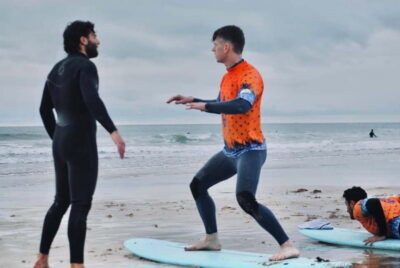
Lisbon – Cascais: Surf, Smile and Sunsets (Lessons Everyday)
Read our review →

Browse the lists this tour appears in